A misfire is more likely caused by the ignition coil when the code stays on one cylinder and moves with the coil. If it follows the spark plug, the plug is the fault. Ignore it and you can waste money on parts, wash fuel into the catalyst, and miss a fuel, air, or compression problem. This guide shows the cylinder-by-cylinder test sequence, the mileage and heat clues, and the signs that point away from ignition.
| Decision factor | Spark plugs | Ignition coils | Winner |
|---|---|---|---|
| Wear over time | Electrodes wear and the gap opens as miles add up. | Solid-state parts can work for a long time, then fail without warning. | Spark plugs |
| Hot-only misfire pattern | A hot misfire can happen, but it is less typical than plug wear or fouling. | Heat and vibration commonly stress coils, and weak coils can fail when hot. | Ignition coils |
| Inspection certainty | You can often see wear, fouling, or gap problems during removal. | There is no easy visual way to judge remaining life. | Spark plugs |
| Cylinder-by-cylinder diagnosis | Bad plugs can be isolated by moving the plug if the engine design allows it. | A coil-swap test can make the misfire follow the coil. | Ignition coils |
| Best first replacement when maintenance is overdue | Often the smarter first step when service life is past due. | Can be replaced with plugs if the coils are already old or the plugs have stressed them. | Spark plugs |
How misfire diagnosis starts
Start with the code, not a guess. A diagnostic scanner or OBD-II reader can show whether the misfire is tied to one cylinder or spread across several, and a flashing check engine light can mean the misfire is severe enough to need prompt attention.
Read freeze-frame and live misfire data
Freeze-frame data shows the engine conditions at the moment the fault set. Live misfire counters show which cylinder is counting up now, which is better than guessing from a rough idle alone.
If the code points to one cylinder, that narrows the search to that cylinder’s plug, coil, injector, compression, and nearby wiring. If the codes are random across several cylinders, look beyond one plug or one coil first.
Use mileage, temperature, and code location together
Mileage matters because spark plugs are a wear item with service life measured in tens of thousands of miles. Standard copper spark plugs may last around 30,000 miles, while iridium or platinum-tipped plugs may last 100,000 miles or more.
Temperature matters too. A misfire that appears after the engine is fully hot can lean more toward a coil or electrical issue than a simple plug wear problem.
Spark plugs vs ignition coils: which fails how?
Spark plugs fire the mixture in the cylinder. Ignition coils step battery voltage up into the tens of thousands of volts so the plug can jump its gap, and most vehicles built since the late 1990s use individual coils mounted directly over each spark plug.
Older vehicles used a single coil and a distributor to route spark to each cylinder in sequence. That layout adds the distributor cap and rotor as extra wear points that can mimic plug or coil trouble.
Why hot and cold behavior matters
A spark plug usually fails by wear, fouling, or gap trouble. An ignition coil often fails from heat and vibration, and a weak coil can act up only when the engine is hot, then seem normal again after it cools.
That pattern is useful. A cold-start misfire points you toward plugs, gap, mixture, or another cylinder-specific fault; a hot-soak misfire pushes the coil higher on the list.
What a spark plug does
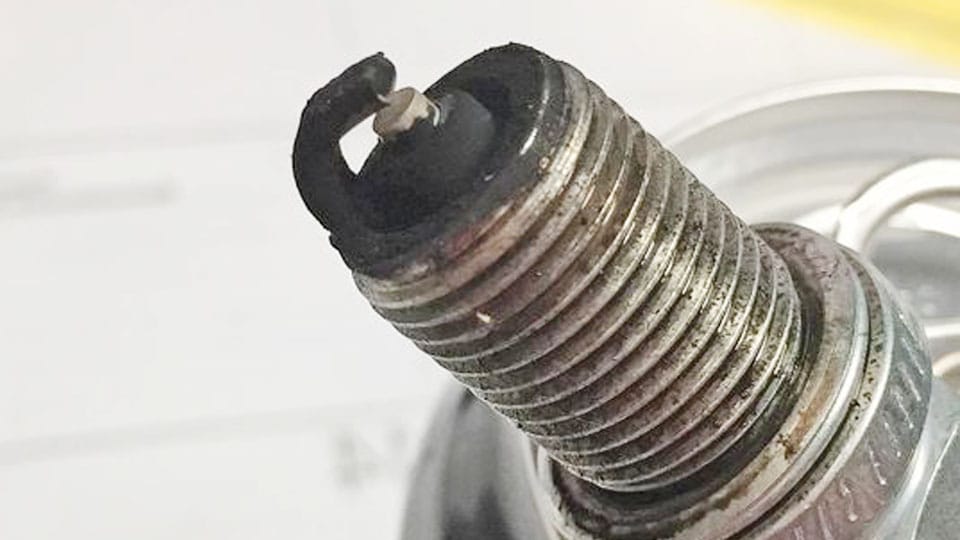
The plug’s job is simple, but the failure modes are not. The electrode wears, the gap opens, and the spark needs more voltage to fire; the plug can also foul from oil consumption or a rich mixture.
Too wide a gap, or a gap that does not match the vehicle specification, can cause exactly the misfire symptoms you are trying to fix. Some plugs need manual adjustment, while others should be installed as supplied.
What an ignition coil does
The coil is an electronic transformer with no easy visual way to judge its remaining life. In coil-on-plug systems, a bad coil affects one cylinder directly; in coil pack systems, one unit may feed several cylinders; in distributor systems, a single coil and cap-and-rotor path can affect the whole engine.
Because the coil is buried in heat and vibration, failure can be intermittent. That is why a coil can pass a quick glance and still fail under load or after a long drive.
What points to a bad spark plug?
Think first about wear, fouling, and gap. If the plug is overdue, oily, or sooted up, it is often the easiest fault to prove, especially when the code stays on one cylinder and the plug is due by mileage.
Wear, gap growth, and fouling
Removal should show whether the plug is worn, oil-fouled, or carbon-fouled. A plug with an opened-up gap can misfire under load, and a plug that is black and wet points toward a mixture or oil-control problem that a new coil will not fix.
Say a 4-cylinder car has high-mileage iridium plugs and cylinder 2 keeps misfiring at idle. If the plug from cylinder 2 looks eroded and the gap is out of spec, that plug is the first suspect before the coil.
Mileage and service interval clues
Replacement intervals vary by plug type and by engine design. If the plugs are past their service life, replacing them first is usually the cleaner move than chasing coils one at a time.
Overdue plugs can also make a healthy coil work harder. That extra demand can expose a marginal coil that was barely holding on.
What points to a bad ignition coil?
A coil becomes more likely when the misfire is hot, intermittent, and cylinder-specific. If the fault appears after heat soak, or if the scanner keeps returning to the same cylinder after the plug checks out, the coil moves to the top of the list.
Heat-soak and vibration patterns
Heat and vibration are common stressors. A coil-on-plug unit mounted on top of the engine sees both, and a weak coil may fail only after a long drive, a long idle, or a hot restart.
Picture a pickup that starts clean in the morning, then idles rough after a highway run and a 10-minute stop for fuel. That hot-soak pattern fits a coil fault better than a simple worn plug, especially if the same cylinder keeps setting the code.
Single-cylinder misfires that move with the coil
A misfire code isolated to one cylinder points more toward the coil or spark plug for that cylinder. The coil-swap test is the key move: if you swap a coil to another cylinder and the misfire follows it, the coil is the cause.
If the misfire stays on the original cylinder after the swap, the plug or another cylinder-specific issue is more likely. That is where false positives matter: a worn plug can make a healthy coil look bad if you swap only the coil and never inspect the plug.
Coil-on-plug, coil pack, and older systems
Most late-model gasoline engines use coil-on-plug. In a coil pack system, one failed unit may affect multiple cylinders depending on the design. On older distributor-based engines, cap and rotor wear can look like a bad coil or plug, so those parts need to be ruled out too.
Misfire decision matrix
| Symptom pattern | Likely cause | Quick test | Next action |
|---|---|---|---|
| Rough idle | Spark plug, ignition coil, or another cylinder-specific fault | Read the code and check the live misfire counter for one cylinder | Inspect that cylinder’s plug first, then swap the coil if the plug looks normal |
| Cold-start misfire | Spark plug, gap issue, fuel delivery, or vacuum leak | Compare cold and warm behavior, then inspect plug condition and gap | Check the plug and air-fuel clues before blaming the coil |
| Hot soak misfire | Ignition coil or electrical issue | Let the engine heat soak, then watch misfire counts on restart | Run a coil-swap test on the suspect cylinder |
| Single-cylinder code | Spark plug or ignition coil for that cylinder | Inspect the plug, then move the coil to another cylinder | Replace the part that makes the misfire follow |
| Random multiple-cylinder misfire | Fuel delivery, vacuum leak, compression loss, or shared ignition fault | Check fuel trims, intake leaks, and whether all coils share power or ground issues | Stop focusing on one plug or one coil |
| Misfire under load | Wide gap, weak coil, fuel delivery issue, or compression problem | Compare load data and inspect plug gap against specification | Test both ignition and non-ignition causes |
| Non-ignition causes | Compression loss, injector faults, vacuum leaks | Compression test, injector balance check, smoke test | Repair the root fault before buying more ignition parts |
How to run a coil-swap test
A coil-swap test is the quickest way to separate a bad coil from a cylinder-specific problem. Move the coil from the misfiring cylinder to another cylinder, clear the codes if needed, and see whether the misfire follows the coil.
- Read the misfire code with an OBD-II scanner.
- Confirm the cylinder number in the freeze-frame or live misfire data.
- Move that coil to a different cylinder.
- Drive or idle the engine until the misfire returns.
- Check whether the code moved with the coil or stayed on the original cylinder.
If the misfire moves, the coil is the likely fault. If it stays put, inspect the plug, plug boot, injector, compression, and nearby wiring before replacing the coil.
A common first-timer mistake is swapping a coil onto a cylinder with a worn spark plug and then blaming the coil when the misfire stays. That result does not clear the coil, but it does mean the original cylinder still has a problem that needs to be found.
Could it be something else?
Yes. Not every misfire is caused by spark plugs or coils, and a good diagnosis has to rule out the engine faults that can mimic them. Compression loss, injector faults, and vacuum leaks can all set misfire codes and rough-running symptoms.
Compression loss
Low compression from worn rings, a burned valve, or a head gasket fault can create a cylinder-specific misfire that looks electrical at first. If the plug and coil both check out, a compression test should move up the list fast.
Injector faults
A weak or dead injector can cause a lean misfire on one cylinder. That is why live misfire data, fuel trims, and injector checks matter before you buy more ignition parts.
Vacuum leaks
A leak near one intake runner can upset a single cylinder or a pair of cylinders. If the misfire changes with throttle position or the scanner shows lean running along with the misfire, look for air leaks before replacing more ignition parts.
Distributor cap and rotor on older engines
On older distributor-based systems, cap and rotor wear can mimic bad plugs or coils. Cracks, carbon tracking, and worn contacts can break the spark path just as surely as a failed coil can.
Choose Spark plugs if…
Choose spark plugs if the engine is overdue for service, the gap is out of spec, the plug is fouled, or the misfire stays on the same cylinder after the coil checks out. They are the better first move when mileage and plug condition both point to wear.
Choose ignition coils if the misfire is hot-only, moves with a coil swap, or keeps coming back on one cylinder even after the plug has been inspected and matched to specification. If the engine has a coil-on-plug setup, that pattern is especially strong.


Frequently asked questions
Is my misfire caused by spark plugs or ignition coils?
Use the code, mileage, and temperature pattern. A cylinder-specific misfire that follows a coil swap points to the coil; worn plugs, bad gap, or fouling point toward the plug. If the misfire is random or spread across cylinders, look beyond both parts.
How can I tell if a bad ignition coil is causing a misfire?
Look for a misfire that appears hot, under load, or after heat soak, then move the coil to another cylinder. If the misfire follows the coil, that coil is the likely fault. If it stays put, inspect the plug and the rest of that cylinder.
What are the symptoms of worn spark plugs versus a failing coil?
Worn plugs usually show age, gap growth, fouling, or a maintenance interval that is past due. A failing coil is more likely to be intermittent, heat-related, and harder to spot by eye. Both can cause rough idle and hesitation, so the code pattern matters more than the symptom alone.
Should I replace spark plugs or coils first when the car misfires?
Replace the spark plugs first when they are overdue or visibly worn, because they are a known service item and a bad gap can create the misfire by itself. Replace the coil first when the misfire is hot-only or follows a coil-swap test. If both are old, both may need attention.
Can a bad spark plug damage the ignition coil?
Yes. A plug with too much gap or heavy fouling can make the coil work harder, and that extra load can stress a marginal coil over time. The reverse is also true: a weak coil can make a good plug look bad.
How do I test which cylinder is misfiring?
Use a diagnostic scanner or OBD-II reader to read the code and watch live misfire counts. The code often identifies one cylinder, which narrows the search to that cylinder’s plug, coil, injector, and compression. Freeze-frame data helps confirm the conditions when the fault set.
What does a coil-swap test show?
It shows whether the misfire moves with the coil. If you swap the coil to another cylinder and the misfire follows, the coil is the cause. If the misfire stays on the same cylinder, the plug or another cylinder-specific fault is more likely.
Can misfires come from something other than spark plugs or coils?
Yes. Compression loss, injector faults, and vacuum leaks can all mimic ignition trouble. That is why a cylinder-specific code should trigger a wider check, not an automatic parts swap.
Why does my car misfire more when the engine is hot?
Heat can make a weak coil fail intermittently, especially on coil-on-plug engines where the part lives close to the cylinder head. Hot soak is one of the strongest clues that the coil, not the plug, is the main problem.
Will new spark plugs fix a misfire if the coil is weak?
Not reliably. New plugs can help if the old ones were worn or gapped wrong, but a weak coil can still misfire under load or when hot. If the misfire remains after the plugs are corrected, the coil and the rest of that cylinder still need testing.

Hi, I’m Melvin, an automobile engineer with extensive experience in automobile equipment. I currently work for a local automobile firm, where I specialize in the car parts industry. I’ve had the opportunity to collaborate with seasoned inspectors, gaining invaluable hands-on experience that goes beyond just theory.
My passion for automotive care started at a young age, which led me to create CarSpareCare. Through CarSpareCare, I share the knowledge and skills I’ve acquired over the years to help others navigate the world of car maintenance and repairs.
My goal is to provide practical tutorials, essential safety advice, and the latest industry insights so that anyone—whether a beginner or an expert—can confidently tackle their automotive projects.