
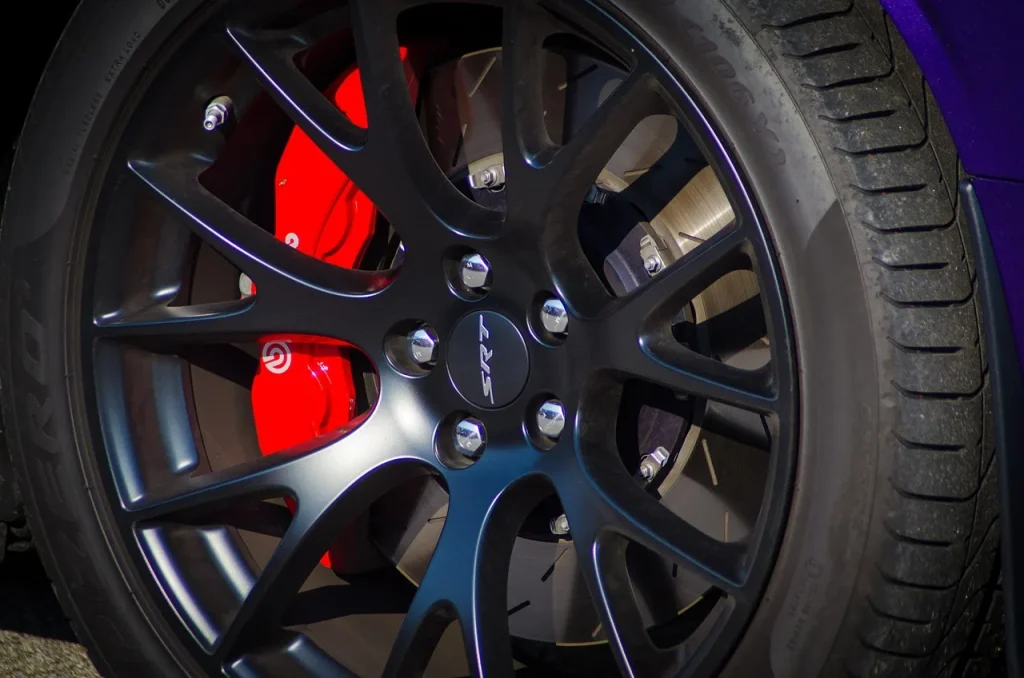
For most drivers, solid rotors are the right answer. Daily commuting usually does not heat the brakes enough to justify drilled or slotted rotors, while towing, mountain descents, and track use usually favor slotted rotors for better fade control and lower crack risk than drilled designs. Drilled rotors are mostly an appearance-led choice for street use, with the main practical upside being water shedding and surface cleanup rather than a meaningful stopping-distance gain.
Verdict
For daily commuting, solid rotors still win on value. For mountain descents, towing, and track use, slotted rotors are usually the safer performance choice because they handle pad transfer and heat stress better than drilled holes do. Drilled rotors can suit a street car that sees occasional spirited use, but they are the most likely of the three to trade durability for appearance.
Specs at a glance
| Factor | Drilled | slotted rotors | Winner |
|---|---|---|---|
| Cost / value | Usually extra cost with little real-world gain; fair only for appearance | Usually more than most commuters need, but best performance value | slotted rotors |
| Lifespan / durability | Most likely to trade durability for appearance; higher crack risk under repeated heat | Lower crack risk than drilled and better under sustained heat | slotted rotors |
| Maintenance / pad interaction | Can cause quicker pad wear and squeal with a soft, dusty pad | Helps keep the pad face fresh and can be more consistent during repeated hard stops | slotted rotors |
| Performance / stopping in normal street use | Does not create a meaningful stopping-distance advantage on its own; limited gain on street use | Better consistency after repeated stops and better fade control | slotted rotors |
| Wet-weather cleanup / surface contamination | Can help shed water and clear the pad surface | Scrapes away dust, light debris, and excess pad material | Tie |
| Noise / comfort | Can add noise and inspection headaches | Can also add noise and inspection headaches, but the article emphasizes performance benefits | Tie |
| Best-fit use | Mostly an appearance-led choice for street use; can suit a street car with occasional spirited use | Usually the safer choice for mountain descents, towing, and track use | slotted rotors |
| Mountain descents | Limited improvement and higher crack risk | Better fade control and debris evacuation | slotted rotors |
| Towing | Not ideal; does not solve an overloaded braking system | Better under sustained heat and pairs better with tow-friendly pads | slotted rotors |
| Track days | Weakest; more likely to crack under repeated high heat | Strongest of these two for short-term performance use | slotted rotors |
Fitment comes first. Your vehicle sets rotor diameter, thickness, hub offset, and whether the rotor is vented or non-vented, and those limits matter more than hole or slot pattern.
Minimum thickness matters too. Most rotors are replaced when they reach the stamped minimum thickness or the manufacturer limit, not when they “look worn,” and any replacement has to match the caliper and pad package the vehicle was built around.
What are drilled and slotted rotors?
Drilled rotors use holes through the friction face. Slotted rotors use grooves cut into the face. Both are meant to manage surface contamination and repeated braking heat, but they do it in different ways and with different trade-offs.
What drilled holes are meant to do
Drilled holes can help shed water and clear the pad surface, which may improve wet-weather bite and reduce surface film after repeated stops. The benefit is limited on modern street pads, where rotor pattern usually does not create a meaningful stopping-distance advantage on its own.
What slots are meant to do
Slots scrape away dust, light debris, and excess pad material. They help keep the pad face fresh and can make braking feel more consistent during repeated hard stops, which is why they often suit performance street driving and downhill braking better than drilled-only designs.
Why pad compound matters here
Rotor choice cannot be separated from the pad. A soft, dusty pad on drilled rotors can wear quickly and squeal, while a pad that transfers material unevenly can create vibration on any rotor type. A good pad-rotor match matters more than hole count for many drivers. For more on how pad condition affects wear, see what happens if you keep driving worn brake pads.
Rotor decision matrix
The real trade-off is simple: drilled and slotted rotors can solve specific braking problems, but they usually cost more and can add noise, wear, or inspection headaches without helping everyday stopping distance. The best choice depends on how often you heat the brakes, not how aggressive the rotors look.
| Use case | Solid | Drilled | Slotted | Winner |
|---|---|---|---|---|
| Daily commuting | Quiet, durable, best value | Usually extra cost with little real-world gain | Still more than most commuters need | Solid |
| Spirited street driving | Reliable, but less pad-cleaning action | Mostly an appearance upgrade with limited gain | Better pad control and heat consistency | Slotted |
| Mountain descents | Can work, but fade may appear sooner | Higher crack risk under repeated heat | Better fade control and debris evacuation | Slotted |
| Towing | Fine for light loads | Not the best choice for sustained load | Better for heat management under load | Slotted |
| Track days | Only acceptable with a purpose-built setup | Least durable under severe heat | Preferred of the two, though still not ideal for every pad | Slotted |
Daily commuting
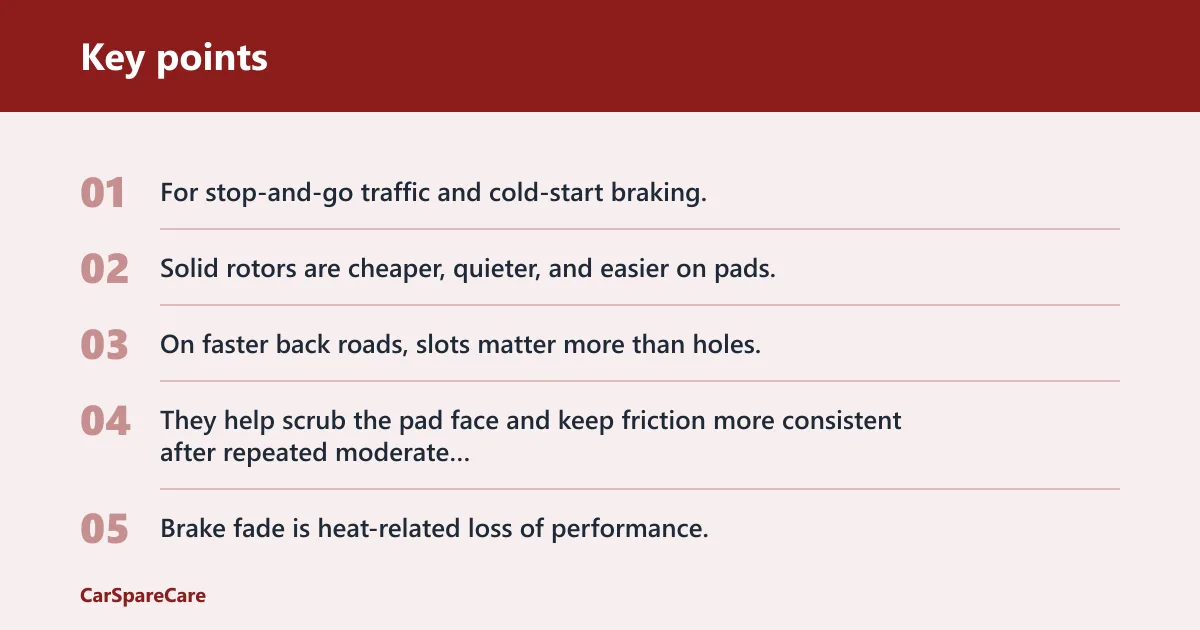
For stop-and-go traffic and cold-start braking, neither drilled nor slotted rotors usually shortens stopping distance in a way most drivers will notice. Solid rotors are cheaper, quieter, and easier on pads, which is why they remain the best value for most commuter cars.
Spirited street driving
On faster back roads, slots matter more than holes. They help scrub the pad face and keep friction more consistent after repeated moderate stops, while drilled holes add little unless wet-weather cleanup is a real issue.
Mountain descents
Heat is the problem on long downhill runs. Brake fade is heat-related loss of performance, and it shows up when pads and rotors get hot enough that pedal feel changes or stopping distance grows. Slotted rotors are the better option here because they handle repeated heating with less crack risk than drilled rotors, which is consistent with general brake-fade guidance from vehicle safety sources and rotor manufacturer minimum-thickness requirements that govern replacement before the disc gets too thin to shed heat safely.
Towing
Extra load means extra heat, especially on long grades. That makes fade resistance more important than appearance, and slotted rotors usually pair better with tow-friendly pad compounds. Drilled holes do not solve an overloaded braking system, and OEM replacement guidance still comes first: use the rotor type, thickness, and pad specification the vehicle calls for before chasing an aftermarket pattern.
Track days
Track use pushes rotor temperature far above normal street driving. Drilled rotors are more likely to crack under repeated high heat, while slotted rotors are the safer of the two for short-term performance use. Even then, pad selection and rotor thickness matter as much as slot pattern.
Do they stop better than solid rotors?
In normal street use, usually no. Drilled and slotted rotors do not automatically shorten stopping distances if the tires, pads, calipers, and rotor size are the same. The big difference is how well they manage heat, debris, and pad transfer after repeated hard braking.
Cold-start braking and normal traffic
On the first few stops of a commute, solid rotors and aftermarket drilled or slotted rotors often feel similar. Cold brakes are limited more by pad compound and tire grip than by rotor face pattern.
Heat, fade, and recovery after cooling
Under repeated braking, the gap opens. Slotted rotors usually recover better because they keep the pad face cleaner and more even, while drilled rotors can help with water shedding and surface cleanup but may lose durability when temperatures climb. For broader brake-system guidance, the main limit is often the tire and pad package rather than rotor pattern alone; once the tire contact patch or friction material is the bottleneck, a different rotor face does little to reduce stopping distance.
What are the downsides?
The main downsides are noise, pad wear, and shorter rotor life. Some drivers also chase rotor appearance and ignore the real limiter, which is often pad choice, caliper health, or a rotor that is the wrong size for the vehicle.
Noise and dust
Whistling, squeal, and groaning can happen with either drilled or slotted rotors, especially with a pad compound that is hard or dusty. A light whistle can be normal on aggressive pads, but loud grinding or a new constant squeal needs inspection. For a deeper breakdown of brake noise sources, see what causes brake squeal after installing new pads.
Pad wear and glazing
Slots can help reduce glazing by scraping the pad surface, but that same action can wear pads faster. Drilled rotors can also increase pad wear because the pad passes over edges and interrupted contact points more often than on a plain face.
Crack risk and inspection signs
Drilled-hole stress concentration is the key drawback. Under high heat, tiny cracks can start at the hole edges and grow outward. Look for hairline cracks radiating from holes, dark heat spotting, new pulsation, or a change in pedal feel after a downhill or track session. That crack risk is why drilled rotors are usually a poor match for sustained heavy heat.
Suppose a midsize SUV used for weekend towing starts to need longer stops after a 6% grade descent. If the pads are still within spec but the rotors show blue heat marks and shallow slots are packed with dust, the issue is heat management, not “sporty” styling.
A common first-timer mistake is fitting drilled rotors to a commuter sedan and then using the same soft, dusty pads that came off the stock setup. The result can be more squeal, faster wear, and no meaningful change in daily stopping distance.
Choose drilled if… / Choose slotted rotors if…
Choose drilled if you want the look, mostly drive on the street, and only occasionally need better wet-weather cleanup. Choose slotted rotors if you tow, drive mountain roads, or want the safer performance choice for repeated hard stops.
Choose drilled if…
- You want a street-focused upgrade and accept more noise and wear.
- You drive in wet conditions often enough to value surface cleanup.
- Your braking loads are moderate, not sustained downhill or track heat.
- You will inspect the rotors often for early cracking signs.
Choose slotted rotors if…
- You tow or haul and need better fade control.
- You drive hard on hills or on back roads with repeated braking.
- You want better pad transfer control and debris evacuation.
- You can tolerate some extra noise and pad wear for better heat handling.
Alternatives
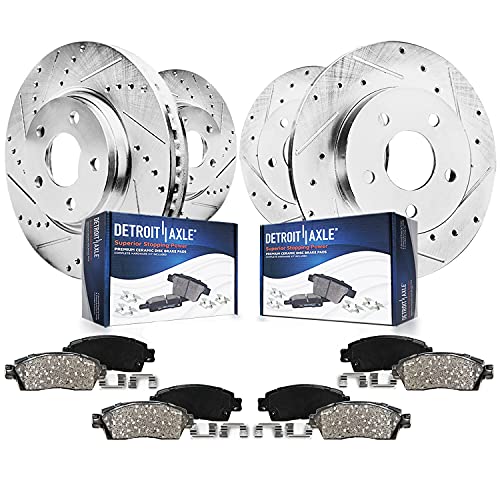
Detroit Axle brake kit is a full front-and-rear drilled-and-slotted package with ceramic pads. Based on the published details, it is aimed at owners who want a complete replacement set and a warranty-backed bundle, but the trade-off is the same as any drilled-and-slotted setup: more parts, more cost, and no guarantee of better everyday stopping if the vehicle does not need it.

Acinoparts brake kit combines front drilled-and-slotted rotors with ceramic pads and included hardware. It is a practical option for a truck or SUV owner who wants a matched kit, but the same caution applies: the pad compound and vehicle fitment matter more than the rotor pattern alone, and drilled surfaces still carry added crack and noise risk compared with solid rotors.
Should you buy it?
Buy drilled rotors only if you have a clear reason for them, such as wet cleanup, light street performance, or appearance, and you accept the higher chance of noise and wear. For most drivers, the stronger answer is either solid rotors for daily use or slotted rotors for towing, mountain driving, and track-heavy braking.
Before you buy, check OEM rotor specification, minimum thickness, and caliper clearance. If the rotor size, vented design, or pad compound is wrong, drilled holes or slots will not fix the braking problem.
Frequently asked questions
Are drilled and slotted rotors worth it on a daily driver?
Usually not. A daily driver mostly sees cold starts, light brake heat, and normal traffic, where solid rotors already do the job well. If your commute includes long descents or frequent hard braking, slotted rotors can make more sense than drilled ones.
What is the difference between drilled and slotted rotors?
Drilled rotors have holes through the disc face, while slotted rotors have grooves cut into it. Holes help with water and surface cleanup, while slots scrape away debris and pad material. In practice, slots are usually the more durable performance choice.
Do drilled rotors stop better than solid rotors?
Not in a way most drivers will notice on the street. Stopping power depends more on tire grip, pad compound, rotor size, and brake system condition. Drilled rotors mainly change surface behavior and wet-weather cleanup, not basic brake physics.
Are slotted rotors better than drilled rotors for towing?
Yes, in most cases. Towing creates heat, and slotted rotors usually handle repeated load better while helping keep pad transfer more even. Drilled rotors can work in light-duty use, but the crack risk rises when heat keeps climbing on long grades.
Do drilled and slotted rotors wear brake pads faster?
Often yes. The edges and grooves can remove more pad material than a plain rotor face, especially with softer or dusty compounds. That extra wear is part of the cost of better debris cleanup and, in some cases, better heat control.
Can drilled rotors crack?
Yes. The holes create stress concentration points, and repeated high heat can start small cracks at those edges. Early signs include hairline cracks around the holes, heat spotting, and a new vibration or pedal change after hard braking.
Are drilled and slotted rotors noisier than stock rotors?
Often yes. Light whistle, squeal, or a low groan can come from the rotor pattern, the pad compound, or both. If the noise is constant, loud, or gets worse with vibration, inspect the pads, calipers, and rotor thickness instead of assuming it is normal.
Do I need drilled and slotted rotors for normal street driving?
Usually no. Normal street driving rarely creates enough heat to need either pattern, and the extra cost can buy little beyond appearance. Most drivers are better served by quality solid rotors and a pad compound that matches the vehicle and commute.
Drilled and slotted rotors vs solid
Solid rotors are the lowest-cost, lowest-noise option and are usually the best fit for standard commuting. Drilled and slotted rotors make more sense only when heat, debris, or wet-weather cleanup is the real problem. If none of those apply, plain rotors are the better value.

Hi, I’m Melvin, an automobile engineer with extensive experience in automobile equipment. I currently work for a local automobile firm, where I specialize in the car parts industry. I’ve had the opportunity to collaborate with seasoned inspectors, gaining invaluable hands-on experience that goes beyond just theory.
My passion for automotive care started at a young age, which led me to create CarSpareCare. Through CarSpareCare, I share the knowledge and skills I’ve acquired over the years to help others navigate the world of car maintenance and repairs.
My goal is to provide practical tutorials, essential safety advice, and the latest industry insights so that anyone—whether a beginner or an expert—can confidently tackle their automotive projects.

