
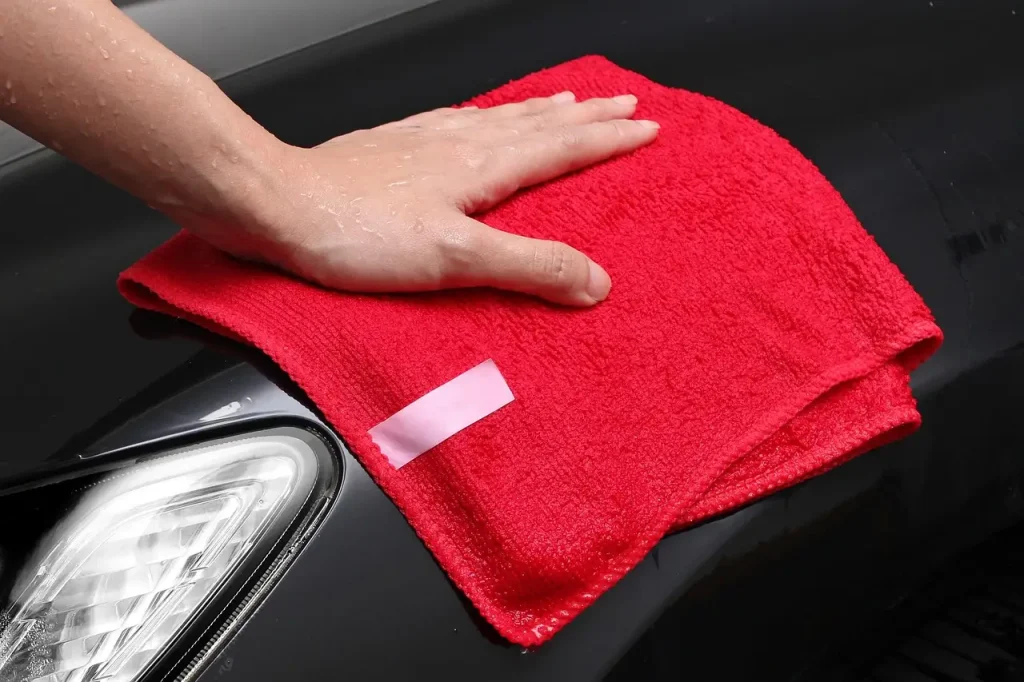
Red paint that looks dull is often contaminated or oxidized, not permanently faded; if the color changes after washing and polishing, you can usually restore it, but chalky paint that exposes primer or base coat needs repainting. Ignore it, and UV, heat, and dirt keep breaking down the clear coat until the finish looks patchy and repair costs climb. This guide shows how to tell contamination, oxidation, and real fading apart, then pick the right fix and prevention steps for your paint system.
This guide is part of our Automotive paint care guide series.
What causes red paint to fade

Red paint tends to fade fastest on panels that take the most sunlight, especially the roof, bonnet, and boot lid. UV radiation is the main driver, because it breaks down pigment and also ages the clear coat that protects it. That is why automotive finish guidance consistently prioritizes UV protection and regular washing to slow long-term degradation, especially on horizontal panels that see the most direct exposure. Fading is often uneven, so one panel can look chalky while a vertical door still looks strong.
UV exposure and panel orientation
Horizontal panels get more direct sunlight for longer periods, so they are often the first to show wear. That exposure pattern is why roofs, hoods, and deck lids usually age before doors and quarter panels. Parking under cover, in shade, or in a garage cuts exposure, and even part-time shelter helps. Dirt left on the surface can also hold heat and moisture against the finish, which speeds visible dulling. [3]
Oxidation, chalking, and dullness
Oxidation usually shows up as a hazy, chalky, or flat look on the surface. On a clear-coated red car, that haze may sit in the top layer rather than in the color itself, which is why polishing can help if the clear coat is still healthy. If the panel has gone matte, powdery, or rough, treat it as a warning sign. Coating manufacturers also note that once oxidation and film damage have progressed beyond the surface, polishing can improve gloss but cannot replace missing material or pigment.
Single-stage versus clear-coated paint
Modern red cars usually use a base coat and clear coat. Older vehicles may use single-stage paint, where color and protection sit in one layer. Single-stage red often oxidizes faster and can leave red residue on a towel, while clear-coated paint usually shows failure in the clear first. OEM and refinish guidance also distinguish between correcting the surface and restoring the coating system itself: if the color layer is gone, no amount of polishing can bring it back.
Is your red paint faded or just dirty?
Not all dull red paint is faded. Bonded contamination, oxidation, and true base-coat loss can look similar from a few steps away, but they behave differently when you wash, clay, and inspect the surface. A clean panel that still looks dull after careful decontamination is the one that needs closer judgment.
What bonded contamination looks like
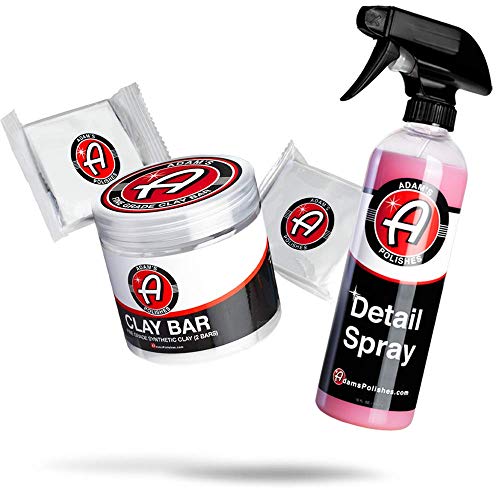
Contamination sits on top of the paint. Road film, fallout, tar specks, and brake dust can make red paint look flat and gray even when the color layer is fine. If the paint feels rough after washing, a clay bar or clay mitt with lubricant can remove bonded grime that washing leaves behind.
How to spot oxidation in the clear coat
Oxidation usually leaves the panel dull but still intact. The finish may improve after polishing, and a finishing polish often restores gloss on mild cases. If the surface looks hazy rather than patchy, and no primer is showing, the clear coat may still be repairable.
Signs the colour layer may be beyond correction
True fade is harder to fix at home. If the red looks uneven even after decontamination, the paint is chalky in spots, or primer and undercoat are visible, polishing will not bring the color back. At that point, the panel likely needs refinishing rather than more aggressive abrasion.
Red paint recovery checklist
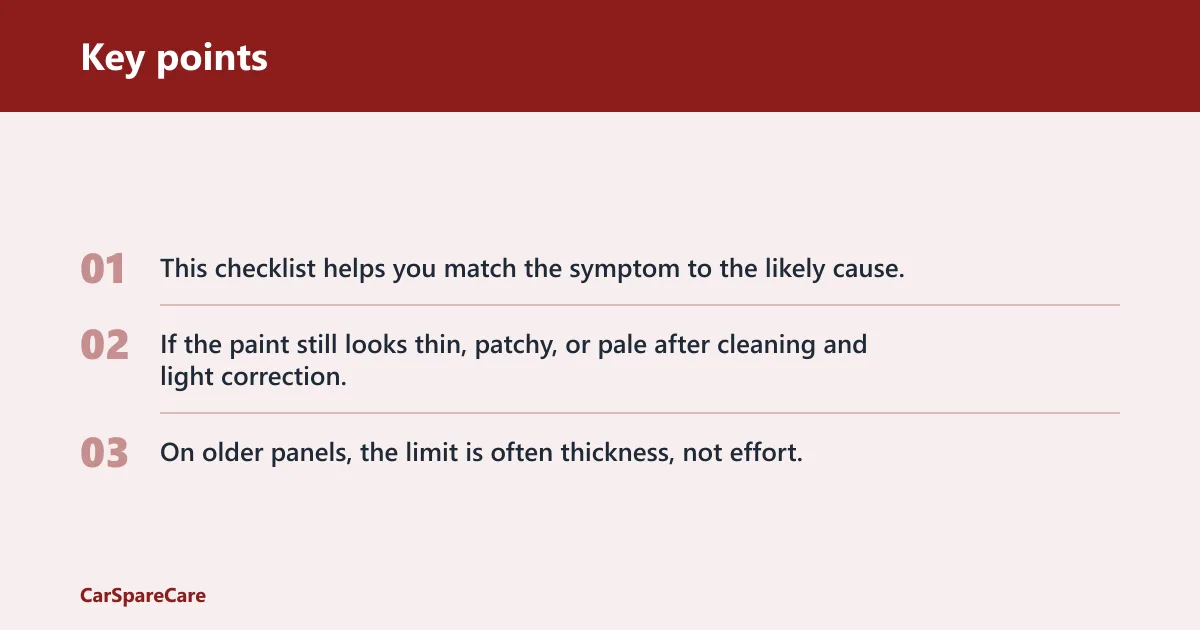
This checklist helps you match the symptom to the likely cause, then choose the safest home step. If the paint still looks thin, patchy, or pale after cleaning and light correction, stop before you remove more clear coat. On older panels, the limit is often thickness, not effort.
| Symptom | Likely cause | Paint system or verification step | Safe home remedy | Warning |
|---|---|---|---|---|
| Chalky roof or bonnet | UV oxidation in the clear coat | Clear-coated; confirm with a light test spot on the worst area | Wash, clay, then try a finishing polish on a test spot | Stop if the panel stays matte or the clear coat looks thin |
| Dull but smooth panels | Light oxidation or worn protection | Clear-coated; check whether gloss returns after decontamination | Clean thoroughly, then apply polish and sealant | Do not assume polish will fix true colour loss |
| Rough feel after washing | Bonded contamination | Towel transfer test: if a microfiber picks up grime after a normal wash, decontaminate | Use a clay bar or clay mitt with lubricant | Clay removes contamination, not oxidation or fade |
| Red colour on towel | Single-stage paint or severe pigment breakdown | Single-stage likely; confirm with a small towel transfer test and inspect adjacent trim edges | Use only mild cleaning and very light polishing | Heavy correction can worsen thinning and expose more material |
| Patchy fade on horizontal panels | Uneven UV exposure | Compare roof or bonnet readings to a nearby vertical panel before correcting | Correct the worst area first, then protect all panels | Expect vertical panels to look better than roofs and bonnets |
| Gloss returns but colour stays weak | Base coat has faded under a still-correctable clear coat | Light test spot improves gloss but not colour saturation | Use the least aggressive polish and add protection | Do not keep polishing if the pigment itself is gone |
| Swirls plus dullness | Washing marks and mild oxidation | Clear-coated; verify with an unobtrusive test spot before compounding | Two-bucket wash, clay, then a finishing polish | Abrasive pads can cut through thin clear coat if overused |
| Thin clear coat risk | Age, previous polishing, or factory low film build | Paint depth gauge shows low or inconsistent readings versus adjacent panels | Measure paint depth if possible and stay conservative | Aggressive compounding can break through the clear coat |
| Primer visible at edges | Clear coat failure and true paint loss | Edge readings are risky; confirm loss across the panel before any correction | Protect the area and plan for respray | Home polishing will not restore missing material |
Wash and decontaminate it first
Start with a pH-neutral car shampoo and a two-bucket wash method. That reduces the chance of stripping remaining protection or dragging grit across the paint. After washing, decontaminate the panel before any polish or sealant, because bonded dirt can make the surface look worse than it is.
pH-neutral shampoo and the two-bucket method
A pH-neutral formula is the safer choice for routine washing because it cleans without being overly harsh on wax, sealant, or ceramic maintenance layers. Use one bucket for wash solution and one for rinse water, with grit guards if available. Wash from top to bottom, and rinse the mitt often. If you are deciding between wash chemistry or maintenance products, this broader paint care product guide helps narrow the choice to the right cleaning and protection steps.
Clay bar or clay mitt use
Use clay only on clean paint, with proper lubricant. It removes bonded contamination that washing leaves behind, which helps you judge the real condition of the surface. It is not a cure for oxidation, and it will not restore pigment that has already faded.
Drying without adding marks
Dry with a clean microfiber towel and light pressure. Harsh towels, dragging motions, and dirty drying cloths can add new marks to already tired paint. A soft drying towel and blotting motion reduce extra marring before correction begins.
Can polishing bring the colour back?
Polishing can revive gloss and improve mild oxidation, but it cannot replace lost pigment. If the damage lives in the clear coat, a finishing polish or mild abrasive polish may help. If the colour layer has truly faded through, polishing only makes the surface brighter, not red again.
When finishing polish is enough
A finishing polish is the least aggressive correction step and often works when the panel is dull, lightly hazy, or marked by fine wash swirls. It is a good first try on red paint that still looks intact after cleaning and claying. Always start with a test spot before doing the whole panel.
When an abrasive polish is needed
If oxidation is heavier, a more abrasive polish may be needed to level the damaged top layer of clear coat. That can improve gloss, but only to the point that the clear coat still exists. Hand polishing is slower and gentler; a dual-action polisher with a foam pad gives more even correction for beginners.
Why a test spot matters
A test spot shows how far the paint will respond without overcorrecting the entire panel. It also helps identify thin clear coat before you commit to machine work. Suppose a bonnet looks chalky on the leading edge but still holds colour in the center; a small test area can show whether polishing helps or simply eats through what is left. If the test spot fails to improve gloss with light correction, stop there and move to protection or respray planning rather than escalating aggressively.
How to protect red paint after correction
Once the surface is clean and corrected, protection matters. Wax, sealant, and ceramic coating are not the same product, and they do not last the same length of time. All three should go onto clean, decontaminated paint if you want them to bond and perform properly.
| Protection product | Main benefit | Typical use | Limit |
|---|---|---|---|
| Wax | Short-term sacrificial layer | Quick refresh after polishing or washing | Shorter durability in hot sun |
| Sealant | Longer-lasting protection than wax | Routine protection for daily-driven red cars | Needs periodic reapplication |
| Ceramic coating | Higher durability and stronger UV resistance | Best for owners who can keep up with proper prep and maintenance | Needs clean paint before application and does not stop all fading |
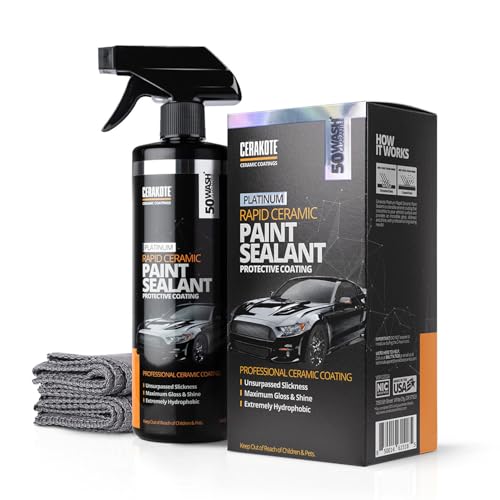
Wax is useful when you want a short-term sacrificial layer. Sealant usually lasts longer. Ceramic coating offers the strongest long-term protection of the three, but it still depends on prep, wash care, and regular maintenance. None of them works well over dirt, oxidation, or leftover residue.
How do you stop red car paint fading?
To slow fading, reduce UV exposure, wash correctly, and keep a protection layer in place. Shade and garage parking help most, but regular cleaning matters too, especially in hot, sunny climates where dust, pollen, and road film build up quickly. The goal is to keep the clear coat from aging faster than it needs to.
Shade, covers, and parking habits
Parking under cover is the simplest way to reduce UV damage. A garage is best, followed by shade and a good car cover used on a clean vehicle. For daily use, try to avoid long all-day parking in full sun, especially on cars with horizontal panels already showing fade.
Wash cadence in hot climates
Frequent washing helps keep the finish healthier because dirt and fallout are easier to remove before they bond deeply. In sunny areas, a careful wash every one to two weeks is a common maintenance cadence for a daily driver. Reapply wax, sealant, or coating topper as needed so the protection does not disappear before the next wash cycle.
What to avoid between washes
Avoid harsh detergents, abrasive towels, and cheap automatic car washes that can add marks or strip protection. Do not dry a dusty panel with a dry cloth. If you need a quick clean between washes, use proper detail spray and a soft microfiber towel instead of scrubbing the paint. For choosing the right protective finish after correction, compare gloss, durability, and maintenance needs before you buy.
When does faded paint need respraying?
Repainting becomes the right answer when the clear coat is too thin, missing, or cracked, or when the base coat has lost colour beyond what polishing can recover. If the panel stays chalky after decontamination and light correction, or if primer shows through, home repair has reached its limit.
Thin clear coat warning signs
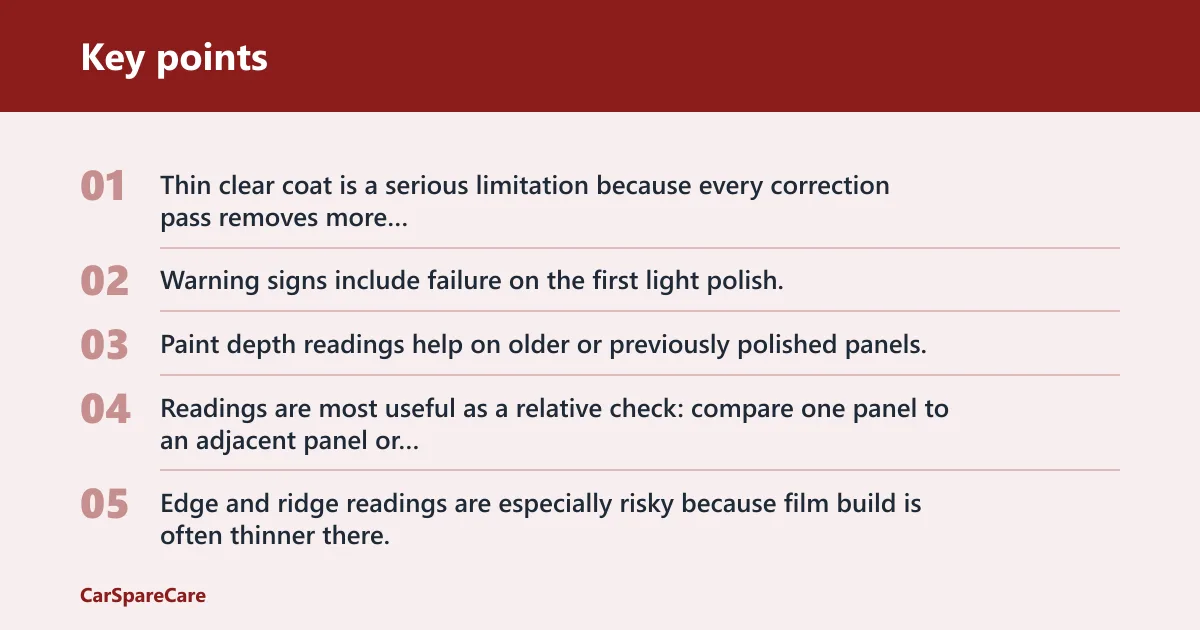
Thin clear coat is a serious limitation because every correction pass removes more material. Warning signs include failure on the first light polish, patchy gloss that will not even out, and visible history of repeated correction. Paint depth readings help on older or previously polished panels, but they are only useful if you can compare nearby areas. Readings are most useful as a relative check: compare one panel to an adjacent panel or an untouched section, because a low number on an edge, body line, or repainted area can mislead you. Edge and ridge readings are especially risky because film build is often thinner there, so use them as a caution flag rather than a target for aggressive correction.
Panels that will not respond to correction
If a bonnet, roof, or boot lid remains dull and pale after washing, claying, and a careful test spot, the colour layer may be too far gone. A common first-timer mistake is to keep polishing the worst panel harder, hoping the red will come back. That can make the clear coat thinner without improving the colour.
Why some repairs need a body shop
Body shop refinishing is the right fix when the damage is structural to the finish rather than cosmetic. That includes exposed primer, severe single-stage loss, clear coat failure, and large panels with uneven fade that will not match after correction. A respray can restore uniform colour where home methods cannot.
Frequently asked questions
Can faded red paint be restored at home?
Yes, if the problem is contamination or oxidation in the clear coat. Washing, claying, and polishing can bring back gloss and sometimes enough colour to look much better. If the paint is chalky, patchy, or showing primer, home repair will not restore lost pigment, and repainting is the better fix.
Why does red car paint fade faster?
Red pigment is highly vulnerable to UV exposure, and sunlight slowly breaks down both the pigment and the clear coat above it. Horizontal panels get hit hardest because they catch more direct sun. That is why roofs, bonnets, and boot lids often look faded before doors do.
When does faded paint need respraying: respraying is needed?
Respraying is needed when the clear coat has failed, the paint is too thin for safe correction, or the colour has gone beyond what polishing can recover. If you see primer, peeling, or a panel that stays chalky after cleaning and a test spot, a body shop is the right next step.
What protects red car paint from UV damage
Shade, garage parking, and a good surface protectant all help. Wax gives short-term protection, sealant lasts longer, and ceramic coating offers the strongest durability and UV resistance of the three. None of them works well unless the paint is first clean and free of bonded contamination.

Hi, I’m Melvin, an automobile engineer with extensive experience in automobile equipment. I currently work for a local automobile firm, where I specialize in the car parts industry. I’ve had the opportunity to collaborate with seasoned inspectors, gaining invaluable hands-on experience that goes beyond just theory.
My passion for automotive care started at a young age, which led me to create CarSpareCare. Through CarSpareCare, I share the knowledge and skills I’ve acquired over the years to help others navigate the world of car maintenance and repairs.
My goal is to provide practical tutorials, essential safety advice, and the latest industry insights so that anyone—whether a beginner or an expert—can confidently tackle their automotive projects.

