

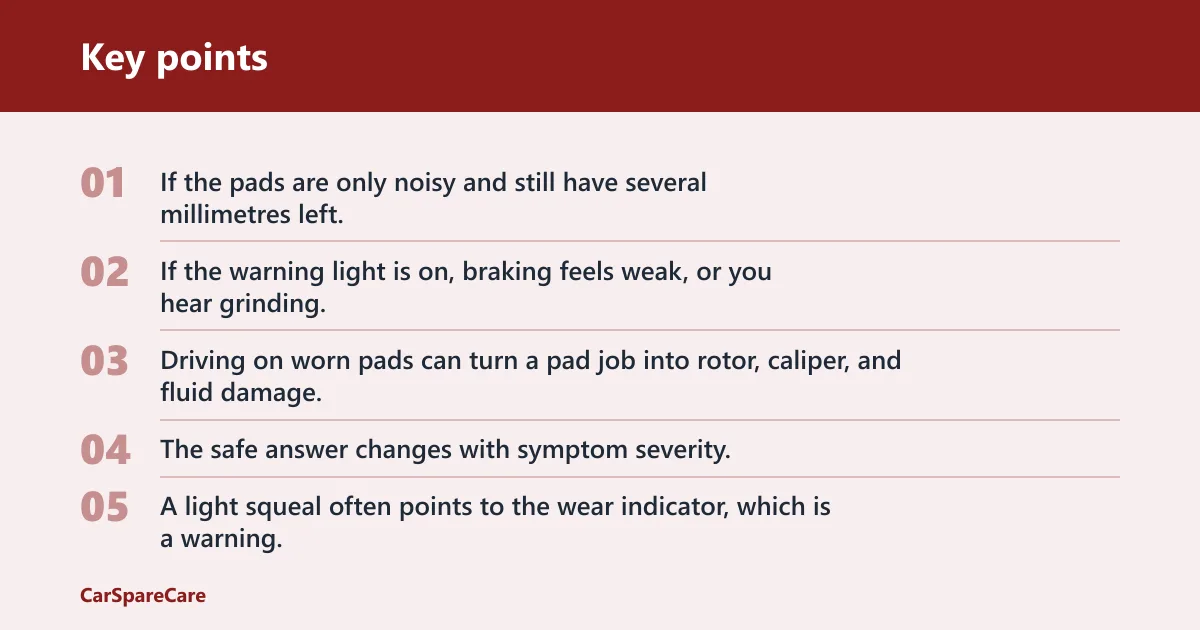
If the pads are only noisy and still have several millimetres left, you can usually drive a short distance to a shop. If the warning light is on, braking feels weak, or you hear grinding, stop and arrange a tow. Driving on worn pads can turn a pad job into rotor, caliper, and fluid damage, plus much higher repair costs.
The safe answer changes with symptom severity. A light squeal often points to the wear indicator, which is a warning. Grinding, pulling, smoke, or a brake warning light paired with abnormal braking means the system may already be in damage territory. Speed, hills, repeated braking, and extra load all shorten the safe window.
How to spot unsafe brake pad wear
Brake pads are friction material. New pads usually start at 10–12mm thick, and most manufacturers set the minimum safe thickness at 3mm for planning replacement. Below 2mm, driving is unsafe and the pads should be replaced immediately. At about 1 mm or less, the risk is no longer about waiting a little longer; it is about stopping the car before more parts are damaged.
Brake pad risk triage table
| Symptom | Likely internal damage | Recommended action |
|---|---|---|
| Light squeal | Wear indicator tab contacting the rotor; pads may be around 2–3mm thick | Book service soon. Short, careful driving to a shop is usually acceptable if braking still feels normal. |
| Visible pads under 3mm | Pad material is at or below the common minimum safe range; stopping distance can start to grow | Plan replacement now. Avoid high-speed trips, towing, and steep hills until repaired. |
| Grinding | Pad material may be gone or nearly gone; steel backing plate can contact the rotor | Stop driving and arrange a tow. Metal-on-metal contact can damage rotors fast. |
| Pulling while braking | Uneven pad wear, a sticking caliper, or heat-related braking imbalance | Do not keep normal driving plans. Drive only if needed to a nearby shop, and avoid hard braking. |
| Burning smell | Heat buildup, dragging caliper, or brake fade risk | Pull over if the smell is strong or brakes feel weak. Let the brakes cool, then get the system checked. |
| Brake warning light | Brake wear or another brake-system fault; fluid, sensor, or hydraulic issue may be involved | Do not ignore it when braking feels abnormal. Have the car inspected before further driving. |
| Tow it | Severe wear, grinding, weak braking, smoke, or repeated fade can mean the system is unsafe | Tow the car and do not continue on public roads. |
What changes as pads wear down?
As pads wear, the friction layer gets thinner and the pad has less material to absorb heat. That matters because the braking system has to work harder to slow the car, and the heat builds more quickly during repeated stops.

Friction material gets thin
Brake pads stop the car by pressing friction material against the rotor. When that material thins, the pad has less reserve for heat and wear. Around 3mm, most manufacturers treat the pads as due for planning replacement, and at 1mm or less they are unsafe.
The wear indicator is a metal tab built into many pads. When the pad gets low, the tab touches the rotor and creates a high-pitched squeal. That sound is not random noise; it is an early warning before critical wear.
Stopping distance grows
Stopping distance is the safety metric that matters most. A vehicle that stops in 100 feet with new pads may need 150+ feet with worn pads. The exact risk depends on traffic, hills, towing, load, road surface, and speed.
Say your commute includes stop-and-go traffic and a long downhill exit. Thin pads will heat faster there than on a flat, empty road, so the safe window shrinks even if the car still “feels fine” on the first few stops.
Heat builds faster
Thin pads shed heat less effectively, which raises the chance of brake fade. Brake fade is a temporary loss of braking power caused by heat buildup. It is more likely on hills and during repeated braking, especially when the brakes are already worn.
What damage can worn brake pads cause?
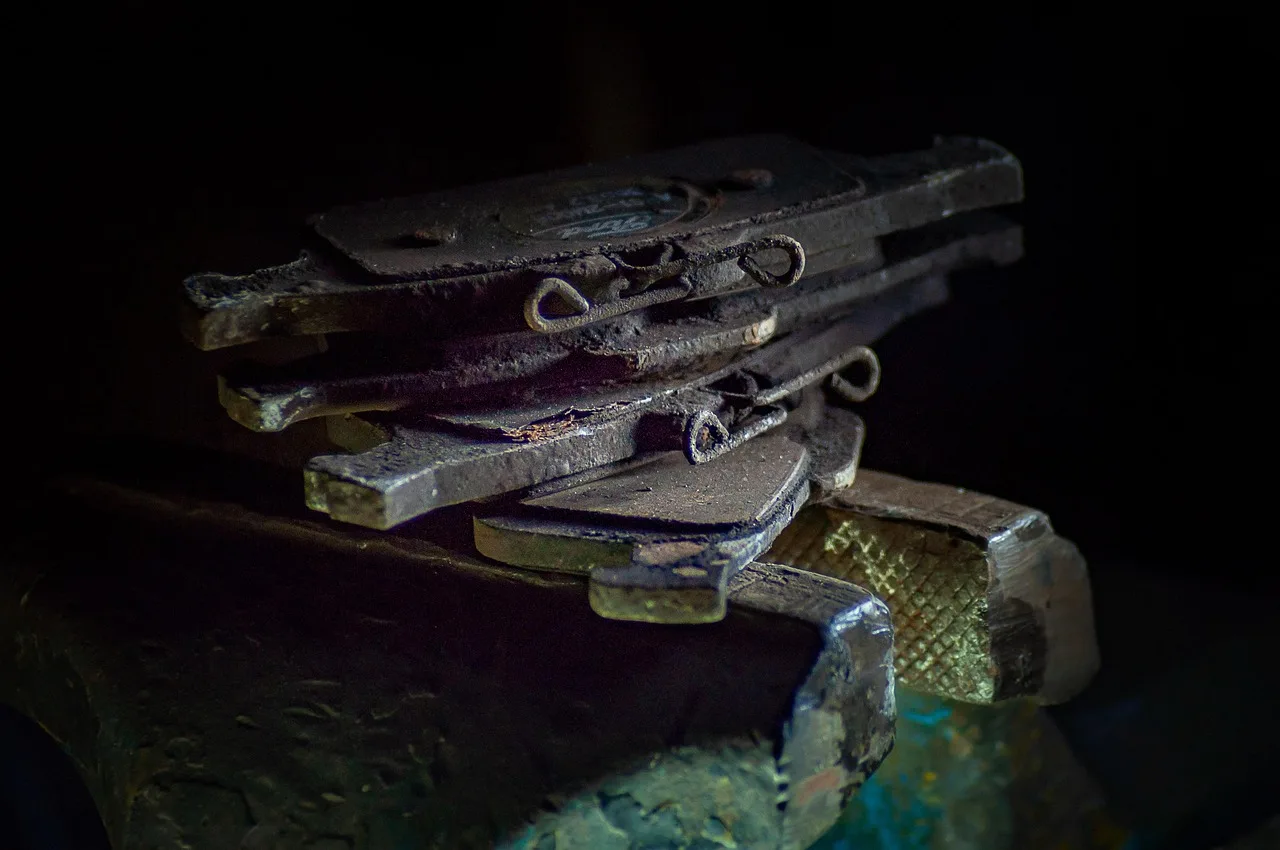
Worn pads can damage more than the pads themselves. The usual chain starts with thin friction material, then heat and extra travel, then rotor contact or caliper stress. Once metal parts start taking the load, repair cost rises quickly.
Rotor scoring and overheating
Once the friction material wears through, the steel backing plate can grind against the rotor. That can score the rotor surface and overheat it. Heat can also reduce usable rotor thickness and may contribute to warping or brake pulsation.
Rotors sometimes can be resurfaced if they still have enough thickness left, but worn or heat-damaged rotors may need replacement instead. That decision depends on measured thickness and visible damage, not on guesswork.
Caliper piston overextension and seal damage
Caliper pistons can overextend when pads are extremely worn. If the piston moves too far out, the seal can be stressed and heat can damage nearby rubber parts. That creates more than a pad problem; it can become a hydraulic and caliper repair.
Picture a front pad worn almost to the backing plate. The piston has to travel farther every time you press the pedal, and that extra travel can push the caliper into a bad range. If the seal is damaged, fluid loss and uneven braking can follow.
Sticking or dragging calipers
A caliper that sticks or drags keeps squeezing the rotor when it should release. That creates more heat, faster pad wear, and a stronger chance of brake fade. A dragging caliper can also make one wheel pull harder than the others during braking.
That kind of heat can damage pads, rotors, and caliper hardware at the same time. It is one reason a car that still moves under its own power may still be unsafe to keep driving.
When does wear become unsafe?
Wear becomes unsafe when the pad thickness is below 2mm, when grinding starts, or when braking performance changes. Around 3mm, the pads are in the “replace soon” range. At 1mm or less, the car should not be treated as road-ready.
A short timeline helps
At around 2–3mm, the wear indicator often squeals and gives about 1,000–2,000 miles of warning before critical wear. That is a warning stage, not a promise that every mile is safe. Heavy traffic, hills, and towing can burn through that margin much faster.
At below 2mm, the risk moves into unsafe territory. The pads can overheat quickly, stopping distance can grow, and the backing plate may start contacting the rotor. The car may still roll and steer normally, but that does not mean it is safe to keep driving.
Do not wait for these signs
Grinding, smoke, a strong burning smell, or a brake warning light with weak braking means the car needs immediate attention. The warning light can indicate brake wear or another brake-system fault, so it should not be ignored when braking feels abnormal.
How should you drive while you wait for service?
If the symptoms are mild, you can usually make a short, cautious trip to a shop. If you hear grinding, feel weak braking, or see a warning light with a brake problem, skip the road trip and arrange a tow. The goal is to avoid turning one repair into several.
Use this decision path
- Drive now only if the brakes feel normal, the pads are only mildly noisy, and the car still has several millimetres of friction material left.
- Drive to a shop if the squeal is steady, the pads are near 3mm, and braking still feels even. Keep the trip short.
- Tow the car if you hear grinding, feel pulling, smell burning, see smoke, or notice a brake warning light with poor braking.
Keep the trip short and boring
A common first-timer mistake is to assume a long, cautious route is safer than a short direct one. It is not. Choose the shortest route, keep speeds low, leave extra following distance, and brake gently so the pads and rotors do as little work as possible.
Avoid highway speeds, towing, steep hills, and repeated hard braking. Those conditions raise heat quickly and shorten the remaining safe window. If the car needs a downhill route or heavy traffic just to reach the shop, towing is the better call.
What happens during inspection and repair?
A proper brake inspection checks pad thickness, rotor condition, caliper movement, and whether the warning light points to wear or a separate fault. That matters because the visible symptom does not always match the full damage underneath.
How pad thickness is checked
Technicians measure the pad friction material directly. Some shops also compare the wear on inner and outer pads, because uneven wear can point to a sticking caliper or hardware issue. VehicleRuns says visible thin pads at around 1/8 inch mean replace them now.
Why rotors may need resurfacing or replacement
If the rotor is only lightly marked and still within its minimum thickness, resurfacing may be possible. If it is scored deeply, overheated, or too thin after machining, replacement is the safer path. Metal-on-metal contact makes this decision more likely.
Why calipers and brake fluid may also need attention
Extreme wear can overextend the caliper piston, and heat can damage seals. If a caliper is sticking or dragging, that fault has to be fixed or the new pads will wear too quickly. A brake warning light can also point to fluid or hydraulic problems, so the entire brake system may need checking.
Brake pad replacement alone can cost $150–$300 per axle. If pads plus new rotors are needed, the cost can rise to $400–$600 per axle. That is why early replacement is often cheaper than waiting for grinding to start.
Frequently asked questions
What happens if you keep driving with worn brake pads?
Thin pads keep wearing until the friction material is gone, which raises stopping distance and heat. If you keep driving past that point, the backing plate can contact the rotor, caliper parts can overextend, and repair cost can rise from a pad job to rotor and caliper work.
Is it dangerous to drive with worn brake pads?
Yes, once the pads are below the safe range or the brakes start to grind, pull, or fade. Around 3 mm, the car may still be driveable for a short trip. Below 2mm, driving is unsafe and the pads should be replaced immediately.
Can you drive with worn brake pads?
Only for a short, cautious trip if the pads are merely noisy and braking still feels normal. If you hear grinding, smell burning, see a brake warning light, or notice weak braking, do not keep driving. Arrange a tow instead.
How long can you drive on worn brake pads?
There is no fixed mileage that applies to every car. At around 3mm, you can typically drive 1,000–5,000 miles, but driving style and conditions matter a lot. Hills, towing, traffic, and repeated braking can cut that window sharply.
When do worn brake pads become unsafe?
They become unsafe below 2mm, and many manufacturers treat 3mm as the point to plan replacement. Grinding, smoke, strong burning smell, or a brake warning light with abnormal braking means the car should be inspected immediately and may need to be towed.
Should you tow a car with grinding brakes?
Yes. Grinding usually means the pad material is gone or nearly gone, and metal may already be contacting the rotor. That can damage rotors fast and may also overheat the caliper. A tow is the safer choice.

Hi, I’m Melvin, an automobile engineer with extensive experience in automobile equipment. I currently work for a local automobile firm, where I specialize in the car parts industry. I’ve had the opportunity to collaborate with seasoned inspectors, gaining invaluable hands-on experience that goes beyond just theory.
My passion for automotive care started at a young age, which led me to create CarSpareCare. Through CarSpareCare, I share the knowledge and skills I’ve acquired over the years to help others navigate the world of car maintenance and repairs.
My goal is to provide practical tutorials, essential safety advice, and the latest industry insights so that anyone—whether a beginner or an expert—can confidently tackle their automotive projects.

