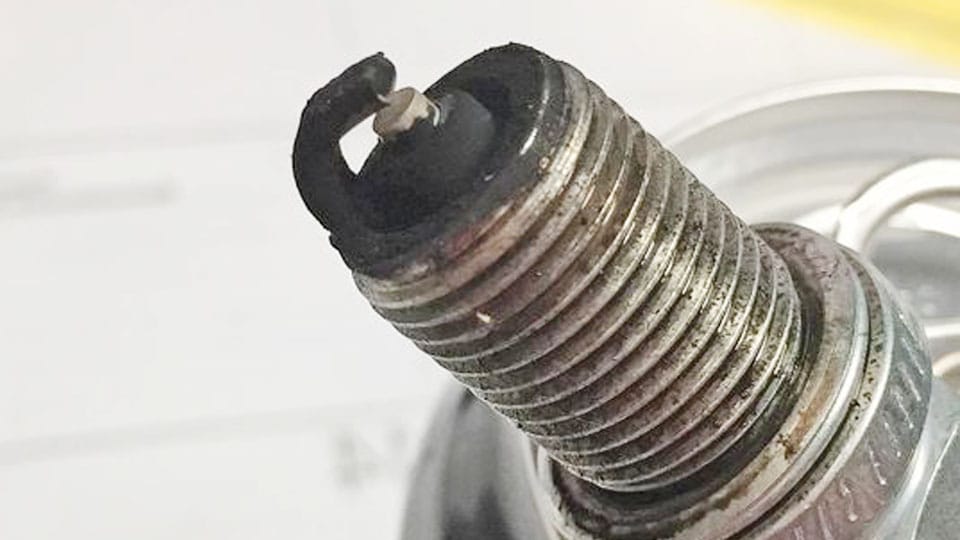
Single platinum spark plugs have platinum on the center electrode only; double platinum adds platinum to the ground electrode too, and that matters mainly in waste-spark ignition systems that fire plugs in both directions. Using the wrong type can shorten plug life or waste money on a more expensive plug you do not need. Use the owner’s manual or application chart first, then identify the ignition system and match the plug spec before you buy.
| Decision factor | Single | double platinum spark plugs | Winner |
|---|---|---|---|
| Ignition system fit | Commonly suited to coil-on-plug or electronic ignition | Preferred for waste spark ignition systems | Depends on system |
| Electrode plating | Platinum on the center electrode only | Platinum on both center and ground electrodes | Depends on wear pattern |
| Wear resistance in waste spark use | More likely to wear the unplated ground electrode faster | Platinum on both sides helps resist reverse polarity wear | double platinum spark plugs |
| Typical service life | About 60,000-100,000 miles | Often similar, but depends on application and ignition design | Tie |
| Price | Usually cheaper than double platinum | Usually costs more | Single |
| Best use case | When the manual or catalog calls for it on a compatible engine | When the engine uses waste spark ignition or the manual specifies it | Depends on engine |
| Checks before purchase | Part number, heat range, electrode count, application chart | Part number, heat range, electrode count, application chart | Tie |
Single vs double platinum: the core trade-off
What each plug has on the center and ground electrodes
The core difference is simple. Single platinum uses platinum on the center electrode only, while double platinum puts platinum on both the center electrode and the ground electrode. That extra plating matters when the ignition system makes both electrodes share wear.
The center electrode is the middle firing point. The ground electrode is the side strap the spark jumps to. If your engine fires the plug in a way that wears both sides, the extra platinum can help the plug last as designed.
Why ignition system type changes the answer
Ignition layout comes first because it decides which electrode wears fastest. In waste spark ignition, the plug fires on both the compression stroke and the exhaust stroke, and those events create positive and negative polarities at the electrodes. That is the main reason double platinum exists.
If the engine uses coil-on-plug or another electronic ignition setup that does not create the same wear pattern, single platinum is often the correct choice. The owner’s manual or application chart should outrank guesses based on price or appearance.
Platinum spark plug
How to read the comparison
This is not a universal “upgrade” chart. It is a fitment chart. The right answer depends on ignition design, electrode wear direction, heat range, and the part number listed for your engine.
Platinum plugs can last up to five times longer than nickel alloy plugs, and they may cost around $4-$8 each. That makes them a sensible replacement when the catalog calls for them, but not when the ignition system needs a different electrode layout.
Cost and durability
Single platinum usually costs less than double platinum because it uses platinum on one electrode instead of two. That lower price makes sense only when the engine does not need the second plated surface for wear control.
Double platinum costs more, but the extra cost is justified in waste spark systems. In those engines, the extra plating protects the side that would otherwise wear faster.
Fitment and wear pattern
Single platinum is a center-electrode solution. It is commonly matched to engines where the ground electrode does not take the same reverse polarity wear as in waste spark systems.
Double platinum is a wear-management solution. It exists because some engines fire the plug in both directions, so both electrodes can erode over time. That is the reason the second platinum tip is there.
Service life and heat range
Single platinum spark plugs are listed at about 60,000-100,000 miles, but that interval is not universal. Heat range still has to match the engine. A plug that is too hot or too cold can foul, run poorly, or disturb combustion behavior.
Do not let mileage alone decide the purchase. A correct heat range with the wrong electrode layout is still the wrong plug, and the right layout with the wrong heat range can still create trouble.
What is a single platinum spark plug?
A single platinum spark plug has platinum on the center electrode only. That design is commonly used where the ignition system does not demand platinum on the ground electrode, and it is often chosen for coil-on-plug or electronic ignition applications. The part number and application chart still decide the final fit.
Where single platinum usually fits
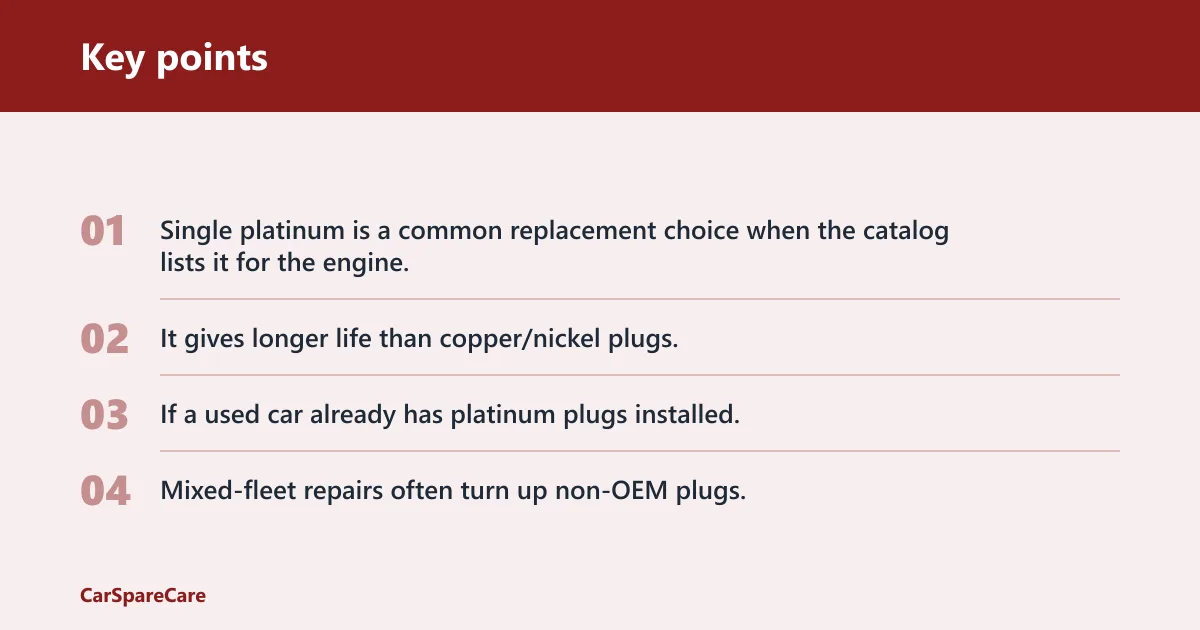
Single platinum is a common replacement choice when the catalog lists it for the engine. It gives longer life than copper/nickel plugs, which are generally used before 1980 and in some turbocharged or supercharged engines, without the extra cost of a second platinum pad.
If a used car already has platinum plugs installed, that does not prove the engine needs them. Mixed-fleet repairs often turn up non-OEM plugs, so check the catalog instead of matching what you pulled out.
What is a double platinum spark plug?
A double platinum spark plug has platinum on both the center electrode and the ground electrode. That second plated surface is there to resist wear in systems where spark polarity and firing direction make the ground side work harder. It is the plug style most often tied to waste spark ignition.
Why waste spark systems wear the plugs differently
Waste spark ignition fires the plugs during the compression and exhaust stroke. Because the spark can travel in positive and negative polarities, the electrodes do not wear evenly the way they do in every ignition system. That is why double platinum is recommended for those engines.
If a catalog calls for double platinum, that is not a luxury choice. It is a wear-matching choice. Using single platinum there can shorten service life on the side that needs the extra plating.
Why does waste spark ignition matter?
Waste spark ignition matters because it changes which electrode is doing the work. The system fires the plug on both the compression and exhaust stroke, so the spark sees reverse polarity wear on alternating events. That makes the ground electrode much more than a passive part.
In that setup, double platinum helps because both the center and ground electrodes have platinum surfaces. The result is less mismatch between the plug design and the way the engine actually fires it.
Say your 2002 V6 has a waste spark coil pack and the old plug shows uneven wear on the side strap. A double platinum replacement matches the ignition design better than a cheaper single platinum plug, even if both fit the thread size and reach.
Choose Single if… / Choose double platinum spark plugs if…
Choose Single if…
Choose Single if your engine uses coil-on-plug or another electronic ignition layout and the owner’s manual or application chart lists a single platinum plug. Choose it if the catalog specifies platinum only on the center electrode. Choose it when you want the lower-cost option and the ignition design does not call for a plated ground electrode.
Choose double platinum spark plugs if…
Choose double platinum spark plugs if your engine uses waste spark ignition. Choose them if the manual, application chart, or part number calls for platinum on both electrodes. Choose them when the engine fires plugs in both directions and you want the wear pattern to match the plug design.
What else should you check before buying?
The spark plug type is only one part of the fitment check. You still need the owner’s manual or application chart, the correct heat range, the exact part number, and the electrode count. That matters more than price or the look of the old plug.
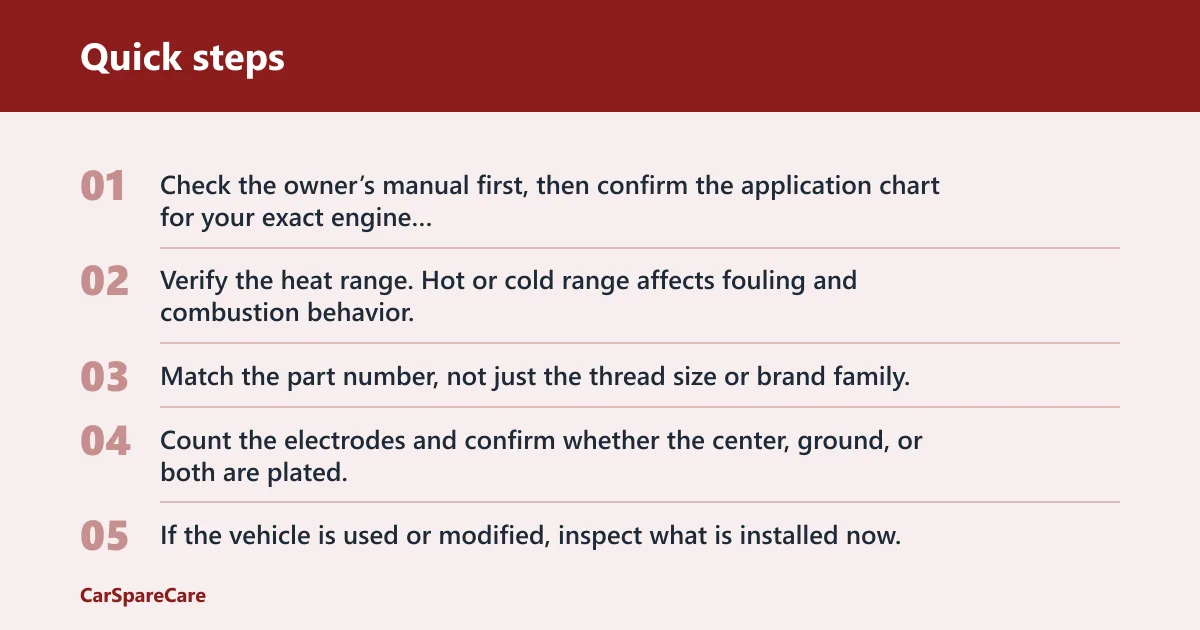
- Check the owner’s manual first, then confirm the application chart for your exact engine code.
- Verify the heat range. Hot or cold range affects fouling and combustion behavior.
- Match the part number, not just the thread size or brand family.
- Count the electrodes and confirm whether the center, ground, or both are plated.
- If the vehicle is used or modified, inspect what is installed now, but do not treat that as proof of correctness.
Picture a used sedan where the previous owner installed expensive plugs that “fit.” If the catalog calls for a different heat range, the wrong plug can still create rough idle or hard starting. The newest-looking part is not always the correct one.
Misfire symptoms such as rough idling, hard starting, and persistent misfiring can point to worn or incorrect plugs, but they can also come from coils, fuel delivery, or wiring. Ignoring worn plugs can lead to costlier engine damage later, so confirm the spec before you replace parts twice.
Frequently asked questions
What is the difference between single platinum and double platinum spark plugs?
Single platinum has platinum on the center electrode only. Double platinum adds platinum to the ground electrode too. That second plated surface matters most in waste spark ignition systems, where both electrodes can wear from alternating polarity. The correct choice depends on the engine, not on price alone.
Do I need single platinum or double platinum spark plugs for my car?
Check the owner’s manual or application chart for your exact engine. If the engine uses coil-on-plug or electronic ignition and the catalog lists single platinum, that is usually the right pick. If the engine uses waste spark ignition, double platinum is often specified.
Are double platinum spark plugs better than single platinum?
Not for every vehicle. Double platinum is the right design when the ignition system needs platinum on both electrodes, especially in waste spark applications. Single platinum is the correct and cheaper choice when the engine does not need the extra plated ground electrode.
Can I use single platinum spark plugs in a waste spark ignition engine?
Sometimes a single platinum plug will physically fit, but that does not make it the correct choice. Waste spark ignition fires plugs in both directions, so the ground electrode may wear faster without platinum on that side. Follow the application chart if it calls for double platinum.
How long do platinum spark plugs last?
Single platinum spark plugs are listed at about 60,000-100,000 miles, but actual service life depends on the vehicle and the exact application. Platinum plugs can last up to five times longer than nickel alloy plugs, yet heat range, engine condition, and ignition design still matter.
Will the wrong platinum spark plug cause misfires or hard starting?
It can contribute to both. Wrong heat range, incorrect electrode type, or the wrong part number can lead to rough idling, hard starting, or persistent misfiring. Those symptoms do not prove the plugs are the only fault, but they are a reason to verify fitment carefully.
What should I check besides the spark plug type before buying?
Check the heat range, part number, electrode count, and the owner’s manual or application chart. The engine’s ignition architecture matters too. A plug that matches the metal design but not the heat range or firing pattern can still be the wrong replacement.

Hi, I’m Melvin, an automobile engineer with extensive experience in automobile equipment. I currently work for a local automobile firm, where I specialize in the car parts industry. I’ve had the opportunity to collaborate with seasoned inspectors, gaining invaluable hands-on experience that goes beyond just theory.
My passion for automotive care started at a young age, which led me to create CarSpareCare. Through CarSpareCare, I share the knowledge and skills I’ve acquired over the years to help others navigate the world of car maintenance and repairs.
My goal is to provide practical tutorials, essential safety advice, and the latest industry insights so that anyone—whether a beginner or an expert—can confidently tackle their automotive projects.