
If brake squeak starts only after rain and disappears after 3 to 5 stops, it is usually surface moisture, not a fault; if it lasts longer, repeats in dry weather, or comes with grinding, check the brakes. A real brake problem can turn a cheap pad or hardware fix into rotor damage and longer stopping distances. This guide shows you how to sort harmless post-rain squeaks from warning signs using a symptom-based check path.
This guide is part of our Power steering and brake problems series.
How moisture makes the first stop noisy
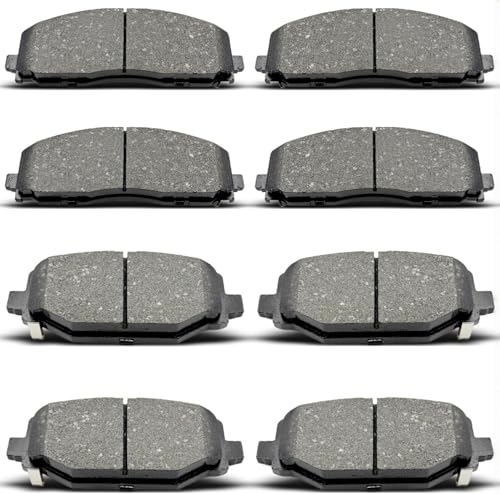


Rain, snow, ice, overnight condensation, and a car wash can leave moisture on brake pads and rotors. That thin film can make the first few stops noisy, then the sound fades as the parts dry and light surface rust is scrubbed off. That is consistent with common brake-service guidance from sources such as the Car Care Council and major brake manufacturers: brief noise after moisture exposure is normal, but persistent noise is not.
How moisture changes pad and rotor contact
Brake pads press against rotors with friction material that can sound different when wet. Surface rust on the rotor face is common after overnight condensation, and that rust layer can make the first stop louder than the next few. A few brake applications usually clear it. If the noise is only a light squeak and the brakes feel normal, moisture is the most likely explanation.
Why the first stop is often loudest
The first stop after rain often scrapes the most moisture and rust from the rotor face. That is why the squeak may be worst at the first red light, then fade on the next block. If the noise is gone after a short drive, moisture is the likely cause. If it remains after a few stops, or returns in dry weather, treat it as a possible brake issue rather than a weather effect.
Front brake versus rear brake clues
Front brakes do most of the work, so they often show noise sooner than the rear set. Front rotors usually pick up more water, road grit, and heat, especially after hard stops. If only one axle squeaks, the other axle may simply be drier or less worn. Noise location helps narrow the search, but it does not replace inspection if the sound persists.
Say your sedan squeaks only from the front left wheel after an overnight storm, then goes quiet after three gentle stops. That pattern fits moisture much better than a hard fault. If the rear axle stays silent, the front brake is the place to watch first.
How do you tell moisture from a fault?
Moisture squeak is short-lived, tied to wet weather or condensation, and usually fades after a few stops. A fault tends to stay around in dry weather, come back on most drives, or show up with grinding, pulling, pulsation, heat, or a burning smell. In general, any burning smell, smoke, severe pull, metal-on-metal grinding, or major braking loss means stop driving and inspect the brakes immediately.
First-stop squeak that fades after a few brakes
If the noise is loudest on the first stop after rain and drops off within a few brake applications, that pattern points to wet pads or light rotor rust. Moisture can build up on brake pads and rotors after precipitation, and rain can leave brakes squeaking until they dry out. Brake manufacturers and safety organizations generally describe this as a temporary condition when the brakes otherwise feel normal.
Squeak that stays after drying
If the brakes squeak after several dry stops, the cause is less likely to be simple moisture. Worn pads, rotor scoring, low-quality pad material, missing hardware, or a caliper problem may be involved. A squeak that appears in dry weather is worth a closer inspection, especially if it happens on most drives instead of only after rain or a car wash.
Squeak plus pulling, grinding, or pulsation
Noise plus pulling, grinding, or a pulsating pedal is a warning pattern, not a normal wet-brake quirk. A stuck caliper can pull the car to one side, and grinding after brake work can point to hardware trouble or worn friction material. Those signs call for inspection before more driving, and severe braking loss or metal-on-metal contact means stop immediately.
Post-rain brake squeak triage table
This table separates a normal wet-brake squeak from patterns that need inspection or a stop-driving response. Use the whole symptom set, not just the noise.
| Symptom pattern | Likely cause | Safe next step | Stop-driving warning signs |
|---|---|---|---|
| First-stop squeak after rain, then quiet after 3 to 5 stops | Moisture on pads and rotors; light surface rust | Drive gently and use a few normal stops in a safe area | Noise that turns into grinding, pulling, burning smell, or smoke |
| Squeak lasts beyond 3 to 5 stops but only happens after wet weather | Residual moisture, pad glaze, or mild hardware noise | Inspect pads, rotors, and hardware soon | One-wheel heat, worsening pull, or major braking loss |
| Squeak returns in dry weather or on most drives | Pad wear, rotor scoring, caliper drag, or missing shims/hardware | Schedule inspection; check pad and rotor condition | Grinding, pulsation, or a burning smell |
| Squeak plus burning smell or smoke | Dragging pad, stuck caliper pin, or caliper that is not releasing | Stop and inspect before more driving | Smoke, severe pull, or wheel too hot to touch safely after a short drive |
| Squeak plus pulling to one side | Stuck caliper, seized slide pin, uneven pad wear, or brake drag | Do not keep driving normally; inspect immediately | Strong pull, steering correction needed, or stopping distance increase |
| Squeak plus pulsation in the pedal or steering wheel | Rotor variation, scoring, or uneven pad contact | Inspect rotors and pad wear | Vibration, grinding, or braking loss |
| Squeak plus grinding or metal-on-metal noise | Worn pads, backing plate contact, or damaged rotor surface | Stop driving and inspect now | Any metal-on-metal sound or major braking loss |
| Post-brake-job squeal in dry weather | New pads still bedding in, missing anti-squeal hardware, or poor pad choice | Follow break-in guidance and inspect installation if it persists | Noise that turns into grinding, heat, or reduced stopping power |
How to dry wet brakes safely
Drying wet brakes is usually simple: use gentle, repeated stops in a safe area and let the friction clear the moisture. Do not test them with hard braking unless the sound points to a real fault. If the noise is paired with heat, odor, or poor stopping, inspect first.
- Find an empty road or parking lot with room to stop smoothly.
- Make a few gentle slow stops instead of one hard stop.
- Listen for the sound to fade after each application.
- Check for pulling, vibration, or odor after the noise quiets down.
- Stop and inspect if the squeak stays, worsens, or changes.
When to avoid hard braking
Hard braking is not the answer when the squeak appears to be moisture only. It can add heat to already damp brakes and make noise worse. Riding the brake can also create too much pressure and excessive temperatures, which can reduce brake effectiveness. If any burning smell, smoke, severe pull, grinding, or obvious loss of stopping power appears, stop driving and inspect the brakes.
A common first-timer mistake is to mash the pedal at the first squeak after a car wash. A better move is a few gentle stops in a parking lot. If the sound shrinks quickly, that supports a moisture pattern rather than a fault.
Why new brakes squeak after installation
New pads and rotors often need a break-in period after installation. During that period, the pad face and rotor face seat against each other, and a little noise can happen. Gentle, slow stops in an empty parking lot are the usual way to help that process along. Brake pad and rotor manufacturers commonly describe this as normal bedding-in behavior when the brakes otherwise operate normally.
Brake break-in for new pads and rotors
Brake break-in matters because pads and rotors need to mate evenly. If the system was just replaced, follow a gentle stop routine instead of demanding hard stops right away. That helps the pad material transfer evenly and can reduce early squeak. If squeal continues well beyond the expected break-in period, the installation, hardware, or pad choice should be checked.
Pad material differences: organic, ceramic, and high-metal content
Brake pads may contain graphite, copper, steel, and iron. Organic pads can contain rubber, glass, or resins. Ceramic brake pads are often presented as a less-squeaky option, while high-metal or cheap pads may squeal more, especially when wet or during break-in.
Low-quality pads and common noise patterns
Low-quality pads can squeal even when the brakes are dry. They may be more sensitive to heat, moisture, and rotor finish. If the noise started soon after a pad change and keeps returning in dry weather, pad material and pad quality deserve a look.
What if the squeak lasts or changes?
If the squeak does not fade, changes with speed, or comes with other symptoms, treat it as a fault until proven otherwise. Surface rust can disappear quickly, but rotor wear, scoring, caliper drag, and hardware trouble do not fix themselves. That is when inspection matters.
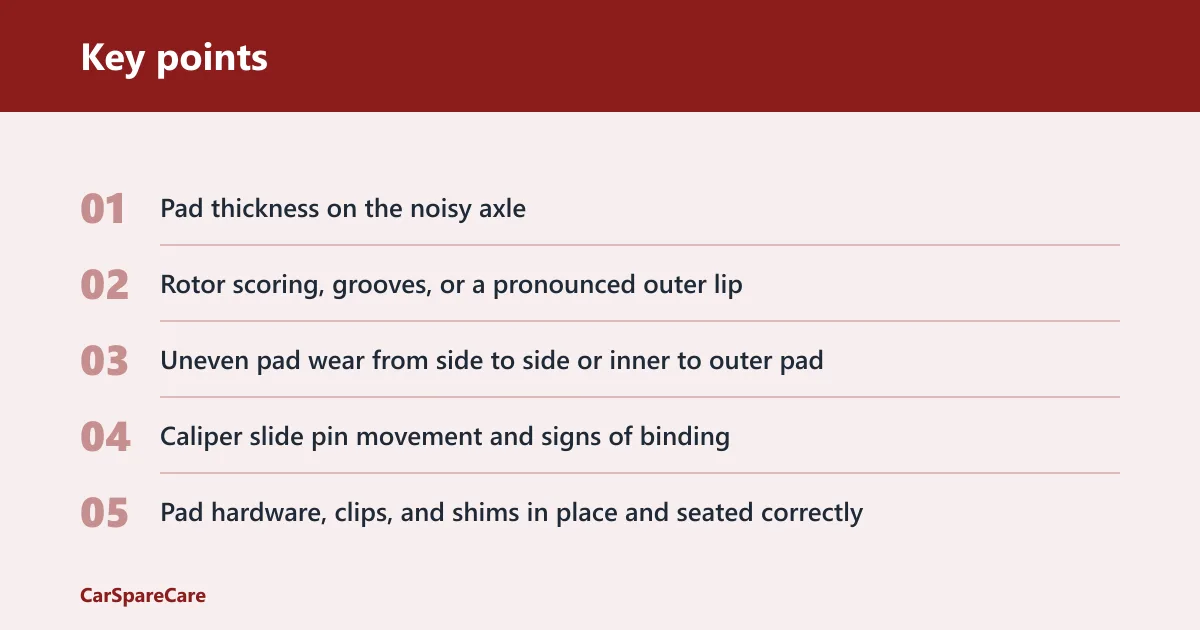
Inspection checklist for a persistent squeak
- Pad thickness on the noisy axle
- Rotor scoring, grooves, or a pronounced outer lip
- Uneven pad wear from side to side or inner to outer pad
- Caliper slide pin movement and signs of binding
- Pad hardware, clips, and shims in place and seated correctly
- Wheel temperature after a short drive, checked carefully only if safe to approach
- Rear parking brake drag if the noise is from the rear axle
Surface rust versus rotor wear or scoring
Light surface rust after moisture is normal and usually temporary. Worn rotors can create squeaking and harder stopping, and deeper scoring can change the sound into scraping or grinding. If the rotor face looks grooved or the pedal feels worse, inspection should move up the list.
Stuck caliper or caliper pins that do not move freely
Caliper pins must move freely. If one sticks, the pad can get jammed into the rotor at an angle. If both stick, heat and odor can appear. A stuck caliper can also create a pulling sensation when braking, which is a stronger warning than squeak alone. Some brake suppliers and safety guides also flag one wheel that is much hotter than the others as a common drag symptom.
Heat from towing, hills, or riding the brake
Heat from towing, mountain driving, or riding the brake can make squeaking worse and reduce effectiveness. Hot brakes can squeak and be less effective, so noise after a long downhill or a trailer pull should not be written off as rain noise. Let the brakes cool and inspect for drag.
One axle squeaks while the other stays quiet
If only one front wheel squeaks after rain, that side may have more rust, more moisture, or a pad that sits differently. If only the rear brakes squeak, look for rear pad wear, rear rotor rust, or a rear caliper that is not releasing cleanly. One axle being noisy while the other stays quiet is a clue, not a diagnosis.
Frequently asked questions
How to fix squeaky brakes
Start with the pattern. If the squeak appears only after rain and fades after a few stops, dry the brakes with gentle braking. If it stays in dry weather, inspect pads, rotors, and calipers. Grinding, pulling, pulsation, burning smell, smoke, or major braking loss means you should not keep driving normally.
How long should wet brakes squeak after rain?
Usually only for the first few stops. If the noise is still there after 3 to 5 stops, or it returns on dry roads, that is no longer a simple moisture pattern. At that point, you should inspect the pads, rotors, and calipers instead of waiting.
How do I tell if brake squeak is just moisture or a fault?
Moisture squeak is tied to wet weather, first-start mornings, or a car wash, then fades quickly. A fault keeps showing up, gets louder, or comes with grinding, pulling, pulsation, heat, or smell. The symptom mix matters more than the noise alone.
What causes brakes to squeak when wet?
Water can sit on the pads and rotors, and overnight condensation can leave surface rust on the rotor face. That changes how the pad contacts the rotor for the first few stops. Pad material also matters, because some compounds are noisier when wet than others.

Hi, I’m Melvin, an automobile engineer with extensive experience in automobile equipment. I currently work for a local automobile firm, where I specialize in the car parts industry. I’ve had the opportunity to collaborate with seasoned inspectors, gaining invaluable hands-on experience that goes beyond just theory.
My passion for automotive care started at a young age, which led me to create CarSpareCare. Through CarSpareCare, I share the knowledge and skills I’ve acquired over the years to help others navigate the world of car maintenance and repairs.
My goal is to provide practical tutorials, essential safety advice, and the latest industry insights so that anyone—whether a beginner or an expert—can confidently tackle their automotive projects.

