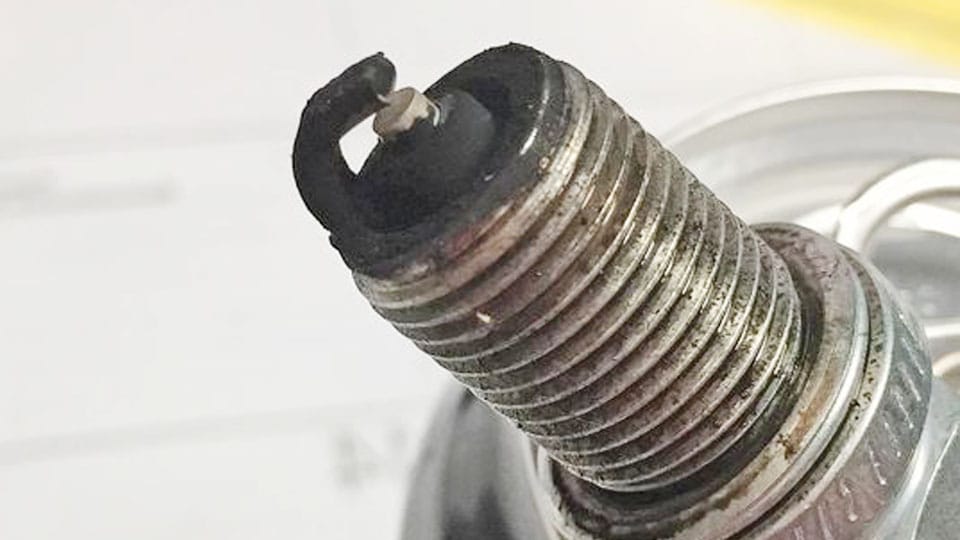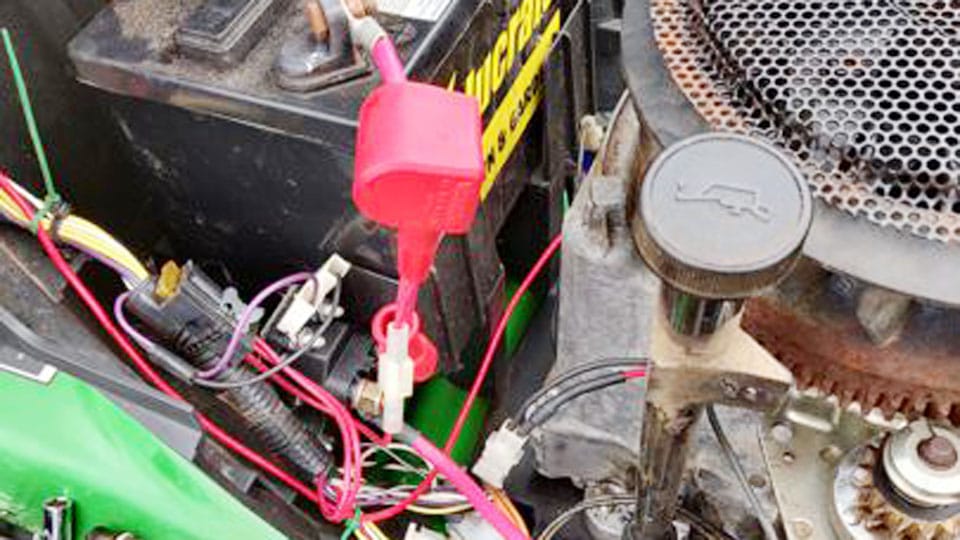
Carbon buildup on spark plugs usually comes from an overly rich air-fuel mix, weak ignition, excessive idling, short trips, or low compression. One plug points to a local fault; all plugs point to an engine-wide issue. Left unchecked, it can cause misfires, poor fuel economy, hard starts, and catalytic converter damage. OEM service manuals and ignition-reference guides from NGK, Denso, Bosch, and Delphi all emphasize reading the plug pattern alongside engine symptoms, not in isolation.
How to tell soot from oil on a plug


Black deposits on a spark plug are a sign of incomplete combustion. Dry, sooty carbon usually points to excess fuel, weak spark, or conditions that keep the plug too cool to self-clean. Oily black deposits point somewhere else: oil entering the chamber or the plug well. Repair databases such as Identifix-style case archives and OEM troubleshooting trees generally treat those as different fault paths because the test sequence changes.
Quick triage checklist
- Note whether the plug is dry soot, wet fuel, oily, or ash-like.
- Check whether the oil is in the plug well or on the firing end.
- Decide whether the problem is one cylinder or all cylinders.
- Match symptoms: hard cold start, fuel smell, smoke color, rough idle, or one-cylinder misfire.
- Then test the shared systems first, or the local cylinder parts if only one plug is affected.
Dry soot versus oily deposits
Dry black soot feels powdery or fluffy. It often wipes off with a finger or cloth. Oily fouling looks wet, sticky, or glossy, and it may leave a smear. That difference matters, because soot sends you toward mixture, ignition, or operating conditions, while oil sends you toward seals, crankcase ventilation, or internal wear.
Look at the firing end, the threads, and the plug well separately. Oil in the well can come from a valve cover gasket or tube seal, while oil on the firing end points more toward the combustion chamber. If you skip that split, you can replace good parts and miss the leak.
What the plug can tell you about combustion
A plug tells a story through color, texture, and wear. Black soot means the mixture or spark quality is off. Ash-like crust can point to oil additives, coolant contamination, or long-term oil use. Rounded electrodes, a damaged insulator nose, or heavy gap wear add more clues and may confirm the plug has been overheated or run too long. NGK and Denso plug-reading references both stress that heat range and deposit pattern need to be judged together.
Spark plug diagnosis matrix
Use the deposit shape, not only the color, to guide the first check. The table below separates soot from oil and shows how one-cylinder fouling differs from all-plugs fouling. That split is often the fastest way to narrow the fault, and it mirrors the decision trees used in OEM service manuals and ignition diagnostic references.
| Deposit appearance | Likely cause | Where to check first | Next action |
|---|---|---|---|
| Dry black soot | Rich mixture, weak spark, cold plug, short-trip use | Air filter, fuel trim inputs, plugs, coils, gap | Fix mixture or ignition fault, then replace plugs |
| Black wet oily deposits | Valve cover gasket leak, PCV problem, valve seals, rings, turbo seal | Plug well, PCV hoses, oil level, valve cover area | Repair oil source before fitting new plugs |
| Ash-like deposits | Oil burning, additive residue, long service intervals, some coolant leaks | Oil consumption signs, coolant loss, service history | Confirm the fluid source and inspect engine condition |
| One cylinder only | Local injector, coil, wire, plug wire, valve seal, ring, or compression issue | Swap test, cylinder-specific wiring, compression on that cylinder | Repair the local fault, then recheck the same plug |
| Fuel-wet plug | Injector leaking, choke stuck, no spark, dead coil, flooding after cold start | Fuel smell, injector balance, spark output, cold-start behavior | Correct flooding or ignition failure before restart attempts |
| All plugs fouled | Engine-wide rich running, restricted air, choke fault, weak ignition, heat range mismatch | Air supply, fuel pressure, sensors, carburetor settings, ignition system | Correct the shared cause before replacing all plugs |
What causes carbon deposits on spark plugs?
Carbon deposits on spark plugs usually come from too much fuel, too little spark, or operating conditions that never let the plug get hot enough to burn off residue. Rich running is the common cause, but sensor faults, injector problems, carburetor settings, and a restricted air supply can all push the engine in that direction. Bosch and Delphi ignition references also note that repeated misfire can mimic a fuel problem by leaving unburned fuel on the insulator.
Rich air-fuel mixture and fuel delivery faults
An air-fuel mixture is rich when fuel is high relative to air. That excess fuel does not burn fully, so soot forms on the plug. Sensor faults, such as bad input to the control system, can command extra fuel. On older engines, carburetor settings can be too rich. A failing injector can also dribble fuel into one cylinder, and OEM troubleshooting charts commonly flag that pattern when only one plug is black and wet.
A restricted air filter can have the same effect by cutting airflow. Fuel pressure issues can do it too, especially if the regulator or pump is out of range. On small engines, a choke stuck closed is a classic cause of black plugs because it keeps the mixture rich long after startup.
Restricted air supply and small-engine cases
Small engines need special attention. A lawn mower plug that keeps turning black may have a choke problem, a dirty air filter, or a carburetor set too rich for the engine’s load pattern. Those engines often run at low load and short intervals, which means the plug may never reach the self-cleaning temperature it needs.
Say your lawn mower starts, runs for ten minutes, then loads up and begins smoking. If the plug is dry black and the air filter is packed with debris, the first checks are the filter, choke linkage, and carburetor setting, not the plug itself.
Could ignition problems be the cause?
Yes. Weak spark can leave fuel unburned and create black deposits. A bad coil, plug wire, cap, or rotor can all contribute to misfire. The plug may look blamed, but the real issue is often spark energy or timing at the firing end. NGK, Bosch, and Delphi all describe plug fouling as a symptom that often follows the fault, rather than causing it.
Weak spark from coils, wires, cap, or rotor
A coil with low output may fire the plug weakly under load or when cold. Damaged plug wires can leak spark. On engines that use a distributor, the cap and rotor can crossfire or wear enough to reduce spark quality. Any of those faults can leave soot on the plug even when fuel delivery is normal.
Wrong plug gap and heat range
Plug gap matters because spark has to jump it cleanly. A gap that is too wide can stress the ignition system and may worsen misfire. Heat range matters too. A plug that is too cold runs cooler at the firing end and tends to collect deposits. The manufacturer-specified range is the starting point for engine-specific selection, and OEM manuals generally treat the specified heat range as non-negotiable unless the application has been changed deliberately.
Too hot is a different problem. A plug that runs too hot can promote pre-ignition and may contribute to engine damage. The goal is not the hottest plug that will fit; it is the correct range for the engine and its operating load.
How operating conditions change fouling
Operating pattern matters because plugs need heat to self-clean. Short trips, cold starts, long idle time, and light-duty use can keep the chamber too cool for long enough that soot builds up. The engine may be healthy enough to run, but not hot enough to keep the plug clean.
Short trips and cold starts
Repeated short trips are commonly reported as a cause of soot. The engine enriches fuel during cold start, and if you shut it down before full warmup, the plug never gets to the temperature where deposits burn away. That pattern can also affect idle quality and fuel economy.
Extended idling and low-load use
Long idle periods can foul plugs because chamber temperatures may stay low and combustion may be less complete. Low-load engines, including some mowers and generators, can show the same problem if they spend most of their time idling or lightly loaded. The plug can look black even when the engine runs without obvious mechanical failure.
Picture a compact mower that is used for quick edging jobs and then parked after a few minutes. If the plug is dry black and the engine only sees short, light-duty runs, the deposit may be a use-pattern problem rather than a broken part.
When oil is the real cause
Oil contamination has a different fix path from dry carbon soot. The common causes include a leaking valve cover gasket, a clogged PCV valve, worn intake valve seals, bad piston rings, and a failing turbocharger. The key is to find whether the oil is outside the cylinder, inside the cylinder, or in the plug well.
Valve cover gasket leaks and plug wells
If oil is pooled in the spark plug well, start above the cylinder head. A valve cover gasket leak can fill the well and contaminate the plug boot. That does not always mean the engine is burning oil. It may only mean the plug cannot fire cleanly because oil is insulating or shorting the connection. This is also the place to think about why one spark plug keeps failing while the others look normal.
PCV faults and crankcase ventilation
Not every vehicle uses the same crankcase ventilation layout, but most modern engines do have a PCV system or integrated crankcase ventilation strategy. If the PCV valve clogs or the hoses are blocked, crankcase pressure can rise and oil mist may move where it should not. Check the PCV valve and the hoses first, then inspect the rest of the ventilation path.
The repair sequence is simple: identify whether oil is leaking inside the cylinder or from above, then inspect and clean the crankcase ventilation hoses and the PCV valve according to service guidance. Do not force debris through the hoses with improvised tools; service literature generally calls for inspection, replacement, or proper cleaning methods that avoid damage.
Ring wear, valve seals, and turbo seals
Worn intake valve seals can let oil infiltrate the intake path and foul plugs. Bad piston rings can let oil seep into the combustion chamber. A failing turbocharger is also a common culprit when oil is on spark plugs. Those faults tend to leave oil on the firing end, not only in the well.
Can low compression foul plugs?
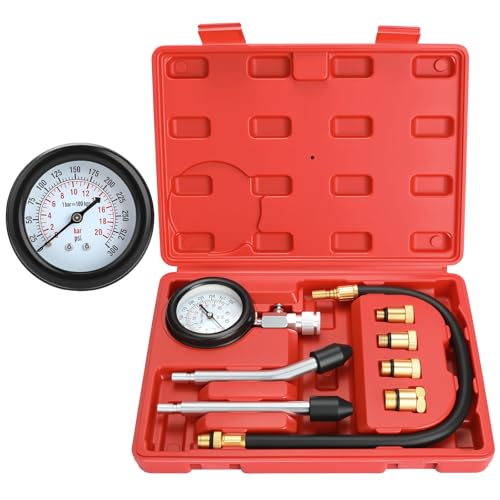
Low compression can worsen fouling because the air-fuel charge may not seal or burn well. That leaves more unburned fuel and more residue on the plug. Mechanical condition matters here, because an ignition or fuel fix may help only a little if the cylinder cannot make enough pressure. OEM service manuals commonly recommend compression testing or leak-down testing when a cylinder keeps misfiring after ignition and fuel checks pass.
Why poor sealing worsens combustion
Low compression can come from worn rings, leaking valves, or head sealing problems. The result is weak burn quality and easier fouling. One cylinder with low compression often shows repeated plug fouling even after new plugs and a good tune-up.
When to use a compression or leak-down test
If the same cylinder fouls again after the fuel and ignition checks, a compression or leak-down test becomes relevant. Those tests help separate a tune problem from a mechanical one. If all plugs are fouled, start with shared systems first. If only one cylinder is affected, focus on that cylinder’s sealing and delivery path.
How to inspect spark plugs the right way
Inspect the plug before replacing it. Look at the firing end, the insulator nose, the electrode shape, and the threads. Compare all plugs side by side. A single bad cylinder often stands out, while engine-wide fouling points to a shared cause.
- Remove the plug and note where contamination sits: well, threads, or firing end.
- Check whether the deposit is dry soot, wet oil, or an ash-like crust.
- Look at the insulator nose for cracks, heavy staining, or fuel wetting.
- Inspect the center and ground electrodes for wear or heavy rounding.
- Compare the worst plug with the others to see whether the issue is local or engine-wide.
- Fix the cause first, then install new plugs or reuse clean ones only if they remain in spec.
A common first-timer mistake is to clean one black plug and reinstall it before checking the injector, coil, or air filter. That can hide the real fault for a few days, then the misfire returns. Root-cause repair comes first.
Frequently asked questions
Why do spark plugs get black and sooty?
Black soot usually means incomplete combustion. The most common reasons are a rich air-fuel mixture, weak spark, cold running, or too much idle time. If the soot is on every plug, look for a shared engine problem. If only one plug is affected, focus on that cylinder first.
Why is one spark plug black but the others are clean?
One black plug usually points to a local fault such as a bad injector, weak coil, leaking valve seal, worn ring, or compression problem in that cylinder. A plug well filled with oil is different from oil on the firing end, so inspect both areas before replacing parts.
Can a spark plug cause a misfire if it is carbon-fouled?
Yes, but the plug is often the result rather than the root cause. Carbon can make firing harder and create a misfire, especially under load or cold start. Still, the real fault is often rich fueling, weak ignition, or a mechanical problem that keeps fouling the plug again.
What does a fuel-wet spark plug mean?
A fuel-wet plug usually means the cylinder is getting fuel but not lighting it off. Common causes include no spark, a dead coil, a flooded cold start, or a leaking injector. A strong fuel smell and a hard cold start often go with this condition, especially on one cylinder.
When should I do a compression test for a fouled plug?
Do a compression or leak-down test after the basic fuel and ignition checks fail to explain the fouling. It becomes more important when the same cylinder keeps returning black, oily, or wet after repairs. Low compression can make even a good tune look bad and keep the plug dirty.

Hi, I’m Melvin, an automobile engineer with extensive experience in automobile equipment. I currently work for a local automobile firm, where I specialize in the car parts industry. I’ve had the opportunity to collaborate with seasoned inspectors, gaining invaluable hands-on experience that goes beyond just theory.
My passion for automotive care started at a young age, which led me to create CarSpareCare. Through CarSpareCare, I share the knowledge and skills I’ve acquired over the years to help others navigate the world of car maintenance and repairs.
My goal is to provide practical tutorials, essential safety advice, and the latest industry insights so that anyone—whether a beginner or an expert—can confidently tackle their automotive projects.