
Brake fluid is commonly replaced every about 2–3 years, or sooner if the fluid test is poor, service history is unknown, or the pedal feels soft. Old fluid absorbs water, drops its boiling point, and speeds corrosion that can hurt braking and lead to expensive hydraulic repairs. This guide tells you when to replace it now, when to schedule it soon, and when to inspect the brake system first.
Brake fluid decision matrix


This matrix sorts the decision into three paths: replace now, inspect or pressure-test soon, or follow the schedule. Use the oldest valid clue first. Age matters, but so do symptoms, recent brake work, and whether the vehicle has documented service history.
| Condition | Replace now | Inspect/pressure-test soon | Follow schedule |
|---|---|---|---|
| Age of fluid | Older than 2–3 years with no record of service | Near the interval, or time-based service is due soon | Within the maker’s listed time or distance limit |
| Unknown history | Yes, if you cannot confirm the last flush | Only if symptoms are absent and testing is normal | No, not until the history is known |
| Pedal feel | Soft, spongy, sinking, or red warning lamp with unsafe feel | Mild change in feel, or inconsistency that appears under load | Normal pedal with no warning signs |
| Fluid condition | Fail or near-fail on testing | Dark or dirty fluid that needs confirmation | Clear fluid with a recent documented service |
| Driving use | Repeated downhill braking, towing, or heavy braking use with old fluid | Hard use without symptoms yet | Light use and the service is still current |
| Recent brake repair | Yes, if calipers, hoses, lines, or ABS hydraulic parts were opened | Inspect if the repair history is partial or the pedal changed | Only if the system stayed sealed and the schedule is current |
| Low-mileage vehicle | Yes, if the service is time-based and the interval has passed | Yes, if the car sits for long periods and history is incomplete | Only if the time limit has not expired |
Say your sedan has 18,000 km on it, but the brake fluid has no service record and the reservoir looks dark. That is not a reason to top up and move on. It is a reason to test the fluid and plan a flush if the result is poor or near-fail.
When should you replace brake fluid?
Replace brake fluid when age, service history, or pedal feel points to a problem. Start with the interval, confirm the manual second, and use symptoms as the last check. If the fluid tests bad, or the history is unknown, replacement moves to the front of the line.
Use age first
Brake fluid is a hydraulic fluid that transfers pedal force to the calipers and other brake parts. It is hygroscopic, which means it absorbs moisture from air and through hoses over time. Kal Tire recommends changing it every 40,000 km or every two years, and says to replace it any time tests show a fail or near-fail.
Use service history second
Documented service can keep a car on schedule. Unknown history changes the decision fast, because you cannot prove how much moisture has entered the fluid or whether a proper bleed was done. If the last flush cannot be confirmed, replacement is usually smarter than guessing.
Use symptoms as a final check
A soft or spongy pedal, a pedal that sinks, or reduced consistency under heat can point to fluid issues, air in the system, or a leak. Moisture contamination lowers boiling point, and even a few drops of water can hurt the system. That can lead to vapor bubbles, poor braking feel, and corrosion in hydraulic parts.
How often should brake fluid be changed?
The common rule is every 2 years or around 40,000 km, but the owner’s manual wins every time. Some vehicles list a time-based interval regardless of mileage, which matters for cars that drive little but age a lot. Premium European models often use a 2-year brake fluid interval.
The common 2-year or 40,000 km rule
That rule helps when the manual is unclear or when the vehicle is due for general maintenance. It is not universal. DOT 3, DOT 4, DOT 5, and DOT 5.1 are not interchangeable without checking the vehicle requirement, and the service interval can vary with the fluid type and brake system design.
Why the owner’s manual comes first
The manual may call for a different time or distance, and that instruction overrides a generic rule. Some makers tie brake fluid service to age rather than mileage because moisture exposure continues even when the car is parked. That is why a low-mileage car can still need a flush.
Time-based intervals on low-mileage cars
A car driven only a few thousand kilometres a year can still need fresh fluid on time. Moisture enters through hoses and air space in the reservoir, not just through use. Picture a commuter car that only sees weekend trips and sits outside through wet seasons; the mileage stays low, but the fluid still ages.
What brake fluid condition can and cannot tell you
Check the reservoir against the MIN and MAX marks, but do not judge safety from color alone. Dark fluid is a clue, not proof. Topping up a low reservoir is not a replacement, because it does not remove moisture, air, or debris from the hydraulic circuit.
Reservoir level and MIN/MAX marks
The brake fluid reservoir should sit between the minimum and maximum fill lines. The exact location is usually shown in the owner’s manual. A low level can point to pad wear, a leak, or fluid loss, but a normal level does not prove the fluid is healthy.
Dark fluid as a clue, not proof
Old fluid can look dark or dirty, and that should prompt further inspection. But color alone cannot confirm condition or safety. A clear-looking reservoir can still hold moisture-contaminated fluid with a lower boiling point and a hidden corrosion risk.
When a top-up is not enough
Top-up works only for level correction. It does not restore the fluid chemistry or remove moisture already absorbed into the system. If the fluid is old, the correct fix is a flush or bleed, not a cap-full of new fluid poured into the reservoir.
When symptoms mean inspect the brake system
Symptoms do not always mean the fluid itself is the only problem. A soft pedal can come from air in the system, a leaking caliper, worn hoses, a master cylinder issue, or old fluid. If the pedal feel changes, inspect the whole hydraulic system before assuming the reservoir is the only issue.
Soft or spongy pedal
A soft or spongy pedal often points to air, moisture, or fluid that has lost boiling margin. Kal Tire links contaminated fluid to a low or dropping pedal, and notes that a spongy pedal can appear especially after repeated braking downhill. If the pedal feels unsafe, stop driving and inspect the system.
Pedal sinking or changing feel
A pedal that slowly sinks can suggest a hydraulic problem rather than a simple level issue. That can come from a leak in a caliper, line, hose, seal, or the master cylinder. If the pedal becomes less consistent during repeated stops, pressure testing and a brake inspection should come before more driving.
Heat-related fade on long descents
Repeated downhill braking raises heat in the brake fluid and surrounding parts. If the fluid has absorbed water, its boiling point drops and vapor bubbles can form under load. That can make the pedal feel weak or inconsistent exactly when the brakes need to be most reliable.
What happens during a brake flush or bleed
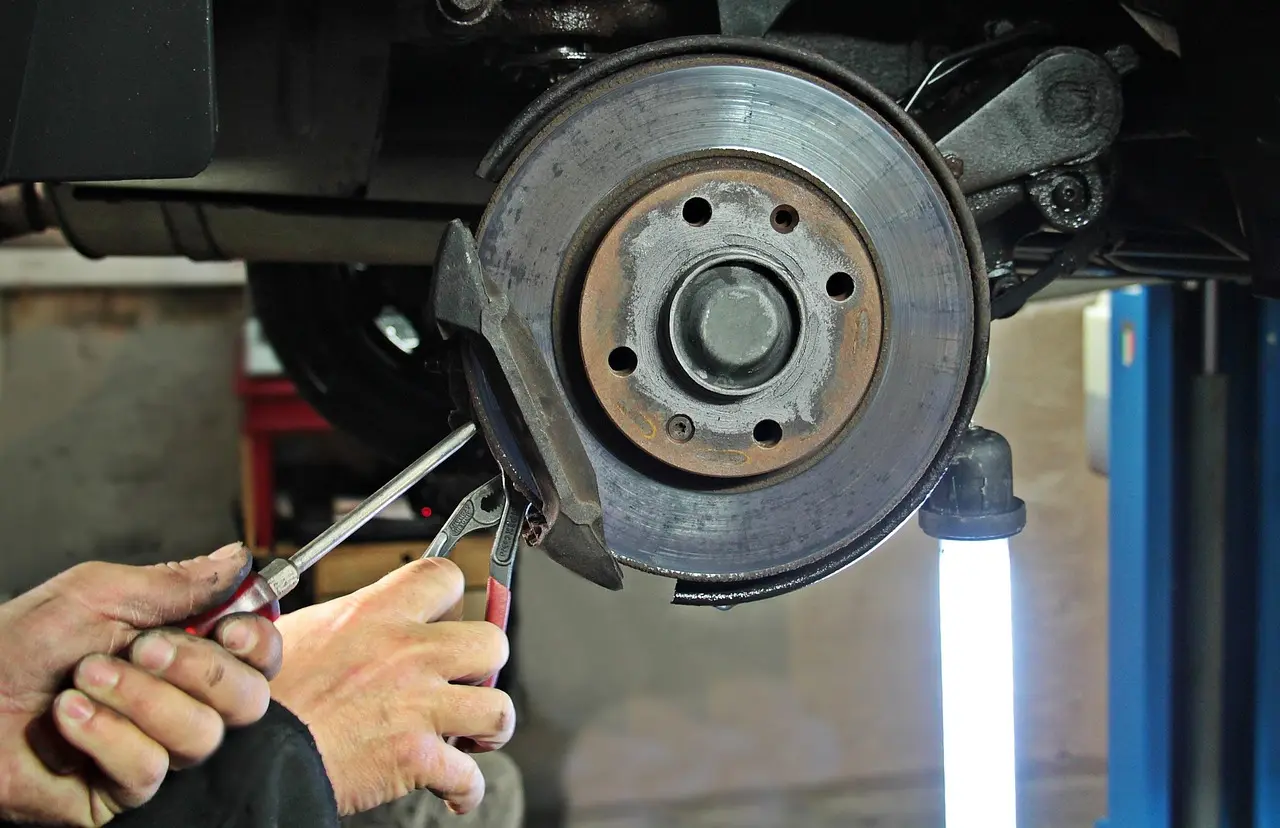
A proper brake fluid replacement is usually a flush or bleed rather than a top-up. The service removes old fluid from the hydraulic circuit and helps expel air. It must be done carefully, because the brake system depends on a sealed path through the master cylinder, lines, hoses, calipers, and ABS hydraulic parts.
Why calipers must be bled
Brake fluid sits in the whole hydraulic circuit, so fresh fluid has to move through the calipers and related lines. That is why a replacement involves opening bleed points and pushing old fluid out in sequence by wheel or caliper. Leaving fluid trapped in one section defeats the point of the service.
Why the reservoir must stay full
The reservoir should not be allowed to run dry during service. If it does, air enters the system and then the pedal can feel soft or unstable. FixMyCar warns not to let the brake pedal go right to the floor, because that can disturb seals and pull the system into a harder bleed job.
Why the correct sealed fluid matters
Use the exact fluid type the vehicle requires and keep the container sealed until use. Brake fluid absorbs moisture from air, so an opened container can be compromised before it ever reaches the car. Wrong-fluid mixing can create compatibility problems and may damage seals or reduce braking performance.
- Confirm the required DOT rating in the owner’s manual.
- Keep the reservoir above the minimum mark throughout the job.
- Bleed the calipers in the recommended wheel sequence.
- Use clean, sealed fluid from an unopened container.
- Check pedal feel after the bleed, then recheck the level.
FixMyCar describes a DIY flush starting with the rear wheel on the passenger side. That sequence may fit some vehicles, but bleeding order is not universal. Always confirm the maker’s order for the specific car, especially if the ABS layout or caliper arrangement is unusual.
Brake fluid after repairs and severe use
Brake fluid should often be replaced after major brake work, even if the mileage is low. The same source recommends replacement during major brake work. That matters because opening the system can introduce air and moisture, and some service jobs change the fluid path through lines, hoses, seals, or ABS-related parts.
After caliper, hose, or line work
If a caliper, brake line, or hose was replaced, a bleed is usually required. The repair opens the hydraulic circuit, which can let air in. In that case, old fluid may be displaced, but the system still needs proper bleeding before the car returns to service.
After ABS-related service
ABS hydraulic components can trap old fluid and air in passages that are harder to clear than a simple wheel bleed. That is why the correct service procedure matters. If the ABS unit or related plumbing was opened, pressure bleeding or a maker-specific sequence may be needed.
After repeated downhill or towing use
Severe use changes the timing. Repeated downhill braking, towing, or long heavy stops can heat the fluid and expose weak fluid sooner. If the car has been worked hard and the pedal feel changed, inspect the system now instead of waiting for the calendar interval.
Suppose a crossover has just had front calipers replaced, but the brake fluid is only 18 months old. The repair still justifies a bleed, because air can enter during the work. The age does not cancel the need for service.
Frequently asked questions
When should you replace brake fluid in a car?
Replace it when the service interval has passed, the fluid test fails or nearly fails, the service history is unknown, or the pedal feels soft or sinks. A documented schedule is best, but a poor test result or recent brake work can move the job up immediately.
How often should you replace brake fluid?
A common interval is every 2 years or 40,000 km, but the owner’s manual comes first. Some cars use a time-based schedule even with low mileage. Premium European vehicles often list a 2-year interval, so low use does not automatically mean the fluid is still good.
When should you flush brake fluid?
Flush brake fluid when age, test results, or symptoms show it is due, and after brake repairs that opened the hydraulic circuit. A flush is also wise after repeated downhill braking, towing, or any service that introduced air into calipers, lines, hoses, or ABS hydraulic parts.
Can you replace brake fluid on your own?
Yes, but only if you can follow the vehicle’s bleeding sequence, keep the reservoir full, and use the correct sealed fluid. The job is safety-critical. Letting the reservoir run low, using the wrong fluid, or pressing the pedal to the floor can create new problems.
Can you replace brake fluid without bleeding?
No. A true replacement requires bleeding or flushing the hydraulic circuit so old fluid and any air are removed. Topping up the reservoir only changes the level. It does not clear moisture, does not restore boiling point, and does not fully protect the brake system.
How often should you replace brake fluid Honda?
Use the Honda owner’s manual first, because the schedule can vary by model and market. If the manual is unavailable, a 2-year interval is a sensible fallback for many vehicles, but it should not override a printed maintenance schedule or a failed fluid test.

Hi, I’m Melvin, an automobile engineer with extensive experience in automobile equipment. I currently work for a local automobile firm, where I specialize in the car parts industry. I’ve had the opportunity to collaborate with seasoned inspectors, gaining invaluable hands-on experience that goes beyond just theory.
My passion for automotive care started at a young age, which led me to create CarSpareCare. Through CarSpareCare, I share the knowledge and skills I’ve acquired over the years to help others navigate the world of car maintenance and repairs.
My goal is to provide practical tutorials, essential safety advice, and the latest industry insights so that anyone—whether a beginner or an expert—can confidently tackle their automotive projects.

