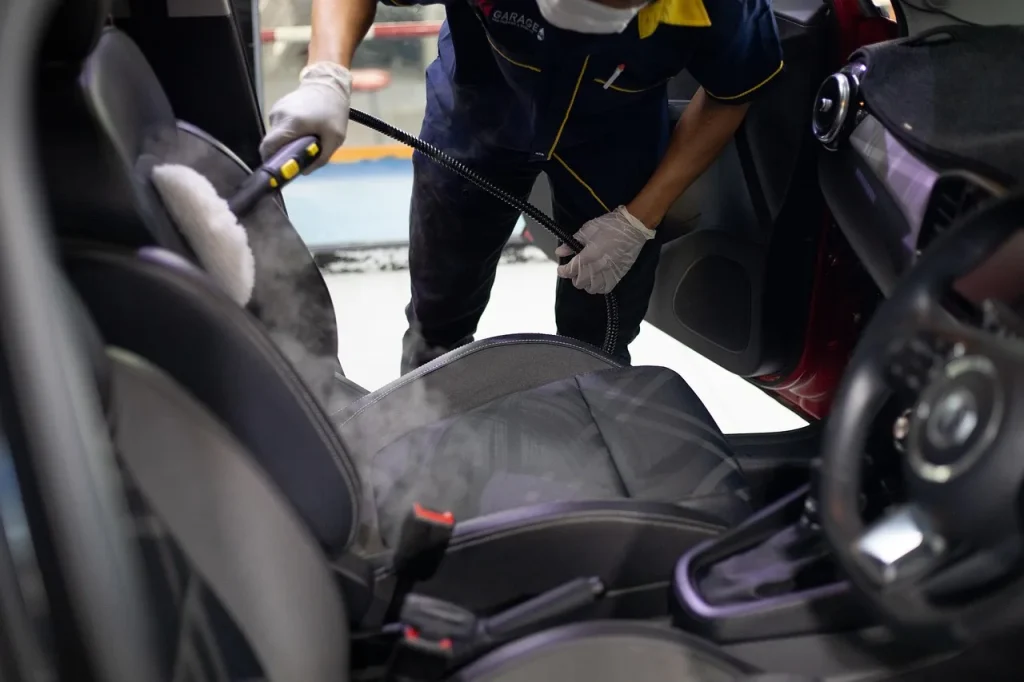
A car interior steam cleaner should have adjustable steam, enough heat to loosen grime without soaking trim, and attachments suited to leather, cloth, plastics, and seams. Steam cleaners used for detailing typically work in the 200°F-plus range, and manufacturers such as Dupray and McCulloch emphasize controlled use on hard surfaces and upholstery rather than saturation. Choose the wrong setup and you can over-wet headliners, leave water in switches, or waste time on weak steam that never lifts grime. Dupray Neat Plus steam cleaner product information and McCulloch MC1385 product information both frame the tool as a controlled cleaner, while Chemical Guys’ steam-cleaning guidance and Mothers’ interior-care guidance reinforce the same approach.
Best steam cleaner picks
The cleanest way to shop this category is by job size, not brand language. A handheld suits fast spot work, a canister suits longer detail sessions, and a fast-heating unit suits repeated use across seats, mats, and vents. The table below summarizes the real tradeoffs and adds the specs buyers usually need before choosing.
QUORVOGEN 1050W handheld: best for quick detail jobs
This compact handheld fits the owner who wants a low-cost way to clean seams, vents, and small plastic areas without dragging a canister around. Based on the listed specs, the 235°F output and 9-piece kit give it enough reach for basic interior work, but the small format means more refills and less sustained steam for larger seats or carpet areas. Steam temperatures in the mid-200s are common on compact units like this, but the real advantage is focused use, not soaking power. Chemical Guys’ steam-cleaning guide and Mothers’ interior-care guidance both emphasize short, controlled passes.
The main strength is portability. The main drawback is stamina: a small tank is easier to carry, but it also means more stop-and-start work if you are doing a full cabin, and handheld units are less forgiving when you need long passes over a larger panel.
McCulloch MC1385: best for longer runtime
This is the better fit if you want a canister steam cleaner for repeated interior jobs, larger cabins, or more attachment variety. The 23 accessories and larger tank make it a stronger choice for carpets, mats, and extended sessions, and Car and Driver has regularly included the MC1385 in its broader steam-cleaner recommendations. For detailing, that extra runtime matters because carpets and floor mats need more than a quick burst to loosen embedded debris. McCulloch’s manual and product guidance also support its use across multiple surfaces with the correct attachments.
The drawback is size and setup time. A canister is less convenient in tight parking spaces, and the extra bulk matters if you only want a fast pass on vents, switches, and a few seat seams.
Dupray Neat Plus: best for fast heat-up
This is the pick for buyers who want quick readiness and refill-on-the-go use. The listed 90-second heat-up and unlimited steam with refilling make it practical when you are moving across several surfaces, and the 17 accessories give you a broader detailing set than most handhelds. Dupray’s own documentation highlights the rapid ready time and refillable operation, which is useful when a job is broken into several short sections. Dupray’s product information also positions it for mixed-use cleaning where timing matters.
The drawback is that “unlimited” steam still depends on how you manage water and pace. It is better than a tiny handheld for longer work, but it still needs discipline around moisture, especially on screens, stitched seams, and porous fabrics.
Quick comparison
| Product | Badge | Best for | Price | ||
|---|---|---|---|---|---|
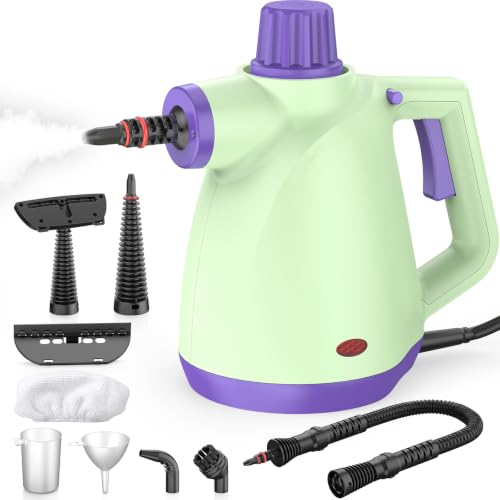 | 1050W Handheld Steam Cleaner with 9-Piece Accessory KitQUORVOGEN | Our pick | Handheld steam cleaner · 235°F · 9-piece kit | $19.97 Price as of 10 Nov 2026 | View |
 | McCulloch MC1385 Canister Steam CleanerMcCULLOCH | Also great | Canister steam cleaner · 23 accessories · car detailing | $218.00 Price as of 10 Nov 2026 | View |
 | Dupray Neat Plus Steam Cleaner for HomeDupray | Upgrade pick | Steam cleaner · 17 accessories · fast heat-up | $249.98 Price as of 10 Nov 2026 | View |
Use the comparison table to match the machine to the job, not just the price. For car interiors, the right pick is usually the one that balances steam control, attachment fit, and refill burden rather than raw output alone. If you want a broader comparison framework, see how to choose right car interior cleaning products and cleaning winter salt from car carpets.
How we chose
We compared the three listed models by four practical filters: attachment fit for car-scale detailing, steam output and heat-up time, tank size and refill burden, and moisture control around sensitive trim. That matters more than a marketing claim about “power.”
We also separated true steam cleaners from other cleaning tools. A steam-vacuum combo or extractor hybrid solves different problems, so a buyer should not assume every “car cleaner” handles the same tasks well.
Finally, check whether the tool can work safely on leather, cloth, plastics, vents, and switchgear. A good interior steamer needs control, not only heat.
Steam cleaner decision table
This table maps common interior jobs to the minimum useful spec, the attachment that makes sense, the drying risk, and whether steam alone is enough. It is the fastest way to avoid buying a tool that sounds strong but fails on the surfaces you actually clean.
| Task | Minimum useful steam spec | Ideal attachment | Drying risk | Steam alone or pre-clean? |
|---|---|---|---|---|
| Cloth seats | Adjustable output with enough heat to loosen soil; use short bursts | Upholstery tool or detail nozzle with microfiber bonnet | Medium; water can sit in the foam and leave watermarking | Steam helps after a vacuum; pre-clean for heavy staining |
| Leather seats | Light, controlled steam with very short passes | Detail nozzle with towel follow-up | Medium to high if you linger; finish with a dry microfiber cloth | Steam only for light soil; use a leather-safe cleaner first for oily buildup |
| Dashboard plastics | Low to moderate output; no soaking | Detail nozzle, soft brush only where texture allows | Low to medium; residue lines can show on glossy trim | Steam alone is often enough after dust removal |
| Center console and switches | Precise output with short bursts | Detail nozzle only, held back from seams and buttons | High if steam enters gaps or around switchgear | Steam alone only for surface grime; avoid forcing moisture into openings |
| Vents | Focused steam with careful distance control | Detail nozzle and a soft brush | Medium; trapped moisture can blow back later | Steam helps, but dry brushing or compressed air may still be needed |
| Carpets and floor mats | Steadier output and enough runtime to cover a larger area | Brush head or fabric tool | High if overdone; deep fibers hold moisture | Pre-clean for mud, salt, or pet messes; steam is not the first step for packed debris |
| Alcantara or suede-like trim | Very light steam, if used at all | Soft brush with minimal moisture | High; nap distortion and spotting are real risks | Pre-clean with a material-safe cleaner first; use steam cautiously or skip it |
How do you steam clean a car interior safely?
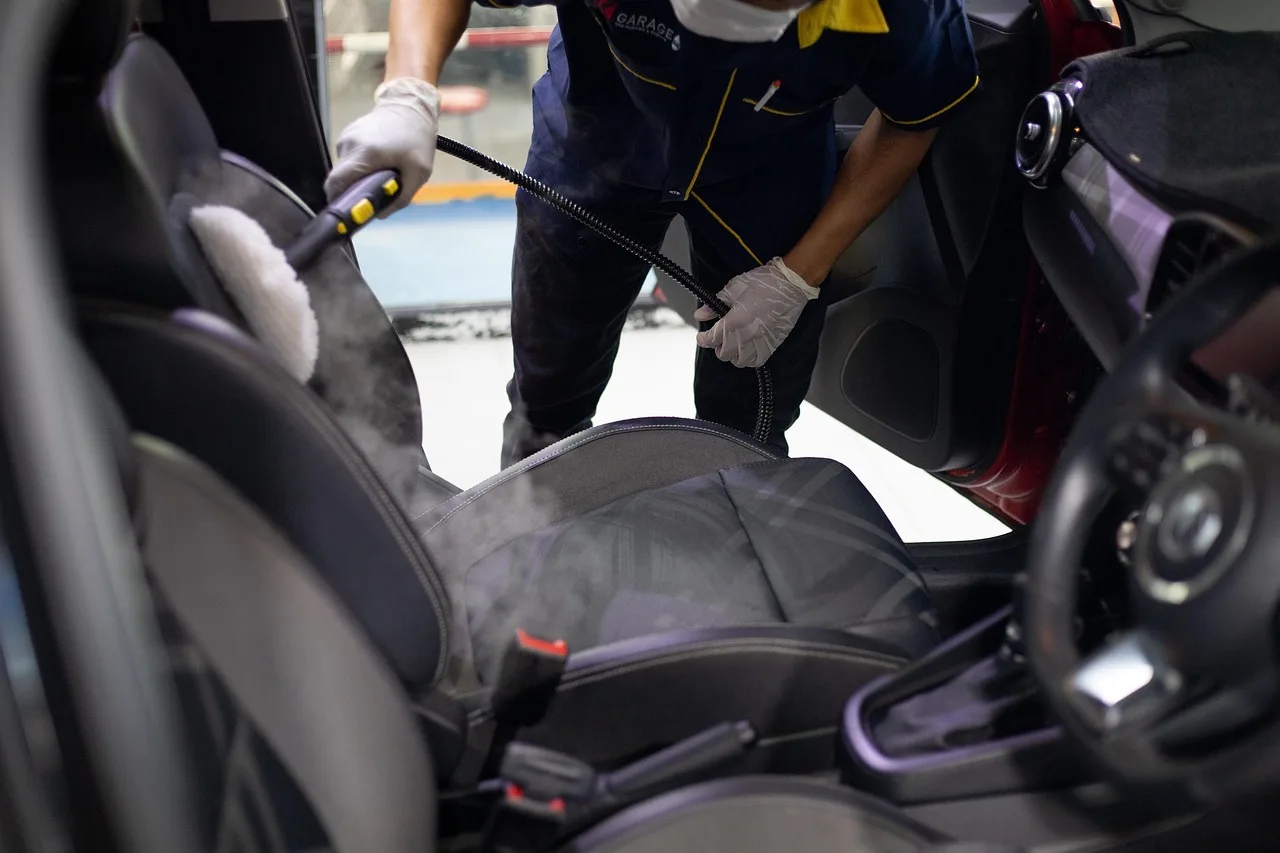
Start by removing dry debris, then use short steam passes, wipe immediately, and keep steam away from screens, connectors, and exposed seams. Safe interior steaming is controlled work, not a soak-and-wait process. The goal is to loosen grime while keeping moisture out of places that trap it.
Start with a vacuum and dry debris removal
Vacuum first so grit does not turn into muddy slurry when steam hits it. That matters on seat rails, carpet edges, and around cup holders, where loose dust and crumbs can migrate into seams. Manufacturers and detailing sources consistently recommend starting dry before applying moisture; Chemical Guys and 3M’s interior-care guidance both stress prep as the first step.
Test on an out-of-sight spot first
Test a hidden area on the seat base, under a rear bolster, or low on a kick panel. If the fabric darkens, the finish changes, or the trim leaves a residue line, stop and reduce heat, distance, or dwell time. That test matters most on coated leather, delicate stitching, and glossy plastics, where visible marking can happen before the grime is fully gone.
Use short passes and immediate towel follow-up
Use the smallest effective burst, then wipe with microfiber right away. That helps control moisture and lowers the chance of watermarking on cloth, fogging on glass, and residue on piano-black trim. For cloth seats, a practical rule is: steam lightly, agitate if needed, then blot. For more on safe technique, see how to use a steam cleaner on cloth car seats safely.
Keep steam away from screens and connectors
Infotainment screens, switch assemblies, and electrical connectors are poor places for direct steam. Keep distance, aim at the surface edge rather than the opening, and avoid saturation near seat belt hardware and stitched seams. If a component has visible gaps, treat steam like a spot tool, not a rinse. A dry microfiber cloth should finish the area.
Which one should you buy?
If you want the lowest-cost entry for light interior detailing, choose the QUORVOGEN handheld. It is the simplest fit for vents, cup holders, and small plastic panels, but expect more refill stops.
If you want the broadest all-around option and a stronger case for larger cabins, choose the McCulloch canister. The larger tank and 23 accessories make it the most practical choice for longer interior sessions.
If fast readiness matters most, choose the Dupray Neat Plus. Its 90-second heat-up and refill-on-the-go setup are useful when you are moving from seats to vents to carpets in one pass.
Say your sedan has light dust, fingerprints on the console, and a few seams around the bolsters. A handheld with a detail nozzle is enough. Suppose the rear seats and floor mats need a longer session after winter salt buildup; a canister is the better fit because refill frequency becomes part of the job.
What attachments do you need for steam cleaning a car interior?
The best attachment set for a car interior includes a detail nozzle, a brush head, and microfiber bonnet compatibility. Those three cover the main failure cases: tight gaps, textured grime, and the need to wipe moisture as you go. Steam-cleaning manuals from major brands and detailing pros consistently favor these basics over large but unfocused accessory bundles.
Detail nozzle
This is the most important tool for seams, vents, and switch edges. It narrows the steam stream so you can work in small zones without wetting the surrounding panel. Keep it at a safe distance from trim and switches. The closer you get, the more likely you are to drive moisture into openings instead of lifting dirt from the surface.
Brush heads
Brush heads help on textured plastics, floor mats, and some fabric stains. They agitate loosened grime so the steam does not have to do all the work alone. Use them gently on leather and avoid aggressive pressure on stitched seams. A stiff brush can leave marks on soft trim or catch thread edges.
Microfiber bonnets
Microfiber bonnets are useful when you want steam plus immediate pickup on flat surfaces. They are a good fit for glossy panels, simple plastic trims, and areas where residue lines are a concern. They are less useful if the bonnet loads up too quickly with grime. Once that happens, wipe it out or swap it, or you will spread soil instead of removing it.
Extension hose and tight-space tools
An extension hose helps you reach under seats, around pedals, and behind console edges without dragging the tank into awkward positions. Tight-space tools matter more in cars than in a garage floor job because the working area is cramped. If a kit has many accessories but no workable crevice tool, that is a gap, not a bonus. Fit matters more than quantity.
What is the best steam cleaner for car interior use?
The best choice depends on the size of the interior and how long you plan to clean. For quick jobs, a handheld with a 10–20 oz tank is practical; for larger cabins or repeated sessions, a canister with more runtime and better accessories is usually the stronger pick. If you want the most balanced option from the listed models, the McCulloch has the broadest support for car detailing. A detailed fit guide is also available in how to choose right car interior cleaning products.
Can a steam cleaner damage car upholstery or electronics?
Yes. Damage usually comes from too much heat, too much moisture, or direct steam pushed into openings. Screens, buttons, seat belt webbing, connectors, and delicate stitching are the main risk points. Use short bursts, keep distance, and never treat electronics like a washable surface. For unsealed electronics or open connectors, skip steam entirely and use a dry method instead.
Is steam cleaning safe for leather and cloth seats?
It can be, but only with the right technique. Cloth tolerates careful steaming better than many people expect, while leather needs lighter passes and a dry wipe right away. Both materials can show watermarking or finish changes if you hold steam in one place too long. For Alcantara, many detailing guides recommend skipping steam unless the material maker specifically allows it.
How do you clean dashboard vents with a steamer?
Use the detail nozzle at a slight angle, not straight into the vent depth. Short bursts loosen dust, and a soft brush can help pull debris to the edge. Follow with a microfiber cloth so moisture does not sit inside the vent or blow back later. If the vent vanes are fragile or the housing is unsealed, reduce output or use a dry brush instead.
What should you test first before using steam inside a car?
Test a hidden spot on the same material you plan to clean. Look for darkening, texture change, residue lines, or a sticky feel after it dries. If that area reacts badly, reduce steam, increase distance, or switch to a different cleaner entirely. Hidden testing matters most on coated leather, plastics with soft-touch finishes, and stitched trim.
Frequently asked questions
How do you steam clean dashboard vents with a steamer?
Use the narrow attachment, keep it just outside the vent opening, and work in short bursts. Follow with a dry brush or cloth so loosened dust does not settle back inside. Direct steam into the vent only briefly, because trapped moisture can reappear as fog or odor later. If the vent housing is loose or unsealed, use less steam or skip it.
Sources
- Dupray Neat Plus steam cleaner product information
- McCulloch MC1385 product information
- Chemical Guys steam-cleaning guidance
- Mothers interior-care guidance
- 3M interior-care guidance

Hi, I’m Melvin, an automobile engineer with extensive experience in automobile equipment. I currently work for a local automobile firm, where I specialize in the car parts industry. I’ve had the opportunity to collaborate with seasoned inspectors, gaining invaluable hands-on experience that goes beyond just theory.
My passion for automotive care started at a young age, which led me to create CarSpareCare. Through CarSpareCare, I share the knowledge and skills I’ve acquired over the years to help others navigate the world of car maintenance and repairs.
My goal is to provide practical tutorials, essential safety advice, and the latest industry insights so that anyone—whether a beginner or an expert—can confidently tackle their automotive projects.