The best tools for cleaning a car interior at home are a handheld vacuum with a crevice nozzle, microfiber towels, soft detailing brushes, cleaning gel for tight slots, and a surface-safe interior cleaner. Rank them by job: vacuum first for loose dirt, towels for dust and residue, brushes for seams and vents, and steam only for deep fabric cleaning.
For most drivers, the smartest home kit starts with the least aggressive tool that still removes the mess. Soft contact for leather and delicate trim, firmer agitation for mats and carpet, and a vacuum that reaches seams will solve most interior problems without overbuying specialty equipment.
Quick comparison
| Product | Badge | Best for | Price | ||
|---|---|---|---|---|---|
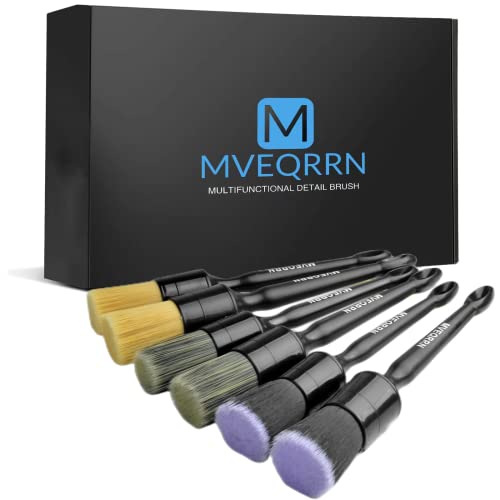 | MVEQRRN 6 Pcs Car Detailing Brush SetMVEQRRN | Our pick | 6 pcs · no-scratch · interior/exterior | $20.84 Price as of 14 Nov 2026 | View |
 | TRONYAN Cordless Vacuum Cleaner Compatible with DEWALT 20VTRONYAN | Also great | Cordless · handheld · tool only | $39.99 Price as of 14 Nov 2026 | View |
 | LFSEMINI 5 Piece Drill Brush Attachment SetLFSEMINI | Budget pick | 5 piece · drill attachment · soft/medium | $9.99 Price as of 14 Nov 2026 | View |
 | TREEUP Portable Carpet Steam CleanerTREEUP | Upgrade pick | 18KPa · steam/hot water · 5 tools | $129.99 Price as of 14 Nov 2026 | View |
Buy by job, not by bundle. For most interiors, start with a vacuum that has crevice and upholstery attachments. It removes the dirt you see first and reaches the gaps that hold it.
After that, add microfiber towels and a surface-safe cleaner for weekly upkeep. Steam cleaners and air guns make more sense once you are dealing with stains, odor, or packed-in dust.
How we chose
The list below prioritizes tools by the surfaces they touch, the problems they solve, and how often you will actually use them. It also separates maintenance tools from deep-clean tools, because buying a stain machine before you own towels and a vacuum is usually backwards.
We compared published product details, manufacturer guidance, and buyer feedback. Surface safety matters more than feature count, so the first pass favors tools that reduce risk on leather, vinyl, plastics, glass, and fabric.
One more filter: tools that do several interior jobs well rank ahead of niche gadgets. A vacuum with the right attachments should beat a one-purpose tool for most DIY owners.
Home interior tool matrix
| Tool | Best surface | Best problem | Risk if misused | Buy-first priority | Budget tier |
|---|---|---|---|---|---|
| Car vacuum cleaner with crevice nozzle and upholstery nozzle | Seats, floor mats, carpet, seat tracks, tight gaps | Loose dirt, crumbs, pet hair, sand | Scratching trim with a hard nozzle; poor pickup in seams if the attachment is wrong | Top priority | $30+ |
| Microfiber cloths | Dashboards, consoles, glass, touch surfaces | Dust removal and final wipe-down | Lint on glass; cross-contamination if used on greasy trim first | Top priority | Under $10 |
| All-purpose interior cleaner | Plastics, vinyl, leather-safe surfaces | General grime and fingerprints | Residue or discoloration if the formula is wrong for the surface | Top priority | $10-$30 |
| Auto detailing brush set | Vents, seams, pedals, grooves, leather stitching | Dust in textured areas | Scratching piano black trim or scuffing delicate leather with stiff bristles | Top priority | $10-$30 |
| Cleaning gel | AC vents, cup holders, button clusters | Small crevices and press-on dust pickup | Leaving residue behind if it is pressed into warm or dirty surfaces | Later buy | Under $10 |
| Interior detailing air gun | Dashboard seams, vents, seat runners | Blowing out dust from hard-to-reach areas | Pushing debris deeper into gaps or blowing dust back into the cabin | Later buy | $30+ |
| Carpet and upholstery cleaner | Fabric seats, carpets, mats | Stains, spills, liquid cleanup | Over-wetting fabric and leaving water marks | Deep-clean buy | $10-$30 |
| Leather care product | Leather seats and trim | Cleaning and conditioning | Overloading the surface and making it slippery or glossy | Need-based buy | $10-$30 |
| Odor neutralizer | Cabin air, upholstery, carpets | Smoke and lingering smells | Masking the odor instead of removing the source | After deep clean | Under $10 |
| Steam cleaner for cars | Carpets, seats, upholstery | Sanitizing, odor removal, stubborn grime | Too much moisture on sensitive trim or glued surfaces | Deep-clean buy | $30+ |
What should you buy first?
Start with a handheld vacuum, two microfiber cloth types, a safe interior cleaner, and one soft brush set. That covers the dirt, the wipe-down, and the tight spaces that cause the most frustration, without paying for specialty tools you may only use a few times a year.
For a tighter budget, buy a microfiber pack and a small detailing brush set first, then add the vacuum next. For a larger budget, move straight to a vacuum with a crevice nozzle and upholstery tool, because it handles the most visible debris fastest.
Starter kit by budget
- Under $10: microfiber towels, cleaning gel, or a single brush set if you already own a vacuum.
- $10-$30: all-purpose interior cleaner, brush set, carpet spot cleaner, and better microfiber cloths.
- $30+: handheld vacuum with attachments, then add steam or extraction tools if you need deep cleaning.
Add-ons by interior type
Leather-only interiors need a leather-safe cleaner, soft bristles, and a conditioning product before they need a steam cleaner. Fabric-heavy cabins benefit more from vacuuming power and a carpet cleaner than from dressings.
Pet owners should move rubber-bristle brushes and a stronger vacuum higher on the list. Parents usually get more value from stain remover, microfiber towels, and a quick-clean vacuum than from odor products alone.
Car vacuum cleaner: best for loose dirt and pet hair
A car vacuum is the first buy for most home kits because it handles crumbs, sand, hair, and grit before they turn into stained or ground-in messes. Choose a model with a crevice nozzle for seams and a upholstery nozzle for seats, and prefer a wet-dry option if spills are common.
Which vacuum attachment is best for car seats and crevices?
The crevice nozzle is best for seat tracks, console gaps, and the joint where the seat meets the carpet. The upholstery nozzle is better for seats and pet hair because it spreads suction over a wider area without pressing too hard into fabric.
Kärcher recommends a wet and dry vacuum cleaner for coarse dirt, and notes that narrow gaps collect a lot of loose dirt. That is why a handheld vacuum can do more useful work than a large house vacuum that never fits the cabin well.
A cordless handheld is easier for quick weekly cleanup, especially if you only need short bursts of suction. A corded unit is better when battery runtime would interrupt a full detail, and a wet-dry option helps when you also clean wet mats or drink spills.
Best use cases for vacuuming
Use the crevice nozzle first on seat rails, under the front seats, and around the parking brake. Then switch to the upholstery tool for fabric seats, floor mats, and pet hair trapped in carpet pile.
If the car has lots of crumbs or pet fur, vacuum before any liquid cleaner touches the cabin. That prevents wet debris from clumping and getting harder to remove.
Microfiber cloths: best for wiping without lint
Microfiber cloths are the core wipe tool because they lift dust and cleaner residue without scratching most interior surfaces. Keep one waffle weave cloth for glass, one micro-chenille cloth for dashboards and consoles, and separate cloths for greasy jobs so lint and residue do not spread from one surface to another.
What microfiber towels are best for car interior cleaning?
Waffle weave is the best pick for windows because it dries fast and helps with streak-free glass. Micro-chenille works well on dashboards and consoles because its plush fibers pick up dust without dragging it across textured trim.
Do not use the same towel for glass and dirty plastics if you want a clean finish. Wash interior towels separately from household rags so lint, hair, and fabric softener residue do not contaminate them.
Glass, dash, and console use
For glass, spray the cleaner onto the towel when possible, then wipe in one direction and finish with a dry pass. That lowers the chance of residue lines on the windshield and side windows.
For dashboards and screens, use a lightly damp towel, not a saturated one. Piano black trim scratches easily, so the safest move is a clean microfiber towel with light pressure and no gritty dust left on the surface.
Brushes and cleaning gel: best for vents, seams, and crevices
Brushes and cleaning gel solve the places a vacuum and towel miss. Soft bristles belong on leather and delicate trim, stiff nylon bristles fit mats and carpets, and rubber bristles help lift pet hair from fabric and floor mats; cleaning gel is useful for cup holders and vent slots where fingers and towels cannot reach.
What brush should I use for car interior cleaning?
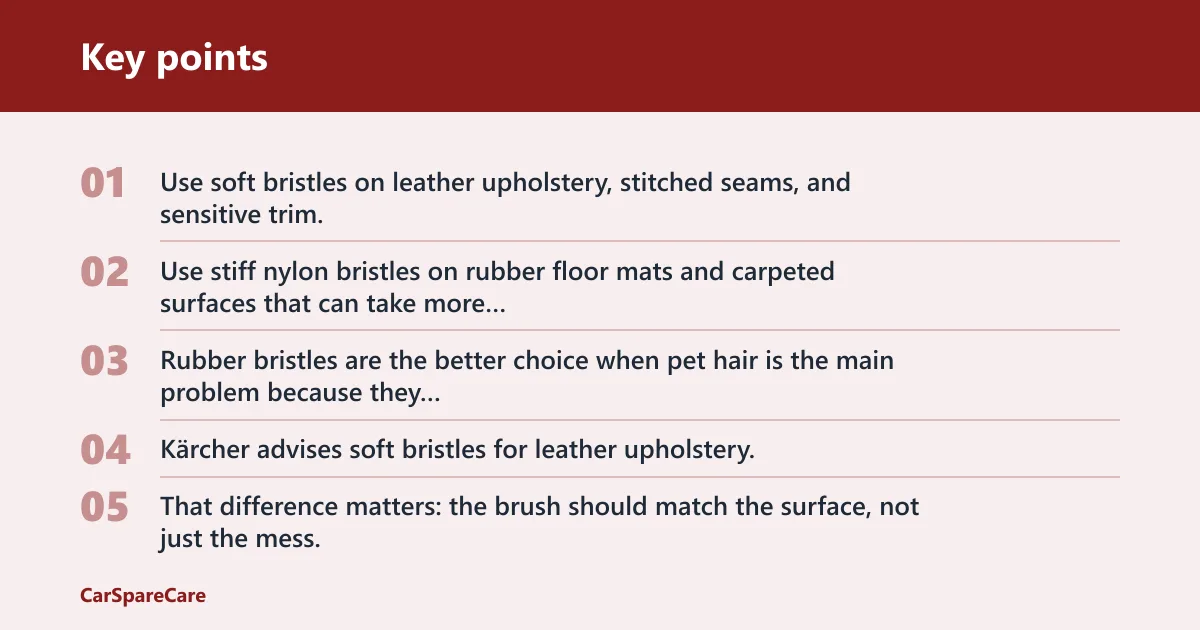
Use soft bristles on leather upholstery, stitched seams, and sensitive trim. Use stiff nylon bristles on rubber floor mats and carpeted surfaces that can take more agitation. Rubber bristles are the better choice when pet hair is the main problem because they pull hair up instead of brushing it deeper.
Kärcher advises soft bristles for leather upholstery, while its guidance on fabric seats points to a suction brush with hard bristles for more aggressive debris removal. That difference matters: the brush should match the surface, not just the mess.
Cleaning vents, cup holders, pedals, and grooves
For AC vents and cup holders, press-on cleaning gel can lift dust from tight shapes without leaving behind fibers. Use it slowly and replace it when it gets visibly dirty, because a loaded gel pad can smear dust instead of removing it.
For pedals and grooves, use a brush with firm bristles and controlled pressure. A common first-timer mistake is scrubbing too hard on glossy trim, which can leave visible marks that are harder to hide than the original dust.
Steam cleaner for cars: is it worth buying?
A steam cleaner is worth buying if you deal with stained fabric, odor, or a cabin that needs deeper sanitation than a wipe-down can provide. Steam is useful as a deep-clean tool, but it should not replace a vacuum and microfiber kit, and it is best used with low moisture and careful drying.
Where steam helps
Steam can help on carpets, seats, and upholstery when you need heat plus moisture control on stubborn grime. It also makes sense for odor removal after a full cleaning, especially in smoke-affected cabins or family cars with repeated spills.
High-temperature steam can loosen bonded dirt without soaking the fabric as heavily as a liquid-heavy shampoo. That matters for owners trying to avoid water marks and long dry times.
Where steam can cause problems
Steam is a poor choice for delicate plastics, some adhesives, and surfaces that do not like heat or moisture. Too much steam can push water into seams or leave you waiting for the cabin to dry longer than expected.
If the cabin already has loosened trim, a steam pass can make the issue more obvious. Compact storage matters too, because a machine that lives in a closet is more likely to get used than one that is bulky and awkward to move.
Which one should you buy for your car?
Choose the kit that matches your biggest problem, not the one with the most accessories. For pet hair, a vacuum plus rubber-bristle brush is the right first move; for leather, start with soft bristles and a leather-safe cleaner; for smoke, buy odor neutralizer only after a deep clean has removed the source.
Pet hair and family messes
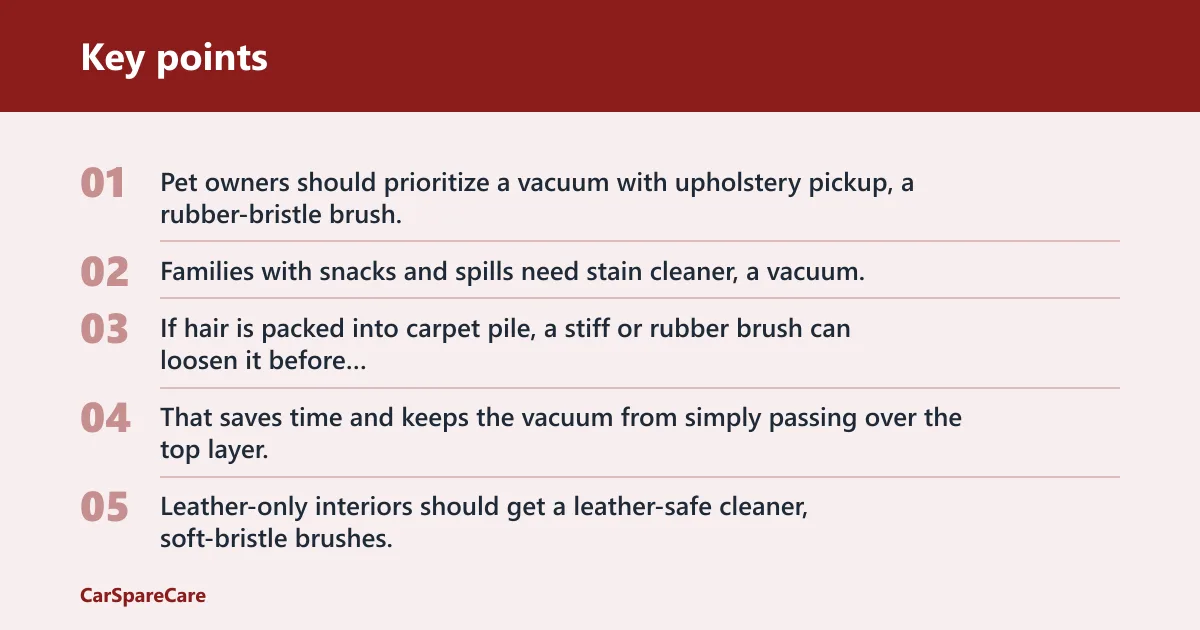
Pet owners should prioritize a vacuum with upholstery pickup, a rubber-bristle brush, and microfiber towels for quick resets. Families with snacks and spills need stain cleaner, a vacuum, and a towel set before any specialty product.
If hair is packed into carpet pile, a stiff or rubber brush can loosen it before vacuuming. That saves time and keeps the vacuum from simply passing over the top layer.
Leather-only interiors
Leather-only interiors should get a leather-safe cleaner, soft-bristle brushes, and a conditioning product before a steam machine or extraction tool. Leather needs cleaning without abrasion, and it should not be over-wet or scrubbed with hard nylon bristles.
Armor All lists interior products for leather, plastic, vinyl, and accessories, which is a useful reminder that the right formula changes by surface. A leather-safe formula is still the safer pick than a general cleaner with unknown residue.
Smoke and odor control
For smoke or lingering odors, buy an odor neutralizer only after you have vacuumed, wiped surfaces, and cleaned fabrics. Spray, diffuser, or charcoal options can help, but they work best once the smell source has been removed from the cabin.
Steam can help here too, especially on upholstery and carpet, but only if you can dry the area properly afterward. Skipping the cleanup and using fragrance alone usually masks the problem.
Best kit by budget
Under $10, buy microfiber towels and a small interior cleaner or cleaning gel. At $10-$30, add a brush set and a carpet cleaner, which gives you a usable home kit for most surface jobs without overbuying.
At $30+, add a car vacuum with crevice and upholstery tools first, then choose steam or air tools only if you have stubborn stains, heavy pet hair, or frequent deep-clean needs. A compact wet-dry vacuum can be more useful than a larger machine that stays in storage.
How to choose
Match the tool to the surface first, then to the mess. Soft contact for leather, medium for plastics, firmer bristles for mats and carpet, and the gentlest wipe that still removes residue from glass and piano black trim.
Think in two layers: weekly maintenance and deep cleaning. Maintenance tools are the vacuum, microfiber towels, and all-purpose cleaner; deep-clean tools are steam, extraction, odor neutralizers, and stronger stain removers.
Suppose the cabin has crumbs, dust in vents, and one coffee stain on the passenger mat. Start with the vacuum and crevice nozzle, then use a brush and microfiber towel, and only then move to a carpet cleaner for the stain. That order keeps dirt from spreading.
Picture a leather sedan with dusty stitching, fingerprints on the console, and a stale smell from last month’s takeout. A soft brush, leather-safe cleaner, microfiber towels, and odor control after cleaning make more sense than a steam machine as the first purchase.
Frequently asked questions
What are the best tools for cleaning car interior at home?
The best home tools are a vacuum with crevice and upholstery attachments, microfiber towels, an all-purpose interior cleaner, soft and medium detailing brushes, and a leather-safe or carpet-safe product where needed. Add steam, air tools, or odor control only when your cabin needs deeper cleaning or smell removal.
What do I need to clean my car interior myself?
At minimum, you need a vacuum, a few clean microfiber towels, a brush for seams and vents, and a cleaner matched to the surface. If you have fabric seats or mats, add a carpet and upholstery cleaner; if you have leather, use a leather care product instead of a generic spray.
Is a steam cleaner worth buying for car interior cleaning?
Yes, if you regularly deal with stains, odor, or dirty fabric seats and carpets. It is less useful for routine dusting, and it can create problems if you over-wet the cabin or use it on heat-sensitive trim, so it belongs in a deep-clean kit rather than a starter kit.
Can I use household products to clean my car interior?
Sometimes, but only if the product is safe for the surface and used with good ventilation. A general household cleaner can be too strong for leather, leave residue on glass, or make plastics look streaky, so a dedicated interior cleaner is the safer default for most DIY owners.
How do I clean car vents, seams, and cup holders at home?
Use a soft detailing brush for seams and vents, a vacuum crevice tool to pull out loosened dust, and cleaning gel for cup holders and tight slots. Work slowly so debris comes out instead of getting pushed deeper into the vent blades or seat stitching.
What should I use for pet hair in a car interior?
Use a vacuum with an upholstery attachment, then a rubber-bristle brush to lift hair from carpet and fabric. If the hair is embedded, loosen it first with the brush and vacuum again. That sequence works better than trying to vacuum packed hair in one pass.

Hi, I’m Melvin, an automobile engineer with extensive experience in automobile equipment. I currently work for a local automobile firm, where I specialize in the car parts industry. I’ve had the opportunity to collaborate with seasoned inspectors, gaining invaluable hands-on experience that goes beyond just theory.
My passion for automotive care started at a young age, which led me to create CarSpareCare. Through CarSpareCare, I share the knowledge and skills I’ve acquired over the years to help others navigate the world of car maintenance and repairs.
My goal is to provide practical tutorials, essential safety advice, and the latest industry insights so that anyone—whether a beginner or an expert—can confidently tackle their automotive projects.