
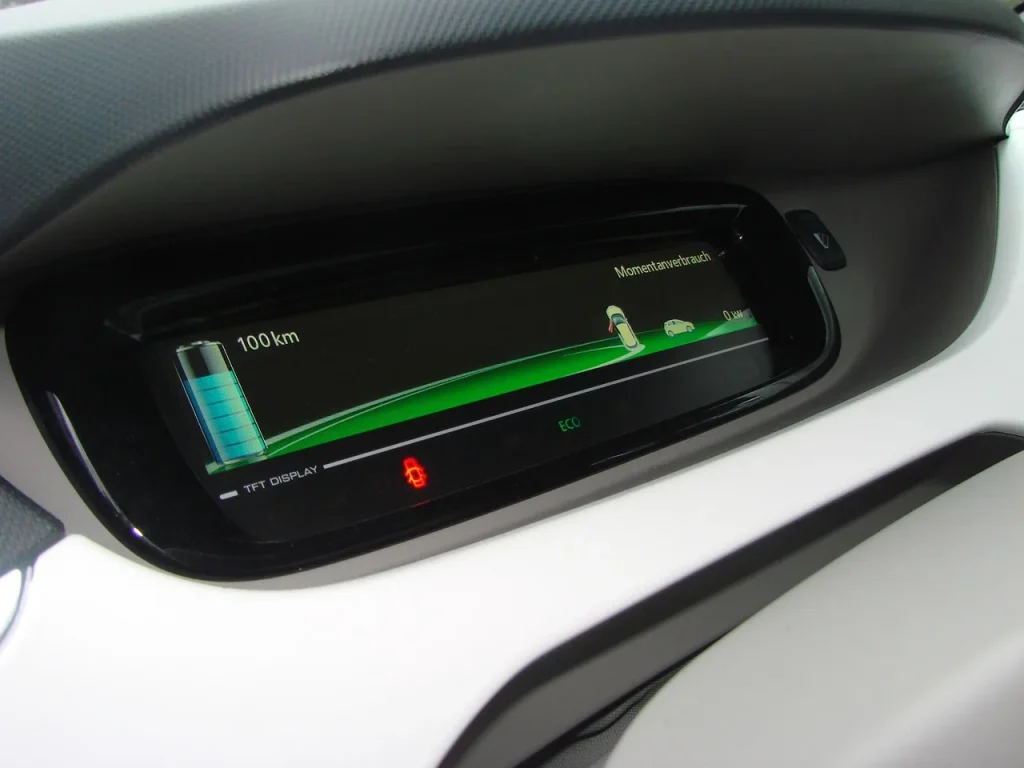
If the ABS light and brake warning light come on together, treat it as two issues until proven otherwise: an ABS fault and a brake-system fault. If the red brake light stays on, the fluid is low, or the pedal feels soft or sinks, do not keep driving. A brief trip to a repair shop may be acceptable only when the pedal feels normal and the brake fluid level is steady, and the red brake light is not signaling a hydraulic problem.
What the ABS and brake lights mean
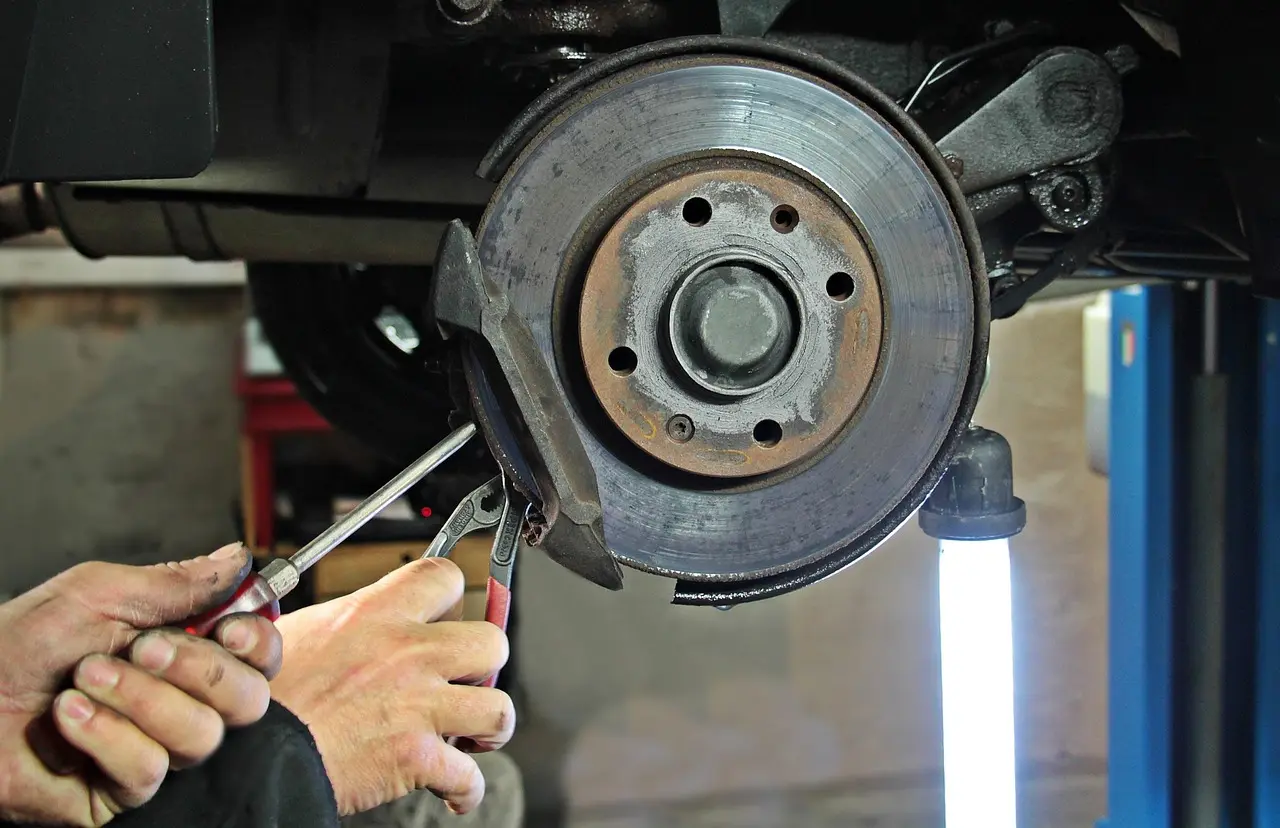


The ABS light is usually amber and points to a fault in the anti-lock braking system. The brake warning light is often red and more urgent; it can indicate low brake fluid, the parking brake is engaged, or a hydraulic fault in the brake system. NHTSA and OEM owner manuals generally treat a red brake warning as a stop-and-check-now warning, not a light to ignore.
ABS stands for anti-lock braking system. The ABS module can store diagnostic trouble codes, and it may disable ABS while normal braking still works. It also often shares wheel-speed information with traction control and stability control systems, so more than one warning light can appear together.
Why both lights can appear together
Both lights can come on when one fault affects more than one system, or when a separate brake issue happens at the same time as an ABS fault. A low-fluid condition can trigger the red brake light, while a wheel speed sensor, fuse, or module fault can trigger the amber ABS light.
Picture a car with worn front pads and a weak wheel speed sensor at the left front wheel. The pads may lower fluid level enough to trigger the brake light, while the sensor fault sets the ABS light. Those are related symptoms, but they are still separate faults.
Is it safe to drive with both lights on?
If the brake pedal still feels firm, the red brake light is not flashing, and the fluid level is steady, the car may still brake normally enough for a very short trip to a repair shop. That does not mean the ABS is working. It means the anti-lock function may be offline while the base brake system still works.
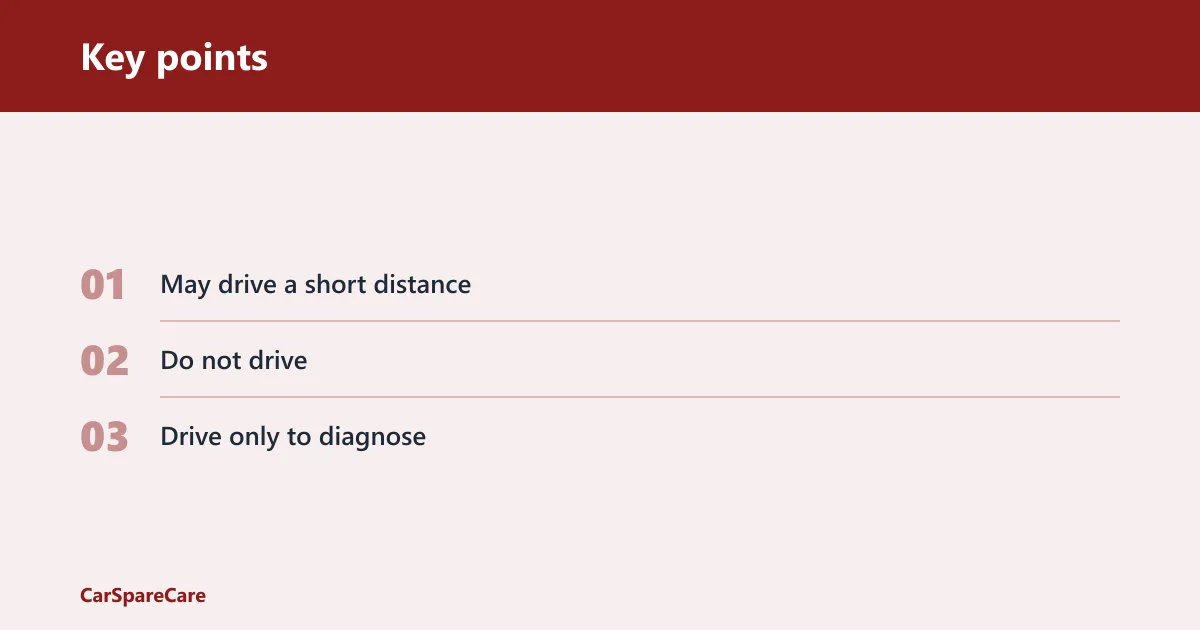
Safe to drive vs do not drive
- May drive a short distance: pedal feels normal, brake fluid is between MIN and MAX, the parking brake is fully released, and the red brake light is not pointing to a hydraulic problem.
- Do not drive: pedal feels soft, sinks, or changes travel; fluid is low or dropping again; the red brake warning stays on; or a leak is visible.
- Drive only to diagnose: ABS light is on by itself or with traction control, but braking feels normal and fluid level is steady.
When to stop driving
Stop driving if the brake pedal feels soft, sinks, needs extra travel, or the fluid level is low again after topping up. A visible leak, a red brake warning that stays on, or a changing pedal feel points to a hydraulic problem, and that is a do-not-drive condition.
A brake hydraulic system includes the master cylinder, lines, calipers, and fluid. Loss of pressure in that system is a safety-critical fault. The vehicle can still move, but the braking margin drops to a level you should not accept.
What a soft or sinking pedal changes
A soft pedal more often points away from a simple ABS sensor fault and toward air in the system, a leak, or another hydraulic issue. If the pedal slowly sinks while you hold pressure, the master cylinder or another hydraulic part may be failing.
That changes the decision immediately. Do not keep driving to “see if it clears.” Inspect the vehicle, and arrange repair before any longer trip.
ABS brake lights decision table
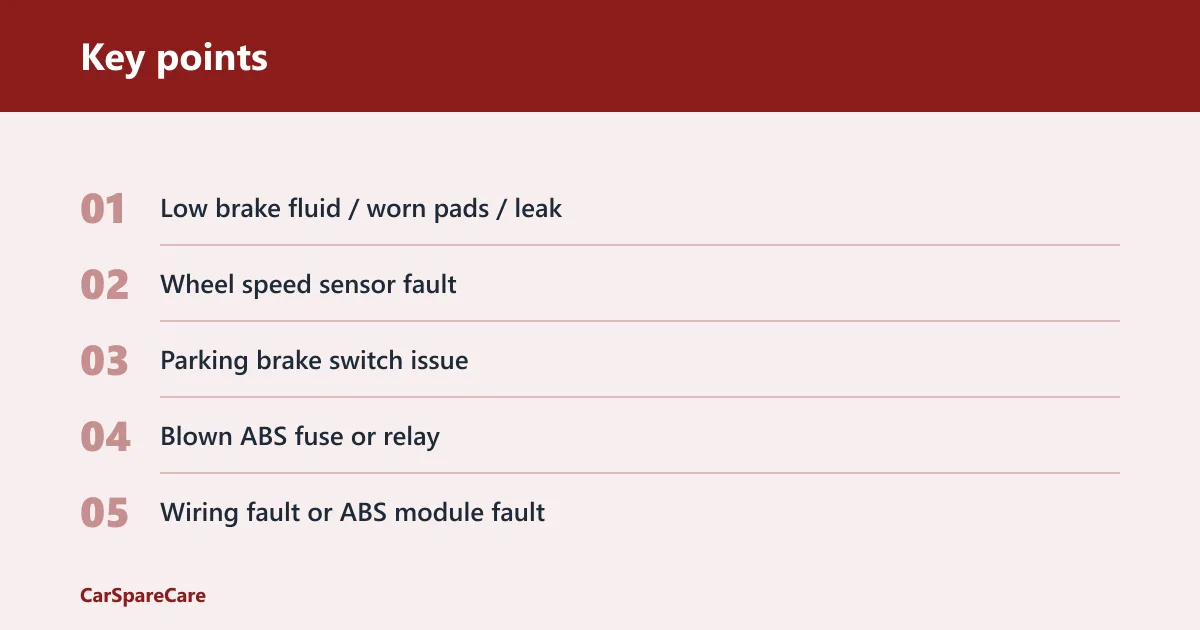
| Warning lights present | Brake pedal or vehicle behavior | Most likely fault category |
|---|---|---|
| Brake light only, or brake light with ABS light after topping up | Pedal feels normal, fluid is below the MIN mark or near it | Low brake fluid, often from worn pads or a leak |
| ABS light only, or ABS with traction control light | Braking feels normal, but ABS may not activate on slippery stops | Wheel speed sensor fault |
| Brake light only | Parking brake is partly applied, light stays on after release | Parking brake switch stuck or misadjusted |
| ABS light only, sometimes after ignition start | Normal braking, ABS disabled, no pedal change | Blown ABS fuse or relay |
| ABS light with traction or stability control light | Normal braking, warning lights stay on | Wiring fault or ABS module fault |
| Brake light with possible ABS light | Pedal feels soft, sinks, or travel changes | Hydraulic leak |
| Any brake light with soft pedal, sinking pedal, or visible fluid loss | Braking feels wrong or unsafe | Do not drive |
- Low brake fluid / worn pads / leak: Check the reservoir level, look for wet calipers, hoses, and lines, then inspect pad wear before adding fluid again.
- Wheel speed sensor fault: Inspect the sensor wiring and tone ring area at the wheel that seems most likely, then scan ABS codes before replacing parts.
- Parking brake switch issue: Release the parking brake fully, cycle it a few times, and inspect the switch or cable adjustment if the light stays on.
- Blown ABS fuse or relay: Check the fuse chart for the exact ABS power supply location, replace only with the specified rating, and look for the reason it failed.
- Wiring fault or ABS module fault: Use an ABS-capable scanner to read stored codes, then trace the circuit or confirm module power, ground, and communication.
- Hydraulic leak: Do not drive farther than needed for safety; inspect all hydraulic components and arrange repair before normal use resumes.
Can low brake fluid turn on both lights?
Yes. Low fluid in the brake fluid reservoir can trigger the brake warning light, and in some vehicles it can also show up with an ABS warning if the system sees a related fault. The reservoir level should generally stay between the MIN and MAX marks. A low level is not a repair by itself; it is a clue. OEM service information commonly treats a low reservoir as either pad wear or a leak until proven otherwise.
How pad wear changes fluid level
Worn brake pads can lower fluid level indirectly. As the caliper pistons extend to take up pad wear, more fluid stays in the calipers, so the reservoir level drops. That can bring on the red brake light even when there is no active leak.
Can worn brake pads cause ABS light? Usually no, not by themselves. Pad wear more often causes a low-fluid brake warning than an ABS fault. If the ABS light is on too, look for a separate problem such as a sensor, fuse, wiring issue, or module code.
Why a leak changes the urgency
If fluid is low because of a leak, the problem is more serious than pad wear alone. Leaks can come from calipers, lines, hoses, or the master cylinder. Refill without finding the leak only hides the fault for a short time.
If the level drops again the next day, then a leak becomes much more likely.
Will a bad wheel speed sensor cause both lights?
Yes, a bad wheel speed sensor can cause the ABS light, and it can also bring on traction control or stability control warnings. The sensor measures individual wheel rotation, so the ABS module can compare wheel speeds during braking. If the signal is missing or wrong, ABS may switch off. Because many vehicles share wheel-speed data between ABS and traction control, one bad sensor can create multiple warning lights.
What to inspect at the wheel
There is often one wheel speed sensor per wheel. Check the sensor wiring, connector, and tone ring or bearing area for corrosion, damaged wiring, or debris. Wheel bearing work can also disturb the sensor or its wiring if the cable was routed or clipped incorrectly.
If the vehicle has an ABS, brake, and traction light all on together, a wheel speed sensor fault is a strong possibility. That pattern often points to the ABS module losing a wheel-speed input, not to a fluid or parking brake issue.
Why did the lights come on after a brake job?
Lights after a brake job usually mean something changed during service. Common causes include a connector left loose, a parking brake switch issue, or a wheel speed sensor wire disturbed while the wheel was off. The timing matters.
What to check after service
- Confirm the fluid level is between MIN and MAX.
- Check that the parking brake is fully released.
- Inspect the wheel speed sensor wiring near the serviced wheel.
- Look for a connector that is loose or not fully seated.
- Scan the ABS module for stored codes before replacing parts.
A common first-timer mistake is to assume any warning after pad replacement means the pads were installed wrong. Often the actual issue is a sensor wire that was pulled, fluid that was lost during service or a system that was bled, or a switch that was bumped during reassembly.
What to check first at home
Start with the brake fluid reservoir, the parking brake, and the ABS fuse or relay. These checks take only a few minutes and can separate a simple level issue from a system fault that needs a scan tool. If the pedal feels wrong, skip the rest and stop driving.
Basic checks
Look at the fluid level and the fluid condition. Dark, contaminated fluid or a level below MIN needs attention. Then confirm the parking brake is fully released and the warning goes out when it should.
Next, check the ABS fuse or relay against the vehicle fuse chart, keeping in mind that some vehicles use integrated fuse and relay modules rather than a swappable relay. A failed power supply component can disable ABS and set a warning light. Do not guess at fuse locations; use the chart for the exact vehicle.
When a scan tool is needed
A diagnostic trouble code scanner that reads ABS-specific codes is the next step when the lights stay on and the basic checks look normal. Basic OBD-II code readers may show engine codes but miss ABS codes, which is why a generic reader is often not enough. Many consumer code readers only access powertrain codes, while ABS faults live in the ABS controller and require a scanner that can communicate with that module.
What ABS codes can point
The ABS module can store codes for wheel speed sensor faults, module communication problems, voltage issues, and internal module faults. Those codes help separate a sensor problem from a wiring fault or a failed control unit.
If the lights came on after a battery disconnect, wheel bearing replacement, or another repair near a sensor wire, the code can point to the disturbed circuit. That saves time and avoids replacing parts that are still good.
When to hand the car to a mechanic
Get professional diagnosis if the red brake light stays on, the pedal is soft, the fluid keeps dropping, or the scanner shows module or voltage codes you cannot clear. A hydraulic leak and a module fault need different repairs, and a code is the quickest way to sort them out.
Frequently asked questions
Can worn brake pads cause ABS light?
Usually no. Worn brake pads do not directly cause an ABS fault in normal cases. They can lower brake fluid level as the caliper pistons extend, which may turn on the red brake warning light. If the ABS light is on too, look for a separate sensor, fuse, wiring, or module issue.
Why do the ABS and brake light come on together?
They come on together when one fault affects both systems, or when two separate faults happen at once. A low-fluid condition can trigger the brake light, while a wheel speed sensor, fuse, or module fault triggers the ABS light. Traction control may join in if the vehicle shares sensor data.
Is it safe to drive with the ABS and brake light on?
Only if the brake pedal feels normal, the red brake light is not indicating a hydraulic problem, and the fluid level is steady. Even then, the ABS may be disabled. If the pedal feels soft, sinks, or the fluid is low again, do not drive the vehicle. A red brake warning is treated by OEM guidance as a stop-and-check warning because it can indicate a hydraulic safety issue.
Why is my ABS light on but the brakes work fine?
That usually means the anti-lock system is disabled, but normal hydraulic braking still works. A wheel speed sensor, fuse, wiring fault, or ABS module code is likely. The car may stop normally on dry pavement, but ABS protection during hard braking or on slippery surfaces may be gone.
Can a blown fuse cause the ABS and brake light to come on?
Yes. A blown ABS fuse or relay can cut power to the ABS module and set the ABS light. The brake warning light may appear too on some vehicles, especially if the system records a related fault or if another brake issue is present at the same time.
Why do the ABS, brake, and traction lights come on together?
That three-light combination often points to a shared input problem, especially a wheel speed sensor or wiring fault. It can also happen when the ABS module loses power or communication. Because traction control relies on the same wheel-speed information, it may shut down with ABS.
Amber ABS light vs red brake warning light
- Amber ABS light: usually means ABS is disabled, but normal brakes may still work.
- Red brake warning light: more urgent; can indicate low fluid, parking brake applied, or a hydraulic problem.
- Both together: treat the red light as the priority and check fluid, pedal feel, and leaks first.
- Best next step: if the pedal feels normal and fluid is steady, read ABS codes; if the pedal feels soft or fluid is low, do not drive.

Hi, I’m Melvin, an automobile engineer with extensive experience in automobile equipment. I currently work for a local automobile firm, where I specialize in the car parts industry. I’ve had the opportunity to collaborate with seasoned inspectors, gaining invaluable hands-on experience that goes beyond just theory.
My passion for automotive care started at a young age, which led me to create CarSpareCare. Through CarSpareCare, I share the knowledge and skills I’ve acquired over the years to help others navigate the world of car maintenance and repairs.
My goal is to provide practical tutorials, essential safety advice, and the latest industry insights so that anyone—whether a beginner or an expert—can confidently tackle their automotive projects.

