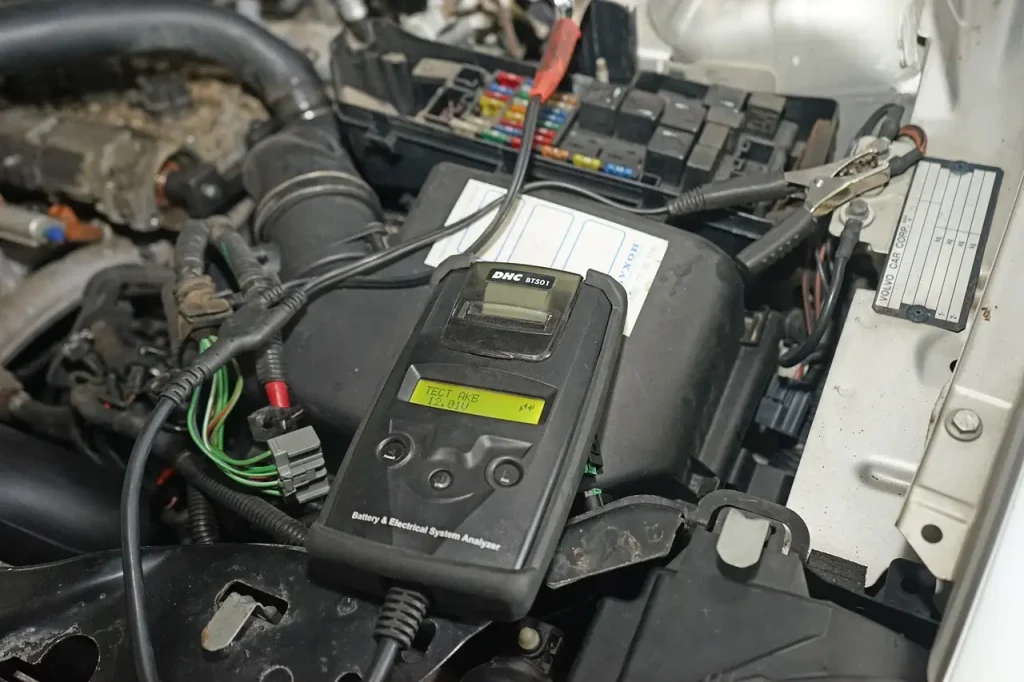
A car battery that will not hold a charge is usually worn out, not being recharged, or being drained while parked. If it drops below about 12.4 volts after sitting, start with the battery, then check alternator output in the common 13.8–14.7 volt range and look for parasitic draw. Ignoring it can leave you stranded and can hide a charging fault that keeps killing new batteries. This guide shows how to separate battery failure, alternator trouble, and hidden drain fast.
Quick diagnosis map


Start with the symptom, not the parts catalog. A battery that fails overnight points in a different direction from one that charges on a charger but not in the car, and both differ from a car that starts with a jump but dies again after a short drive.
The usual suspects are an old battery, a bad alternator, parasitic drain, corrosion, a blown fuse, short trips, and leaving lights on. That list matters, but the order matters more. A battery can test fine at rest and still fail under load, and a charging system can look normal until a cable or ground adds resistance.
What each first test tells you
Use a multimeter set to DC voltage first. A healthy battery should read 12.6 volts or higher at rest, and a running engine should usually show 13.5 to 14.5 volts. If the resting number is low, charge the battery fully and retest before replacing anything.
If the battery reads well at rest but the car dies after a jump or after a short drive, shift attention to charging output, belt slip, cable resistance, and parasitic drain. A load test is the next step when voltage looks normal but the battery still fails in service.
When to stop and replace the battery
Replace the battery first when it is near or beyond a typical three- to five-year lifespan, fails a load test, or shows signs of weak-cell behavior after a full charge. If the battery is damaged or sulfated, a jump-start may not work, or it may work only briefly.
Battery diagnosis table
| Symptom | Most likely cause | First test | Expected voltage reading | Next action |
|---|---|---|---|---|
| Overnight dead | Parasitic drain, weak battery, or corroded connection | Resting voltage after sitting; then fuse-pull test | Below 12.6 volts suggests a problem; a healthy battery should be 12.6 volts or higher at rest | Check for drain, clean terminals, then load-test the battery |
| Starts with a jump but dies | Charging-system failure or bad cable/ground path | Charging voltage at the battery with engine running | Below 13.5 volts points away from proper charging; normal running voltage is 13.5 to 14.5 volts | Inspect alternator output, belt, cables, and grounds |
| Holds charge on a charger but not in the car | Parasitic drain or charging failure in the vehicle | Key-off current draw test | Battery may read normal at rest, yet drop again after sitting | Pull fuses one at a time to isolate the circuit |
| Alternator tests good | Battery weakness, cable loss, or parasitic drain | Load test and cable voltage-drop check | 12.6 volts at rest can still hide sulfation or internal damage | Test battery under load, then inspect terminals, ground, and accessory draw |
| Battery light stays on | Charging-system fault, slipping belt, or bad connection | Charging voltage and belt inspection | Running voltage should usually be 13.5 to 14.5 volts | Check alternator, belt tension, and battery cable condition |
Suppose the car starts fine after a jump on Monday, then sits overnight and is dead again on Tuesday. That pattern usually points away from a single dead battery and toward either a drain while parked or a charging problem that never replenished the battery.
A healthy lead-acid battery can still fail if one cell is weak or if sulfation has reduced its ability to accept and deliver charge. Resting voltage alone will not catch every failure. That is why a load test matters when the numbers look acceptable but the car still acts weak.
Why won’t my car battery hold a charge?
A battery that will not hold a charge is often worn out, sulfated, or damaged inside even if it shows a decent resting voltage. Car batteries typically last three to five years, and age raises the odds of internal cell damage and high internal resistance. A load test is the best next step when the battery looks normal on a meter but fails in service.
Battery age and internal failure
Lead-acid batteries fail in more than one way. Sulfation can coat the plates after repeated undercharging, and an internal short or bad cell can make the battery collapse under load. Either fault can leave you with a battery that charges briefly, then fades again after sitting.
Resting voltage around 12.6 volts only tells you the surface state of charge. It does not guarantee the battery can supply current to the starter or keep its charge after a drive. A fully charged battery should show over 12.6 volts on a voltmeter, but that number still needs a load check if symptoms keep returning.
Resting voltage versus real battery health
A battery can read 12.6 volts at rest and still be too weak to crank the engine. That often happens when the plates are sulfated or a cell is failing. A load test checks how the battery behaves when current demand rises, which is closer to real use than a parked reading.
Picture a compact car that starts after charging, then hesitates the next morning even though the meter showed 12.7 volts the day before. That kind of pattern often means the battery accepted a charge but cannot retain it under normal use.
Why car battery not charging?
If the battery is not charging while the engine runs, the problem often sits with the alternator, its belt, or the cable path between the alternator and battery. The alternator recharges the battery while the engine is running. Normal running voltage is often 13.5 to 14.5 volts, and a reading below that range needs attention.
Alternator output and belt slip
Check charging voltage at the battery with the engine running. If it stays near resting voltage, the alternator may not be producing enough output, the belt may be slipping, or a wiring problem may be limiting current flow. A loose or glazed belt can let the alternator spin too slowly to recharge the battery properly.
Can a bad alternator cause a battery not to hold a charge? Yes. If the alternator does not recharge the battery while driving, the battery may seem fine for one start, then fail again after parking. A battery light that flickers or stays on often points in that direction.
Cable and ground losses that block charging
Corrosion can block proper battery charging, and loose or dirty connections can do the same. Battery corrosion occurs because sulfuric acid releases hydrogen gas, which contributes to the crust on terminals. The ground connection at the engine block matters too; a bad ground can make a good alternator look weak.
Clean the terminals, tighten the clamps, and inspect the main ground path before replacing the alternator. A meter can show normal alternator output at one point in the circuit while a corroded cable or loose ground prevents that charge from reaching the battery fully.
What the battery warning light usually means
The battery warning light is a charging-system warning, not a battery-health meter. If it stays on or flickers, the alternator, belt, wiring, or regulator circuit needs attention. Do not treat that light as proof that the battery itself is bad.
How do you check for a parasitic drain?
Parasitic drain is current draw that continues when the vehicle is off. It can come from lights, relays, modules, and aftermarket accessories. A common cause is an interior or cargo light that stays on, but a stuck relay or a control module can do the same thing.
Common off-key loads
Accessory drain can come from headlights, radio, HVAC, alarm systems, windows, defrosters, and heated mirrors. Aftermarket audio gear, alarms, and trackers can also draw current. When a battery dies overnight, those off-key loads are worth checking before replacing the battery.
Fuse-pulling method to isolate the circuit
- Fully charge the battery and confirm it reads 12.6 volts or higher at rest.
- Turn the car off, remove the key, and let the vehicle enter sleep mode if applicable.
- Set a multimeter for DC current and connect it in series for parasitic-draw testing.
- Pull one fuse at a time and watch for the draw to drop.
- When the draw falls, note the circuit and inspect the parts on that fuse.
This method helps separate a stuck relay from a module problem or an accessory feed. If pulling one fuse changes the draw sharply, that circuit is the place to inspect first. If the draw stays high across all fuses, the test setup or a main cable path may need another look.
What a multimeter should show during the test
A multimeter is used for DC voltage checks, charging-system testing, and parasitic-draw testing. During a draw test, the reading should settle to a low key-off draw after the car sleeps. A persistently high reading means something is staying awake or powered when it should not.
What voltage should a fully charged battery read?
A fully charged battery should show over 12.6 volts on a voltmeter, and a healthy battery should read 12.6 volts or higher at rest. With the engine running, voltage should usually rise to 13.5 to 14.5 volts. Those numbers help separate charge state from charging-system output.
Resting voltage around 12.6 volts
At rest, 12.6 volts is the basic checkpoint for a healthy, fully charged lead-acid battery. If the battery sits below that after a charge, think about parasitic drain, a weak battery, or a charging problem. If it falls below 12.4 volts after sitting, move the battery to the top of the list for testing.
Running voltage around 13.5 to 14.5 volts
Running voltage should be above resting voltage, often around 13.5 to 14.5 volts. A reading inside that range suggests the alternator is charging, though cable losses can still hide a problem. A reading below that range points toward a charging fault or a poor connection in the charging path.
What low, normal, and borderline readings suggest
Low resting voltage suggests a discharged or weak battery. Normal resting voltage with repeated overnight failure suggests drain. Normal running voltage with a dead battery can still mean a battery fault, because the alternator may be charging the system while the battery itself is no longer able to store energy well.
A common first-timer mistake is swapping the battery after one dead morning without checking the charging path. If the alternator, cable, or ground fault stays in place, the new battery can fail for the same reason as the old one.
When to replace the battery or inspect the charging system
Replace the battery when it is old, fails a load test, or cannot stay above normal resting voltage after a proper charge and a clean connection check. Inspect the charging system first when the battery light is on, the engine voltage is low, or the battery dies again after a jump and a short drive.
Signs the battery is the weak link
The battery is the likely problem if it is near the three to five year mark, reads low after a full charge, or fails a load test even though the alternator output is normal. Sulfation, a bad cell, or internal damage can make the battery look charged and still fail under use.
Signs the alternator, cables, or drain need attention
If the engine runs but voltage stays low, the alternator, belt, cables, or ground path need inspection. If the battery is fine after charging but dies while parked, search for parasitic drain by pulling fuses. Corrosion at the terminals can also block proper charging and should be cleaned before deeper diagnosis.
When a jump-start is only a short-term move
A jump-start that works usually means the issue was just a drained battery. If the battery is damaged or sulfated, a jump-start may not work. After a successful jump-start, the car should run at least 15 to 30 minutes, but that is a temporary recovery, not a repair.
Frequently asked questions
Why won’t my battery hold a charge?
The most common reasons are battery age, sulfation, internal cell damage, parasitic drain, or a charging system that never fully recharges the battery. Start with resting voltage, then load-test the battery and check charging voltage if the car keeps going flat after sitting.
Can a bad alternator cause a battery not to hold a charge?
Yes. The alternator recharges the battery while the engine is running, so a weak alternator, slipping belt, bad cable, or poor ground can leave the battery undercharged. That can look like a bad battery even when the battery is not the root cause.
How do I know if my battery is bad or just drained?
A drained battery often responds to a jump-start and then holds up once the car has run long enough to recharge. A damaged or sulfated battery may not recover, or it may fail again quickly. A load test is the clearest next step when resting voltage alone is not enough.
What voltage should a fully charged car battery read?
A healthy battery should read 12.6 volts or higher at rest. With the engine running, you should usually see 13.5 to 14.5 volts. A lower resting number means the battery is not fully charged or may be weak, while a low running number points to a charging problem.
How long should I drive after jump-starting a battery?
After a successful jump-start, the car should run at least 15 to 30 minutes. That gives the alternator time to add charge if the battery was simply drained. If the battery dies again soon after, check for a charging fault, parasitic drain, or a battery that can no longer hold charge.

Hi, I’m Melvin, an automobile engineer with extensive experience in automobile equipment. I currently work for a local automobile firm, where I specialize in the car parts industry. I’ve had the opportunity to collaborate with seasoned inspectors, gaining invaluable hands-on experience that goes beyond just theory.
My passion for automotive care started at a young age, which led me to create CarSpareCare. Through CarSpareCare, I share the knowledge and skills I’ve acquired over the years to help others navigate the world of car maintenance and repairs.
My goal is to provide practical tutorials, essential safety advice, and the latest industry insights so that anyone—whether a beginner or an expert—can confidently tackle their automotive projects.