To remove bad odors from car air vents, locate the source first: clean the vent face if the smell stays at the grille, replace the cabin air filter if it comes from the HVAC intake, and disinfect the evaporator if it returns with the fan. If you skip the source, mold, trapped debris, or a clogged drain can rebuild the odor and push it through every vent. This guide shows how to trace the smell, choose the least invasive fix that reaches it, and tell when the problem needs deeper HVAC cleaning.
This guide is part of our Car interior maintenance guide series.
Why do car air vents smell musty?


A musty or sweaty-sock smell usually points to moisture inside the HVAC system, especially around the evaporator core. That part collects condensation, and Consumer Reports notes bacteria and mold can build up there when moisture and debris stay trapped. If the odor shows up most strongly when the AC first starts, suspect the evaporator before the vent face.
Vent surfaces can also smell dirty on their own. Chemical Guys notes that dust, pollen, pet dander, skin cells, and body oils settle on louvers and channels, then moisture can turn that grime into a stale odor. That is a surface-cleaning problem, not the same thing as an evaporator odor.
What you’ll need
- Vacuum with a crevice attachment
- Soft-bristle detailing brush
- Microfiber towel
- Disinfectant or AC disinfectant spray
- Cabin air filter, if replacement is due
- Flashlight for checking the intake and vent openings
- Gloves and a dust mask if the debris is heavy
How do you know where the smell starts?
Use the odor location to separate vent-surface dirt from HVAC-source odor. If the smell is strongest at the grille and fades with the fan off, start at the vent face. If it appears when the AC turns on, points to the windshield intake, or returns after a day or two, the source is more likely inside the HVAC path or evaporator.
If your center vent smells dusty only when you lean close to it, that usually points to surface grime. If the odor is stronger on the first cold blast after a humid night, that pattern fits moisture in the system, often near the evaporator or drain.
Vent odor diagnosis matrix
| Symptom | Likely source | Test | Safe first fix | Escalation trigger |
|---|---|---|---|---|
| Fresh damp, musty smell at the grille | Vent face or louvers | Sniff each vent with the fan off, then with the fan on low | Vacuum, brush, and wipe the louvers | Smell stays after cleaning the vent surfaces |
| Smell only on AC start | Evaporator core | Turn the AC on after the car sits closed for several hours | Disinfect the plenum intake with the cabin filter removed if needed | Odor returns within 48 hours |
| Smell after rain | Water intrusion, wet debris, or clogged drain | Check for damp carpet, a wet cabin filter, or standing water near the firewall | Dry the cabin, replace a soaked filter, and clean the intake area | Water keeps coming back or airflow drops |
| Smell after filter replacement | Residual evaporator odor or wrong installation | Check filter direction and housing seal | Re-seat the filter and treat the intake path | Odor remains with correct airflow and fit |
| Smell returns within 48 hours | Evaporator drain, persistent moisture, or deeper HVAC contamination | Run AC for 10 minutes, then inspect for dripping under the car | Use a plenum spray and monitor drainage | No drip, repeated odor, or recurring dampness |
Clean the vent face and louvers
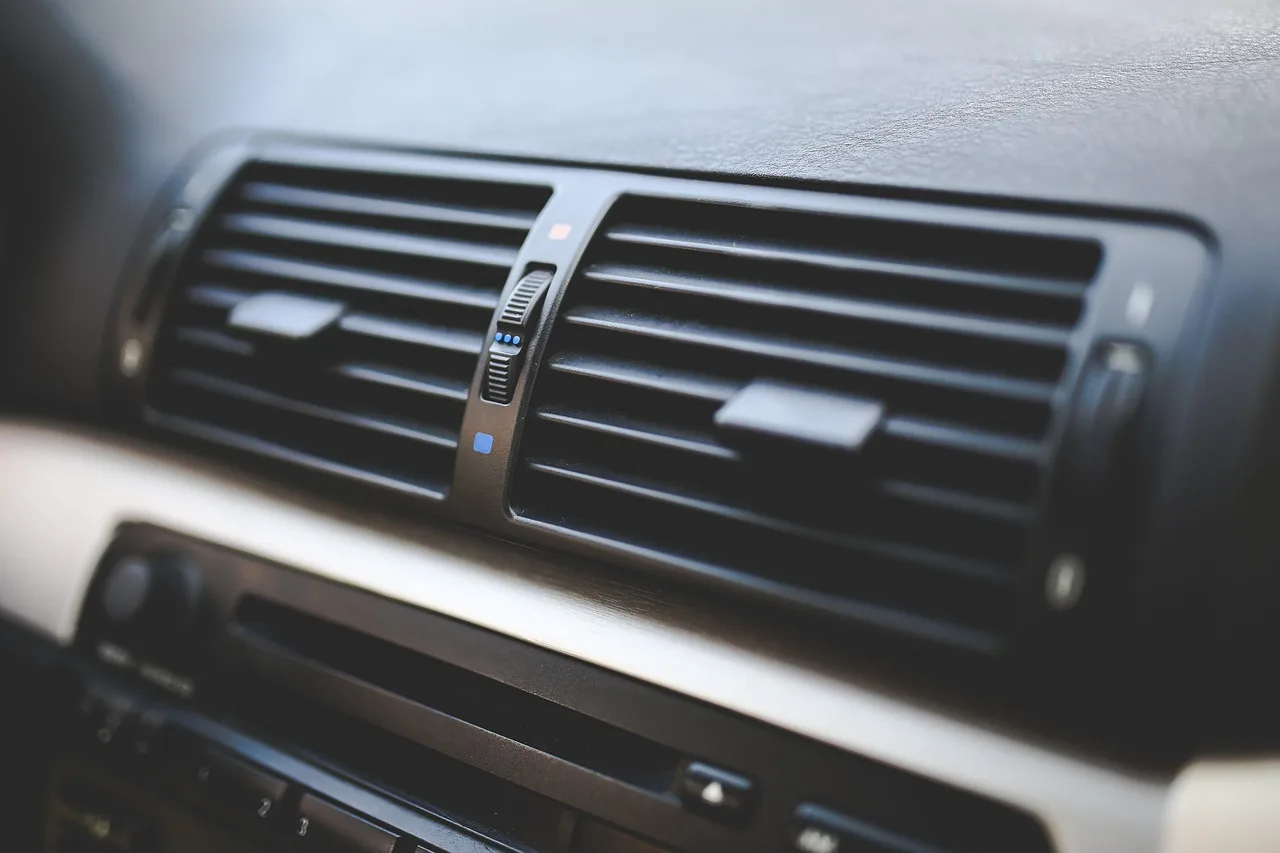
Clean the vent face when the odor sits at the grille or you can see dust in the slats. This is the least invasive fix, and it should come before spraying anything into the HVAC system. Chemical Guys advises vacuuming first, then using a brush rather than pushing liquid into the opening.
-
Switch off recirculation.
Open the windows and start the interior fan on low. Fresh cabin ventilation helps pull fumes out while you work and keeps cleaner from hanging in the car. -
Vacuum the vent openings.
Use a crevice attachment to lift loose debris from the louvers and surrounding trim. This matters because dust and grit can drag through the slats when you brush them. -
Brush the slats gently.
Lightly dampen a soft-bristle detailing brush with interior cleaner, then work one vent at a time. Do not soak the brush; a wet brush can leave residue in channels. -
Wipe the face dry.
Use a microfiber towel to catch the loosened debris and dry the vent face. This helps keep dust from settling right back into the same spot. -
Check airflow again.
Turn the fan to medium for 30 seconds and smell the air at the vent. If the odor remains but the grille is clean, move to the intake and filter path.
A common first-timer mistake is scrubbing the louvers hard enough to bend them. That can leave the vent pointing the wrong way and still not solve the odor. Gentle brushing plus vacuuming is usually enough for surface grime.
Should you spray cleaner directly into the vents?
No. Direct spraying into the vent opening is a poor first move because liquid can be driven into ducting, and Chemical Guys warns it can push fluid deeper where it is harder to remove. Use cleaner on the brush for vent surfaces, and use disinfectant at the plenum intake if the odor points into the HVAC system.
If the smell is in the HVAC system
-
Find the plenum intake.
Look at the base of the windshield near the wipers. That intake is the entry point for fresh air and the place Consumer Reports recommends spraying cleaner into the plenum.
(Consumerreports) -
Remove the cabin filter first.
If your car has one, pull it before spraying disinfectant. Consumer Reports says cabin filters are often behind the glove compartment door, and a dirty filter can reduce airflow. -
Spray the intake, not the vent.
Use the disinfectant as directed at the plenum intake with the fan on low and the windows open. Run the interior fan briefly so the cleaner is drawn through the HVAC path instead of pooling at the grille. -
Reinstall or replace the filter.
Put in a fresh filter if the old one is dirty or saturated. If the filter is just dusty, reinstall only after the area is dry and odor-free.
What can you use to disinfect car air vents safely? A disinfectant or AC disinfectant designed for HVAC use is the safer choice when you spray at the plenum intake, not into the vent faces. Lysol-type disinfectants and auto-parts-store AC disinfectants are commonly used for this kind of treatment, but the spray path matters more than the label.
How do you know if the smell is from the vents or the evaporator?
Use timing and location together. Vent-surface odor is strongest at the grille and can often be reduced by vacuuming and brushing alone. Evaporator odor shows up when the AC starts, especially after the car sits closed, because the evaporator core is a common moisture-collection point where bacteria and mold can grow.
If the smell is strongest during the first minute or so of AC use and then fades, the evaporator is a likely place to check first. If it is present with the fan on but AC off, inspect the vent face and intake path. If you can smell it from multiple vents, the source is usually upstream of the cabin outlets.
What if the smell comes back?
If the odor returns within about 48 hours, treat that as a sign the source may not have been fully reached. The usual next suspects are a clogged evaporator drain, a saturated cabin filter, or deeper HVAC contamination that needs more than a surface clean. Repeated masking or light spraying will not fix that pattern.
Escalation ladder
-
Replace the cabin filter.
If the filter is dark, damp, or loaded with debris, replace it rather than trying to clean it. A saturated filter can hold odor and block airflow. -
Check the drain path.
After running the AC for about 10 minutes, look for water dripping under the car. No drip can mean the evaporator drain is clogged, which keeps moisture in the housing. -
Repeat intake treatment.
Use the plenum spray again with the fan on low, windows open, and the filter removed if access requires it. Let the system dry before closing up the cabin.
If the smell disappears for a day after you clean the grille, then comes back after a humid commute, that pattern usually means the problem was never limited to the vent face. Move to the intake and filter path instead of repeating the same surface clean.
How do I stop car vents from smelling again?
Prevention depends on drying the system and keeping airflow open. Run the fan briefly before shutdown so the evaporator has a chance to dry, keep up with cabin filter intervals, and clean more often during humid seasons. Dust plus moisture is what lets odor return.
A practical maintenance cadence is to inspect the cabin filter at each scheduled service, then shorten that interval if you drive in heavy humidity, dusty areas, or with frequent recirculation use. If the car has automatic climate control or rear vents, stale air can still move through branches of the ducting even when the front grille looks clean.
Frequently asked questions
How to get rid of bad smell in car air vents
Start with the vent face, then move upstream if the odor persists. Vacuum the louvers, brush with a lightly dampened detailing brush, and wipe with a microfiber towel. If the smell appears when the AC starts, treat the plenum intake and replace a dirty cabin filter.
How to get rid of musty smell in car vents
Open the windows, run the fan on low, and disinfect the plenum intake at the base of the windshield. If the cabin filter is behind the glove compartment, remove it before spraying. Replace any filter that looks dark, damp, or clogged, since airflow loss makes odors linger.
Should I spray cleaner directly into car vents?
No. Spray cleaner onto a soft-bristle brush for the vent faces, or into the plenum intake if you are treating the HVAC source. Direct spraying can drive liquid into ducting and make the problem harder to clear. Keep the fan on low and the windows open.
What can I use to disinfect car air vents safely?
Use an AC disinfectant or disinfectant designed for HVAC odor treatment, and apply it at the plenum intake rather than the vent opening. For surface cleaning, use interior cleaner on the brush, not a direct spray into the vents. Always ventilate the cabin while working.

Hi, I’m Melvin, an automobile engineer with extensive experience in automobile equipment. I currently work for a local automobile firm, where I specialize in the car parts industry. I’ve had the opportunity to collaborate with seasoned inspectors, gaining invaluable hands-on experience that goes beyond just theory.
My passion for automotive care started at a young age, which led me to create CarSpareCare. Through CarSpareCare, I share the knowledge and skills I’ve acquired over the years to help others navigate the world of car maintenance and repairs.
My goal is to provide practical tutorials, essential safety advice, and the latest industry insights so that anyone—whether a beginner or an expert—can confidently tackle their automotive projects.