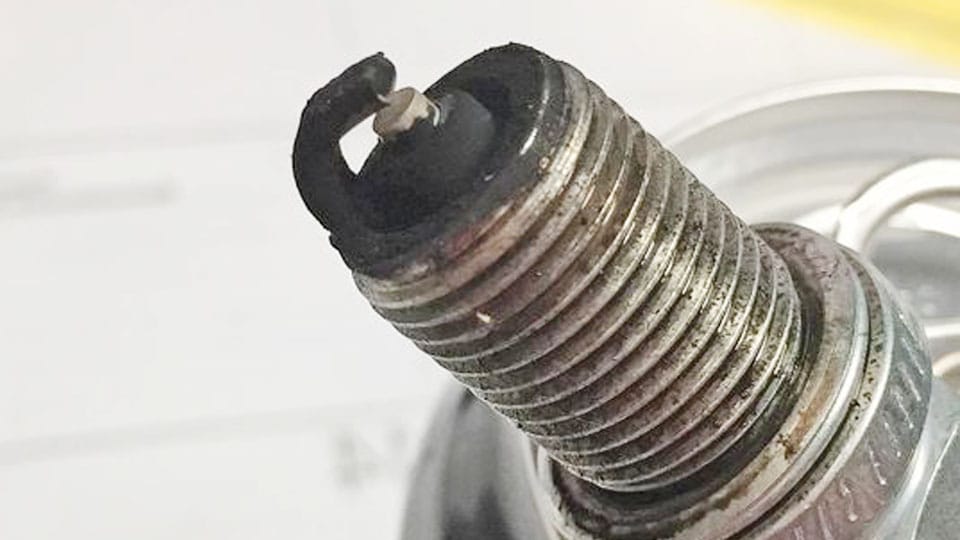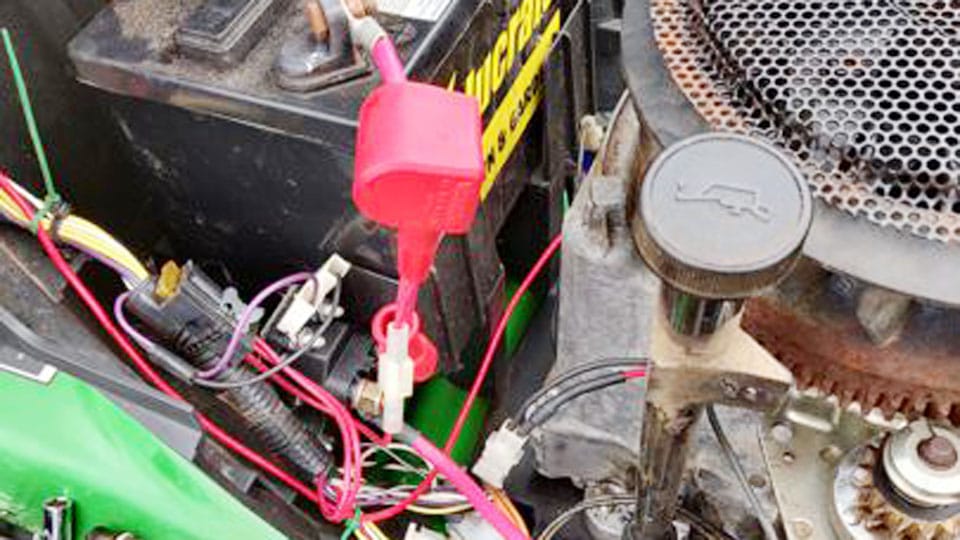
Choose spark plugs by matching your engine code, thread size, reach, seat type, heat range, and electrode design to the vehicle maker’s specification, then stay with OEM unless your engine or conditions call for a different heat range. Wrong plugs can contribute to misfires, poor fuel economy, hard starts, and possible pre-ignition or catalytic converter damage. This guide shows how to read fitment data first, then decide whether to keep OEM plugs, choose longer-life materials, or select a plug better suited to towing, short trips, or tuned engines. For related maintenance steps, see our guides on ignition coils, misfire diagnosis, reading spark plug condition, and spark plug torque and gapping procedures.
Start with the owner’s manual
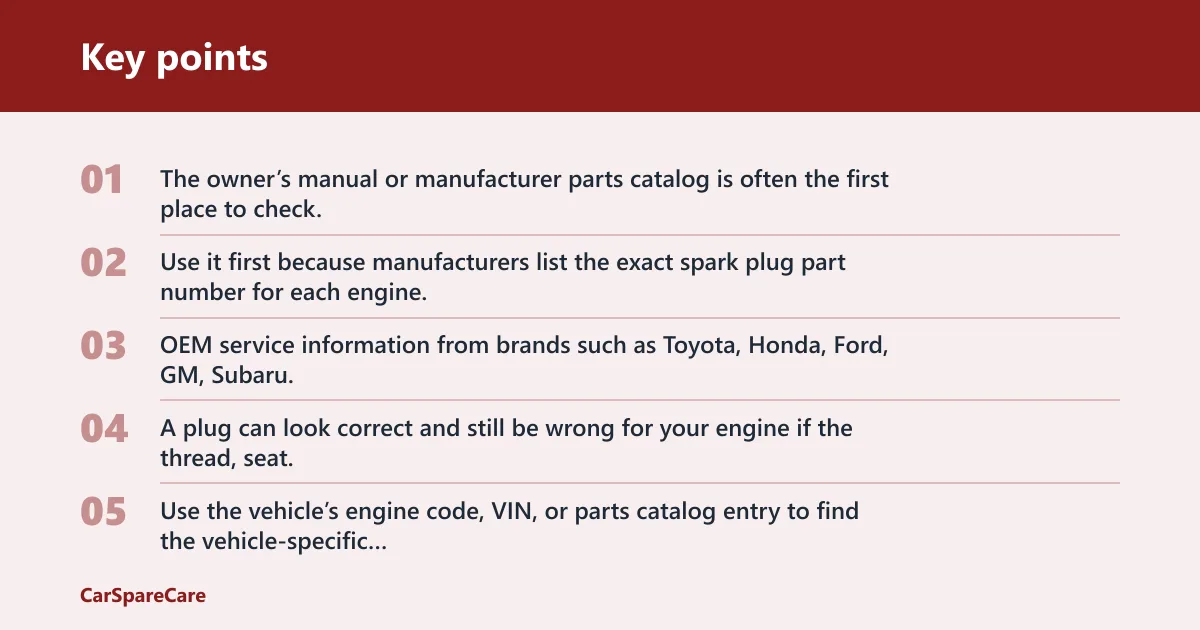
The owner’s manual or manufacturer parts catalog is often the first place to check. Use it first because manufacturers list the exact spark plug part number for each engine, plus approved substitute brands, the correct heat range, and the service interval. OEM service information from brands such as Toyota, Honda, Ford, GM, Subaru, and Volkswagen typically ties the plug choice to the engine code or VIN rather than to the vehicle model name alone.
That order matters. A plug can look correct and still be wrong for your engine if the thread, seat, or heat range does not match the factory specification.
Find the exact part number first
Use the vehicle’s engine code, VIN, or parts catalog entry to find the vehicle-specific spark plug part number. Then check whether the maker lists approved substitute brands, not just a generic size. Major plug makers such as NGK, Denso, Bosch, and Champion all publish vehicle lookup data and catalog notes that track fitment by engine family, not just by diameter.
That part number tells you more than brand. It usually ties together thread diameter, thread length, seat type, heat range, electrode material, and the expected service interval.
Note the service interval and heat range
Service interval matters because long-life plugs are chosen for durability, not because they suit every engine better. Heat range matters because it controls how quickly a spark plug dissipates heat. Manufacturers and plug makers use different numbering systems, so “hot” and “cold” cannot be compared by number alone across brands. NGK, Denso, Bosch, and Champion each define heat range in their own catalog system, so always cross-check the engine listing instead of translating by number alone.
Stay with the listed range unless the engine setup calls for a specific change, such as a tuned engine, sustained towing, or another condition the manufacturer accounts for. Do not guess here.
Are spark plugs universal?
No. Spark plugs are not universal for all vehicles, and the wrong plug can cause misfires, poor fuel economy, or engine damage. The plug must fit the cylinder head, seal correctly, and operate in the heat range the engine was designed for. OEM service data and plug-maker catalogs treat fitment as engine-specific for a reason.
Why thread size and reach must match
Thread diameter must fit snugly in the cylinder head. Thread length, often called reach, prevents the plug from sitting too deep or too shallow. If the reach is wrong, the plug may seal badly or place the firing tip in the wrong part of the chamber.
That can affect combustion and, in severe cases, create contact problems inside the chamber. Fitment is not a vague “close enough” issue.
How seat type affects sealing
Seat type must match the engine’s sealing surface. The common types are gasket seat and taper seat. NGK, Denso, Bosch, Champion, and OEM service data all distinguish these seat styles because the sealing method changes how the plug clamps and transfers heat. If the seat does not match the head, the plug may not seal properly, which can lead to leakage, damaged threads, or an unstable installation.
A plug can thread in cleanly and still be wrong. Sealing is part of fitment.
Why the wrong plug can damage the engine
Wrong-plug problems do not stop at rough running. They can include fouling, pre-ignition, knocking, sealing issues, and thread damage. If the plug is too hot, it can run outside the safe operating window. If it is too cold, carbon can build up. Heat range guidance from major plug makers and OEM service manuals varies by engine, compression ratio, fuel control, and duty cycle, so universal mileage or temperature claims do not hold across every application.
The operating window commonly referenced in plug-maker and OEM guidance is above 500°C and below 950°C at the firing end. Below 500°C, leftover fuel can create carbon buildup and misfires. Above 950°C, hot plugs can lead to pre-ignition or knocking.
Match the fitment specs
Use fitment as the first filter. Choose the plug that matches the engine before you compare material, durability, or tuning options. If you are checking a replacement, verify the VIN and engine code first, then confirm the plug’s dimensions against the catalog entry.
Thread diameter
Thread diameter must match the cylinder head exactly. It is not a universal size, and the fit affects both sealing and thread safety. A mismatch can damage the head or leave the plug loose.
Thread reach
Thread reach sets how deep the plug sits in the chamber. Too short, and the plug sits too high. Too long, and it may sit too deep or interfere with chamber parts. Either problem can disturb combustion.
Seat type
Confirm whether the head uses a gasket seat or a taper seat. That detail affects how the plug clamps and seals. If you are unsure, use the manufacturer catalog, not a visual guess. Seat type is one of the first details OEM service data and plug manufacturers call out because a wrong seat can still “fit” without sealing correctly.
Ignition system type
Ignition system type matters too, especially with coil-on-plug and waste spark setups. Those systems can change how hard the plug works and which electrode material makes sense for service life and wear. See our ignition coils guide for more on how coil output and plug demand interact.
Say your engine calls for a taper-seat iridium plug with a specific reach, but you buy a gasket-seat plug because the hex and thread size look similar. It may thread in, then seal poorly and misfire under load. The issue is fitment, not brand.
Real-world failure case: wrong reach
A common shop-level failure is a plug with the wrong reach in a high-mileage four-cylinder. The symptom pattern is a persistent misfire on one cylinder, sooty plug threads, and a rough idle that does not improve after coil swapping. Diagnosis usually comes from comparing the removed plug’s firing position to the head design and checking the catalog by engine code. The outcome, once the correct reach is installed, is often a stable idle and cleaner combustion because the electrode sits where the chamber was designed to burn it.
What spark plug heat range means
Heat range tells you how quickly the plug sheds heat from its tip. A hotter plug holds more heat at the firing end, while a colder plug moves heat away faster. The right choice keeps the plug in the safe operating window.
Hot plugs and pre-ignition risk
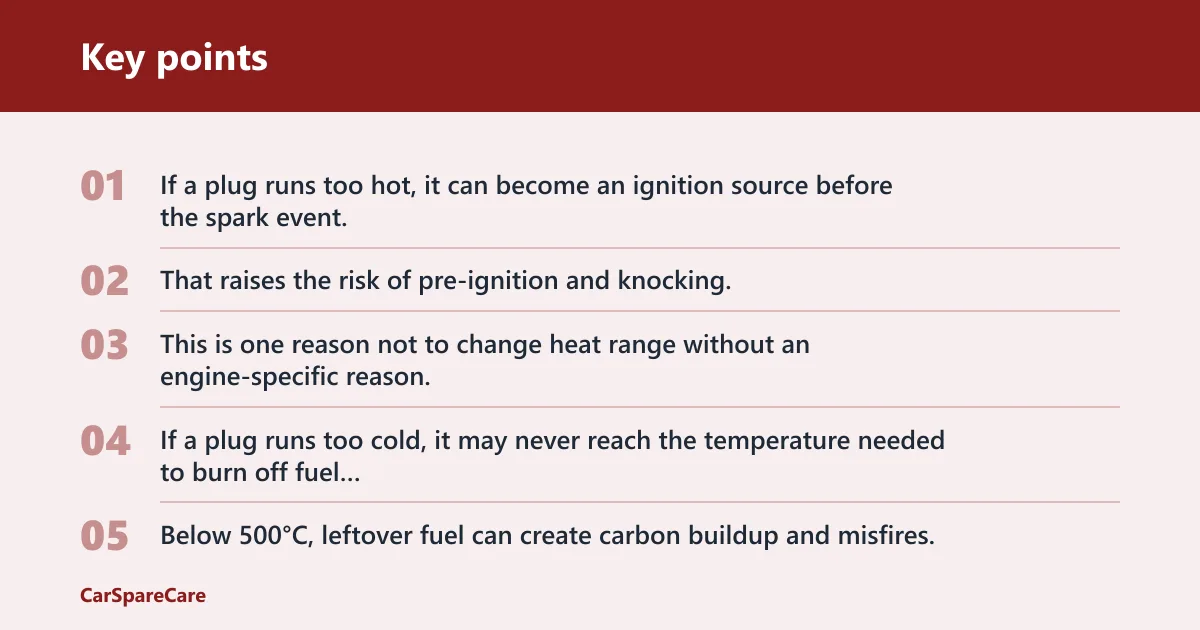
If a plug runs too hot, it can become an ignition source before the spark event. That raises the risk of pre-ignition and knocking. This is one reason not to change heat range without an engine-specific reason.
Cold plugs and fouling risk
If a plug runs too cold, it may never reach the temperature needed to burn off fuel residue. Below 500°C, leftover fuel can create carbon buildup and misfires. That is why short-trip driving, rich mixtures, or cold operation can expose a plug problem sooner.
Why modified or turbo engines need special attention
Turbocharged, high-compression, or tuned engines can put more heat and cylinder pressure into the plug. That does not mean you should automatically choose a colder plug, but it does mean the factory heat range deserves a closer look before any change is made. For turbo applications, plug makers often recommend confirming the gap, heat range, and reach together rather than changing one variable at a time.
Real-world failure case: an over-gapped turbo plug is a common cause of boost-dependent misfire. The symptom is usually clean idle quality followed by breakup or hesitation under load. Diagnosis often shows the coil is healthy, but the spark blowout starts as cylinder pressure rises. The outcome is usually simple: return to the engine’s specified gap, and the misfire under boost disappears.
Which electrode material should you choose?
Choose electrode material by service life and ignition-system needs, not by marketing language. Copper, platinum, double platinum, and iridium each offer different durability. The best fit depends on the engine’s spark demand, the service interval you want to follow, and the manufacturer’s own naming system for longevity. Mileage claims vary by engine, tune, duty cycle, and plug design, so use them as category guides rather than guarantees.
Copper and nickel
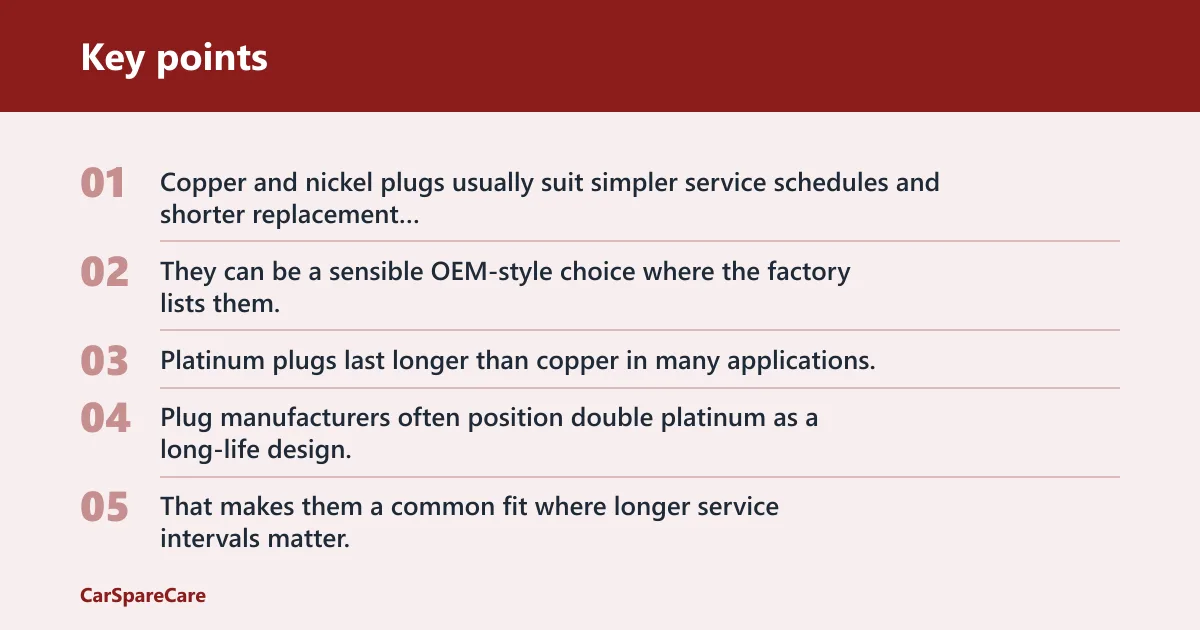
Copper and nickel plugs usually suit simpler service schedules and shorter replacement intervals. They can be a sensible OEM-style choice where the factory lists them, but they are generally chosen for cost and spark characteristics rather than long life.
Platinum and double platinum
Platinum plugs last longer than copper in many applications, and double platinum adds durability on both electrodes. Plug manufacturers often position double platinum as a long-life design, but actual service life still depends on engine design, heat range, and driving conditions. That makes them a common fit where longer service intervals matter.
Iridium for longer service life
Iridium plugs are often chosen for long service intervals and precise factory fitment. They are a long-life option in many OEM applications, but their service life still varies with engine tune, fuel quality, duty cycle, and how closely the plug matches the specified heat range and gap. They are not an automatic upgrade for every engine.
What to choose for coil-on-plug and waste spark systems
Coil-on-plug systems often benefit from long-life plugs because access can be harder and replacement labor matters. Waste spark systems can be more sensitive to plug design and wear across the paired cylinders. In both cases, follow the manufacturer’s plug type first.
A common first-timer mistake is buying iridium plugs because they sound “better,” then installing them in an engine that specifies a different seat or gap. Durability is useful only when the part still matches the engine.
Real-world failure case: wrong seat type
Another common case is a taper-seat plug installed where the head needs a gasket seat. The symptom is often an exhaust tick or a faint leak smell, sometimes followed by carbon tracking around the plug shell. Diagnosis usually comes from inspecting the washer area and checking the service catalog against the engine code. The outcome after correction is a proper seal, restored compression at the plug seat, and no further leakage at that cylinder.
Do you need to gap new plugs?
Yes, you need to verify the gap against the engine specification before installation. Some plugs arrive pre-gapped, but factory-gapped does not necessarily mean ready for every engine. The engine maker’s spec is the one that matters, and plug makers like NGK, Denso, Bosch, and Champion all advise checking against the application rather than assuming the box setting is final.
Where to find the correct gap spec
Check the owner’s manual, under-hood label, or manufacturer parts data. The gap is the distance between the center and ground electrodes, and it is engine-specific. Do not assume the number printed on the box is correct for your vehicle.
When to check factory-gapped plugs
Check the gap even on new plugs. Shipping, packaging, and handling can alter it, and some engines need a very specific setting. If the plug material or design is fragile, adjust carefully and only if the manufacturer allows it.
What happens if the gap is too wide or too tight
If the gap is too wide, the ignition system may struggle to fire the plug, which can cause misfire under load or at startup. If the gap is too tight, the spark kernel can be weaker and combustion quality can suffer.
Suppose a four-cylinder turbo engine calls for a narrow gap, but the replacement plugs are left at a wider setting. The engine may idle acceptably, then misfire when boost rises because the coil must work harder to jump the extra distance.
Spark plug selection worksheet
Use this worksheet to turn vehicle specs into a yes/no decision before you buy. Work down the list in order. If one item fails fitment, stop and find the correct part number. Final decision flow: verify VIN or engine code first, then confirm fitment specs, then choose OEM-equivalent or an approved upgrade only if the engine use case calls for it.
| Vehicle spec to verify | What the spec means | Acceptable choices | Red flags |
|---|---|---|---|
| Thread diameter | Diameter of the threaded shell that must fit the cylinder head exactly | Exact manufacturer spec; approved substitute with the same diameter | Loose fit, forced threading, “close enough” size |
| Reach | How far the plug threads into the head; controls depth in the chamber | Exact specified reach from the manual or parts catalog | Too deep, too shallow, chamber interference |
| Seat type | How the plug seals against the head: gasket seat or taper seat | Seat type listed for the engine | Wrong sealing surface, leak, damaged threads |
| Heat range | How quickly the plug dissipates heat | Manufacturer-specified range; justified change only for engine setup | Too hot: pre-ignition or knocking; too cold: carbon buildup or misfires |
| Electrode material | Copper/nickel, platinum, double platinum, or iridium | Material listed for the engine or service interval | Material chosen only for marketing or life claims |
| Gap | Distance between center and ground electrodes | Exact engine specification before installation | Too wide, too tight, guessed setting |
| Ignition system type | Coil-on-plug, waste spark, or other factory setup | Plug type suited to the ignition system and service plan | Ignoring system type when selecting long-life or performance plugs |
Final yes/no flow: Yes if the VIN or engine code matches the catalog entry, the fitment specs match exactly, and the plug is either OEM-equivalent or an approved upgrade for your use case. No if any dimension, seat, heat range, or gap is uncertain. For a stock daily driver, default to OEM-equivalent. For towing, short-trip use, or a tuned engine, only choose an approved upgrade if the manufacturer or plug maker lists that application clearly.
How do I find the right spark plugs for my car?
Start with the owner’s manual, then confirm the exact plug part number in the manufacturer catalog using the VIN or engine code. Match thread diameter, reach, seat type, heat range, gap, and ignition system type before comparing brands. Approved substitutes should match those specs, not just the box label.
How do I choose the best spark plugs for my car?
The “best” plug is the one that fits your engine and your use case. For a stock daily driver, that usually means OEM-equivalent fitment. For long service intervals, pick the material and design the maker allows. For towing, short trips, or tuned engines, reassess heat range and gap against the factory guidance.
How do I choose the right spark plug?
Choose the right plug by checking the engine’s exact specification first, then selecting a plug that matches it in every critical dimension. Fitment comes before material. After that, choose the durability level that suits your service interval and driving pattern, without changing heat range unless the engine calls for it.
What happens if you put the wrong spark plugs in your car?
Wrong plugs can misfire, foul, run too hot, run too cold, or seal badly in the head. They may also damage threads during installation. In some cases the engine will start and run, but poorly enough to hurt fuel economy and trigger driveability issues before a warning light appears. If misfire symptoms appear after plug service, check the coil packs and plug condition together rather than replacing parts at random.
What is the right spark plug heat range for my engine?
The right heat range is the one listed for your exact engine by the manufacturer. Use that as the starting point, then factor in approved substitute plugs if the catalog lists them. A plug that is too hot can pre-ignite; a plug that is too cold can foul. Because numbering systems differ by brand, compare application data instead of relying on a universal hot-or-cold scale.
Do I need to gap new spark plugs before installing them?
Yes, verify the gap before installation, even if the plug arrives pre-gapped. The correct gap is engine-specific and can vary by ignition system and plug design. If the gap is outside spec, correct it carefully or choose a plug that the maker says arrives ready for that engine.

Hi, I’m Melvin, an automobile engineer with extensive experience in automobile equipment. I currently work for a local automobile firm, where I specialize in the car parts industry. I’ve had the opportunity to collaborate with seasoned inspectors, gaining invaluable hands-on experience that goes beyond just theory.
My passion for automotive care started at a young age, which led me to create CarSpareCare. Through CarSpareCare, I share the knowledge and skills I’ve acquired over the years to help others navigate the world of car maintenance and repairs.
My goal is to provide practical tutorials, essential safety advice, and the latest industry insights so that anyone—whether a beginner or an expert—can confidently tackle their automotive projects.