A tire that keeps losing air at the wheel bead usually has a bead-seat leak, a bent or corroded rim, or a valve problem. If soap bubbles form only at the rim edge, the bead is the culprit. Ignore it and you may keep overinflating, damage the tire, or miss a wheel repair that the shop can actually fix. This guide shows how to separate bead leaks from punctures and valve leaks, then choose reseal, rim repair, or replacement.
What a bead leak


The tire bead seals the tire to the wheel. That seal happens where the bead presses against the wheel bead seat, the rim surface made to hold air. If that contact area is dirty, corroded, bent, or damaged, the tire can lose air slowly even when the tread looks fine.
A bad bead seal usually leaks at the rim edge, not through the tread. The leak may show up after inflation, after a temperature drop, or after the wheel has been removed and reinstalled. A slow leak at the rim is easy to mistake for a puncture unless you check the exact escape point.
Common causes include a tire bead damaged during installation, a wheel bead seat that is corroded or scarred, and a poor seal after a new tire goes on the rim. A valve stem or valve core can also leak, so the rim alone should not be blamed until you narrow the source.
Bead leak diagnosis checklist
Use this checklist to separate a bead leak from a valve leak, puncture, or wheel problem. Check the bead edge, valve stem, valve core, and tread in turn. The goal is to find the source before you reseat the tire or replace parts that are still good.
| Symptom | Likely cause | Next action |
|---|---|---|
| Slow leak after inflation, no tread damage visible | Bead-seat leak, valve stem leak, or valve core leak | Spray soapy water on the bead edge, valve stem, and valve core; watch for bubbles |
| Leak after new tire installation | Poor seating, contamination on the bead or rim, rim damage, or size mismatch | Deflate, inspect both bead seats, clean the rim, and reseat the tire if needed |
| Leak with visible rim corrosion | Corroded wheel bead seat or sharp corrosion cutting the bead | Remove the tire, clean or repair the wheel, then reseal or replace parts as needed |
| Air loss near the valve area | Old or dirty valve stem, cracked stem, or faulty valve core | Check the stem for cracks and replace the core first if bubbles form at the valve center |
| Rapid drop from a normal fill level | Puncture, bead failure, bent wheel, or damaged tire sidewall | Inspect immediately and do not keep driving if the tire looks flat or unstable |
PSI triage
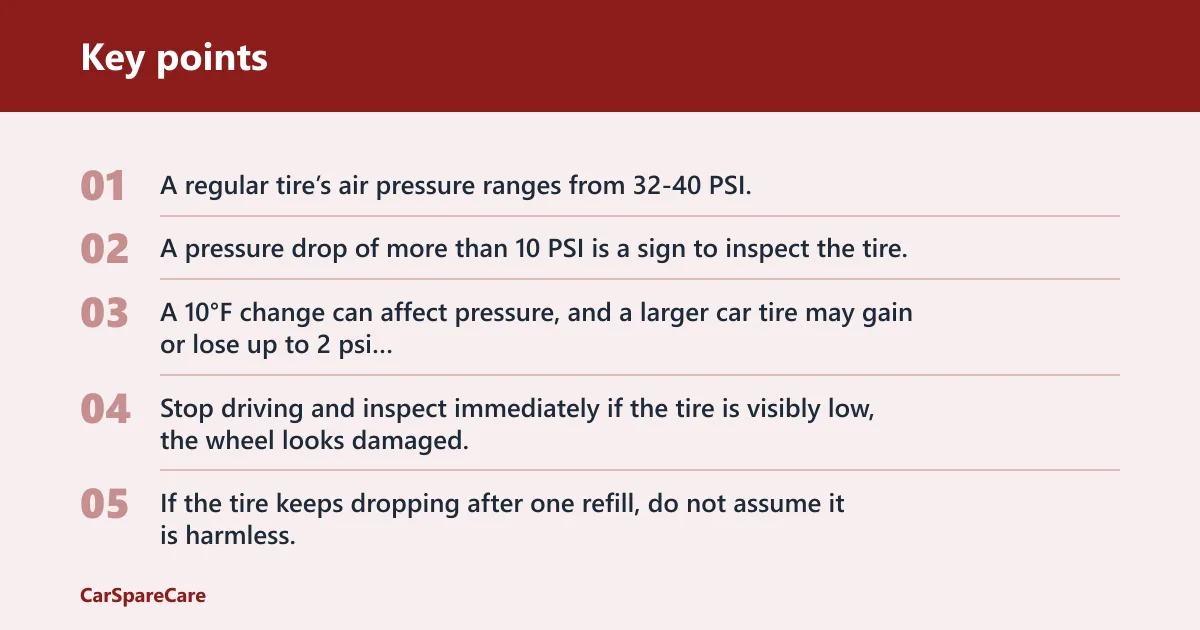
A regular tire’s air pressure ranges from 32-40 PSI. A pressure drop of more than 10 PSI is a sign to inspect the tire, not keep topping it off blindly. A 10°F change can affect pressure, and a larger car tire may gain or lose up to 2 psi from temperature change, so compare the reading with recent weather before deciding it is a leak.
Stop driving and inspect immediately if the tire is visibly low, the wheel looks damaged, or the pressure has dropped more than 10 PSI since the last check. If the tire keeps dropping after one refill, do not assume it is harmless. Find the leak source first.
Why is my tire losing air but no hole shows up?
No visible hole usually means the leak is not in the tread. The most common hidden sources are the bead seat, the valve stem, the valve core, or a wheel defect. Temperature swings can also make a healthy tire read lower the next morning, which can look like a leak when it is only a pressure change.
Bead seat leak versus puncture
A puncture from a nail, glass, metal, or wood chip often leaks from the tread or shoulder, and it may not leak immediately. A bead-seat leak usually shows bubbles at the rim edge where the tire meets the wheel. If the leak appears only around the rim edge, the bead or bead seat is worth checking first.
Valve stem and valve core leaks
Old or dirty valve stems can cause slow leaks. A faulty valve core can do the same. If bubbles appear at the valve stem base or at the valve center, the bead is not the main suspect. Replace the valve core first if the leak is tiny and the stem itself still looks sound.
Temperature changes that mimic a leak
Cold lowers PSI and warm air raises it. A tire can read low after an overnight drop and then read normal later in the day. A roughly 2% change in air volume per 10°F can move the gauge enough to confuse diagnosis, so confirm whether the pressure loss repeats after refilling.
Can a corroded wheel cause a bead leak?
Yes. Corrosion on the wheel bead seat can stop the tire bead from sealing, and sharp remaining corrosion can cut the tire or keep the seal from holding air. A wheel can leak even when the tire sidewall and tread look fine from the outside.
How corrosion damages the seal
The wheel bead seat needs a smooth contact surface. Rust buildup creates rough spots that let air escape. If the corrosion is sharp, it can also damage the bead itself. That matters because the tire may keep leaking even after it is inflated to the right pressure.
What wheel damage looks like
A bent wheel can cause tire leaks by changing the shape of the bead seat. Dents, gouges, and rim edge damage can do the same. If the leak started after hitting a pothole or curb, the wheel should be inspected for bend or deformation, not only for visible rust.
If your front tire drops from 35 PSI to 28 PSI over two days, that pattern can point to the bead seat rather than a tread puncture, especially if a spray test shows bubbles only at one patch of the rim edge. That points to the bead seat, not a tread puncture. If the rim edge is rusty and rough, cleaning alone may not hold air for long.
When cleaning is enough and when repair is needed
Light corrosion can sometimes be cleaned off the bead seat before the tire is resealed. If corrosion has pitted the wheel, left sharp edges, or bent the rim, cleaning may not solve the leak. At that point, wheel repair or replacement can be the safer answer.
Why does a new tire still leak at the rim?
A new tire can still leak at the rim if it was not seated correctly, if the bead or rim was contaminated, or if the wheel has damage that interferes with sealing. Poor sealing can happen right after installation and can worsen over time if the underlying issue is not fixed.
Poor seating during installation
A tire bead damage can happen during installation of a new tire, especially if the mounting process pinches or scrapes the bead. If the tire was not fully seated, air can escape at the bead line even though the tire is new. Reseating may solve it if the bead and wheel are still intact.
Contamination on the bead or rim
Soap residue, dirt, old sealant, and rust flakes can block the bead from sealing. The wheel bead seat should be clean and smooth before the tire goes back on. If contamination is left in place, the tire may leak again soon after a fresh inflation.
Mismatch, damage, or a bent wheel
If the tire size does not match the wheel correctly, the bead may not seat the way it should. A bent wheel, a damaged bead seat, or an installation error can all cause repeat leaks. When a new tire still loses air, the rim deserves the same attention as the tire.
Suppose a newly mounted tire leaks down overnight after the first drive home. If soap bubbles form on the rim edge and not on the valve stem, the shop should check seating, rim cleanliness, and wheel shape before calling the tire defective. A repeat leak is often a setup problem, not bad luck.
Valve stem, valve core, or bead?
Check the valve before you blame the bead. A leak at the stem base points to the stem seal, a leak at the center points to the valve core, and a leak that appears only around the rim edge points to the bead or bead seat. A simple spray-soap test helps sort them out fast.
How to check the valve stem
Spray soapy water around the valve stem base and the stem body. Bubbles at the base can mean the seal between the wheel and the valve stem has failed. Cracks in the stem are common on older parts, and a dirty or aging stem can leak slowly without obvious damage.
How a faulty valve core leaks
The valve core sits inside the stem and can be faulty on its own. If bubbles form at the center pin area, replacing the core may stop the slow leak. It is a small part, but it can cause the same repeated top-off problem that a bead leak does.
Simple spray-soap checks to narrow the source
- Inflate the tire to its normal range and park on level ground.
- Spray the bead edge, the valve stem, the valve core, and the tread surface.
- Watch for steady bubble growth, not just foam sitting on the surface.
- Mark the exact spot where bubbles appear.
- If bubbles appear at the rim edge only, focus on the bead seat and wheel.
When to reseal, repair, or replace
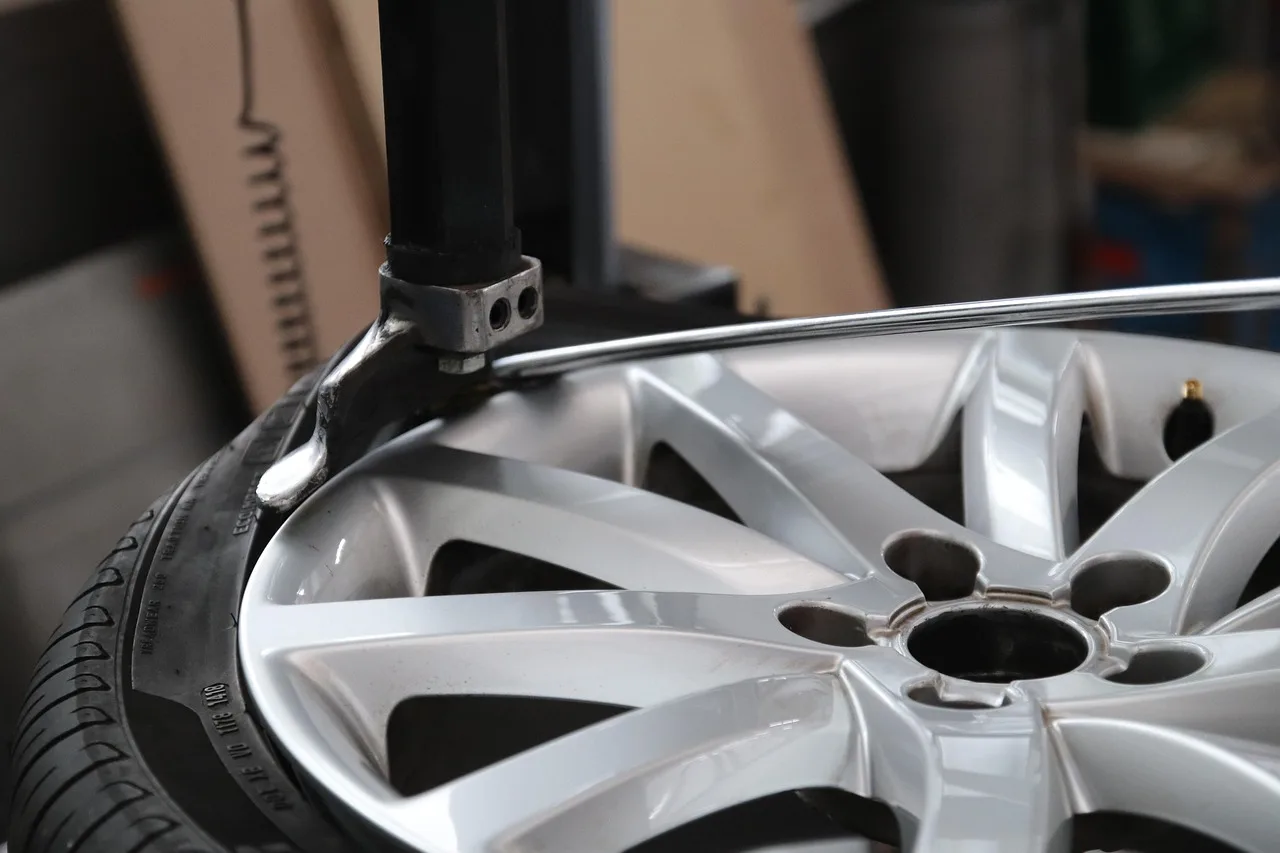
Reseal the bead when the tire and wheel are sound but the seal is dirty, lightly corroded, or not seated correctly. Repair the wheel when the bead seat is bent or damaged but still salvageable. Replace the tire or wheel when the bead, sidewall, or rim damage is severe enough that sealing is no longer reliable.
When a bead can be resealed
A reseal makes sense when the bead surface is intact and the wheel only needs cleaning. That may include removing rust from the bead seat, cleaning contamination, and remounting the tire. If the leak stops after reseating and holds pressure, the problem was the seal, not the tire body.
When the wheel needs repair or replacement
If the wheel is bent, deeply corroded, or damaged at the bead seat, repair may be required. A wheel with sharp corrosion can keep cutting the bead or leaking air. If the wheel cannot be made smooth and round enough to hold a seal, replacement is the better choice.
When the tire should be replaced
Old tires with dry rot and age-related cracking are a different problem. Dry rot makes the tire brittle, and cracked rubber can cause sudden air loss or make repair unsafe. If the bead area is torn, the sidewall is cracked, or the tire has repeated failures, replacement is safer than another reseal.
Frequently asked questions
Why does my tire keep losing air at the wheel bead?
Repeated air loss at the wheel bead usually means the bead is not sealing against the wheel bead seat. Dirt, corrosion, a bent rim, or bead damage during mounting can cause it. A valve stem or valve core can also leak, so check the exact bubble location before replacing parts.
Why are my tires constantly losing air?
Constant air loss can come from small punctures, valve stem leaks, valve core failure, bead-seat leaks, or wheel damage. Temperature swings can also make pressure read lower after a cold night. If the drop is more than 10 PSI, inspect the tire instead of relying on repeated refills.
My tire keeps losing air pressure—what could be wrong?
Start with the valve, the tread, and the rim edge. A slow leak near the bead points to a sealing problem, while a tread puncture usually comes from nails or sharp debris. If the tire was recently installed, poor seating or contamination may be the reason.
Car tire keeps losing air slowly near the rim: what causes it?
A slow leak near the rim is often a bead-seat leak caused by corrosion, dirt, or a bead that was not seated correctly. A damaged wheel can also leak in that area. Spray the rim edge with soapy water and look for steady bubbles to confirm the source.
Tire losing air but no hole: could it be the bead?
Yes. If the tread shows no puncture and the leak appears at the rim edge, the bead is a strong suspect. The bead may be damaged, dirty, or not seated properly. Check the valve stem and valve core too, because they can leak without leaving a visible hole.
Is it normal for a tire to lose a little air over time?
A small pressure change can happen with temperature swings, and a tire may read lower after cold weather. But repeated loss that goes beyond that pattern is not normal. A regular tire’s air pressure ranges from 32-40 PSI, and a drop of more than 10 PSI calls for inspection.

Hi, I’m Melvin, an automobile engineer with extensive experience in automobile equipment. I currently work for a local automobile firm, where I specialize in the car parts industry. I’ve had the opportunity to collaborate with seasoned inspectors, gaining invaluable hands-on experience that goes beyond just theory.
My passion for automotive care started at a young age, which led me to create CarSpareCare. Through CarSpareCare, I share the knowledge and skills I’ve acquired over the years to help others navigate the world of car maintenance and repairs.
My goal is to provide practical tutorials, essential safety advice, and the latest industry insights so that anyone—whether a beginner or an expert—can confidently tackle their automotive projects.