
Check brake fluid with the car parked on level ground, engine off unless the manual says otherwise, then compare the level with the MIN and MAX marks and inspect color and pedal feel together. Dark fluid, a dropping level, or a soft pedal calls for service or a leak check, not a quick top-up. Ignoring a brake-fluid problem can mean longer stopping distances or total brake loss. This guide shows how to inspect the reservoir safely at home and decide whether you need a simple top-up, a booked service, or an immediate leak inspection.
What brake fluid level tells you
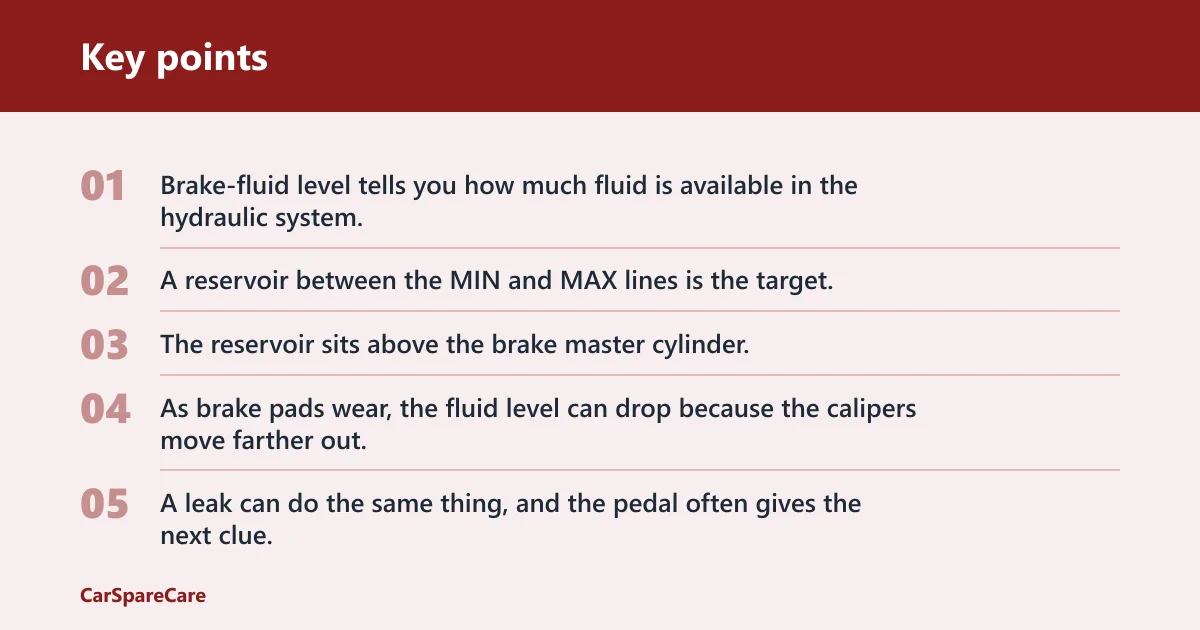
Brake-fluid level tells you how much fluid is available in the hydraulic system, but it does not tell you everything by itself. A reservoir between the MIN and MAX lines is the target, yet color and pedal feel help separate normal pad wear from a likely fault.
Why level alone is not enough
The reservoir sits above the brake master cylinder, which transfers pedal force through the hydraulic brake system. As brake pads wear, the fluid level can drop because the calipers move farther out. That can be normal. A leak can do the same thing, and the pedal often gives the next clue.
Say your sedan’s reservoir sits just under MAX after a routine check, but the pedal has turned soft while parked. That combination needs more attention than the level alone. A full-looking reservoir does not cancel out a spongy pedal.
📊 Most cars use DOT 3, DOT 4, or DOT 5 brake fluid specifications. Source: Wikihow.
Where is the brake fluid reservoir?
The brake fluid reservoir is usually a translucent or semi-transparent plastic tank near the back of the engine bay on the driver’s side, with MIN and MAX markings visible through the side on many newer cars. The owner’s manual should tell you the exact location and fluid type for your model.
How to find it under the hood
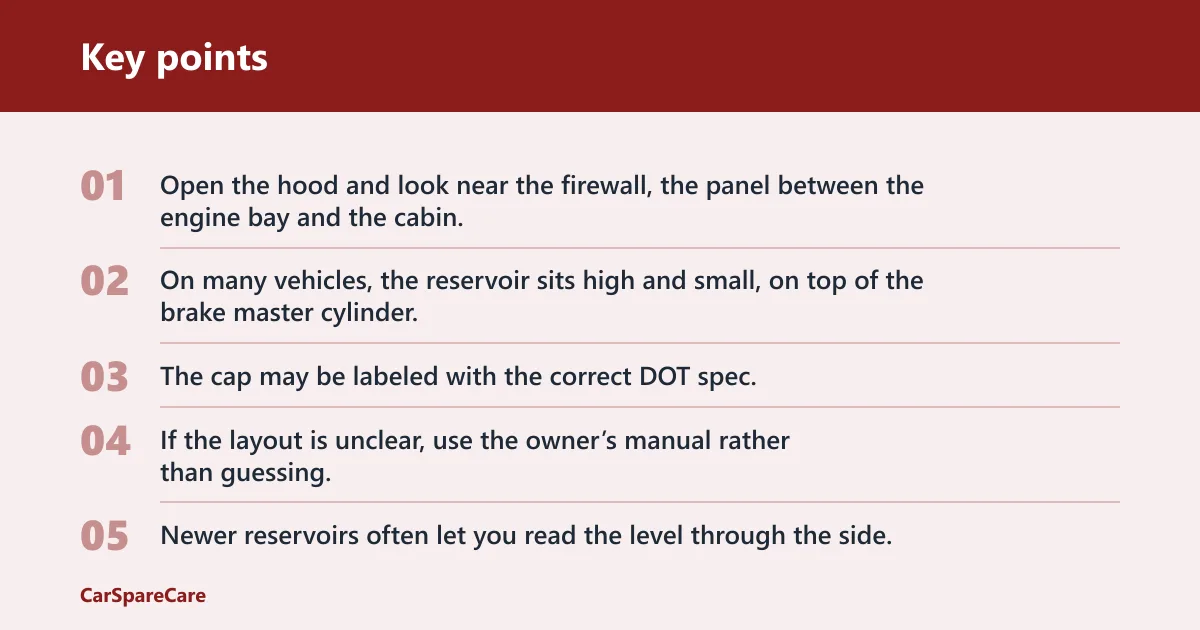
Open the hood and look near the firewall, the panel between the engine bay and the cabin. On many vehicles, the reservoir sits high and small, on top of the brake master cylinder. The cap may be labeled with the correct DOT spec. If the layout is unclear, use the owner’s manual rather than guessing.
Translucent reservoirs versus older metal ones
Newer reservoirs often let you read the level through the side. Older cars may have metal reservoirs that require removing the cap to inspect fluid. Either way, keep dirt out of the opening, and only check the fluid with the vehicle parked on level ground and the engine off unless the manual says otherwise.
Suppose you are checking a classic car with a metal reservoir. You cannot read the fluid from outside the tank, so you lift the cap and inspect directly. The method changes, but the judgment does not: you still want the level between MIN and MAX, and you still need the right brake-fluid type.
Brake fluid level marks explained
Brake fluid should sit between the MIN and MAX lines in the reservoir. Between those marks is the acceptable range. Near MAX is ideal after a proper top-up. Near MIN is a warning that needs a closer look. Below MIN is low and should not be ignored. (Wikihow)
What low, near MIN, and between the lines mean
If the fluid is between the lines, the level is generally acceptable. If it is near MIN, inspect the pads and look for leaks before you simply add fluid. If it is below MIN, that can indicate worn brake pads, a leak, or both. Significant drop below the minimum line is not something to brush off.
When topping up is appropriate
Top up only after you have confirmed the correct DOT specification from the owner’s manual or the reservoir cap. Do not assume they are interchangeable.
Use the manufacturer-marked MAX line as the fill target when topping up is appropriate. Do not guess at volume. A small reservoir can overfill quickly, and overfilling can make a clean diagnosis harder later.
What color should brake fluid be?
Fresh brake fluid is usually light yellow or pale yellow, and some guidance describes it as nearly the color of vegetable oil. As fluid ages, it absorbs moisture over time because brake fluid is hygroscopic. Brown fluid usually means aging or degradation. Black or cloudy fluid suggests a problem that deserves inspection.
Fresh fluid, aging fluid, and problem signs
Color gives you a condition check, not a full verdict. Light yellow to pale yellow is the normal range for fresh fluid. Brown means the fluid has aged and likely needs replacement on schedule. Black or cloudy fluid is a stronger warning sign, especially if the pedal also feels soft or the level is dropping.
Brake fluid can also be tested with a chemical strip for copper content or with an optical refractometer for moisture content. Those tools help if you want more than a visual check, but the reservoir color and pedal feel still matter.
Brake pedal feel checks
Check pedal feel only while the vehicle is parked and stationary. Press the brake pedal gently with the engine off unless the manual says otherwise, and note whether it feels firm or soft. A spongy or soft pedal can suggest trouble, including air in the system, a leak, or degraded fluid.
Why a full reservoir with a soft pedal needs attention
A full reservoir does not guarantee healthy brakes. A reservoir that is full but still gives a spongy pedal can still mean trouble, especially if the pedal sinks more than expected or feels inconsistent. That combination points away from simple low-fluid wear and toward a system issue that needs inspection.
Brake fluid also takes heat and moisture into account in a way many drivers miss. Because it absorbs moisture over time, its boiling point drops, which is why maintenance intervals matter even when the level looks fine. The owner’s manual gives the service schedule for your vehicle.
Brake fluid decision table
| Observation | Likely meaning | Urgency | Next step |
|---|---|---|---|
| Level at MAX | Fluid level is where it should be | Low | Record the reading and check again at the next service interval |
| Between MIN and MAX | Normal operating range | Low | Continue routine monitoring |
| Near MIN | Possible pad wear or early leak | Moderate | Inspect pads and hoses soon, then confirm the cause |
| Below MIN | Low fluid; worn pads or a leak is possible | High | Do not ignore it. Inspect for leaks and book service |
| Clear or light yellow | Fresh fluid condition | Low | Keep monitoring and follow the maintenance interval |
| Brown | Aged or degraded fluid | Moderate | Plan a fluid service based on the owner’s manual |
| Black | Strong sign of contamination or severe aging | High | Have the system inspected and serviced |
| Cloudy or milky | Possible moisture contamination or fluid problem | High | Arrange inspection promptly |
| Full reservoir with a soft pedal | Hydraulic fault, air in the system, or another brake problem | High | Stop treating it as a simple top-up issue and get the system checked |
Note: A low reservoir can happen from normal pad wear, but a leak usually comes with a continuing drop in level or a pedal that feels soft, spongy, or inconsistent. Color alone does not prove a leak, and a dark reservoir alone does not prove immediate brake failure.
What to do after the check
If the fluid is between MIN and MAX, the color is reasonable, and the pedal feels firm while parked, you can keep monitoring it. If the level is near MIN, inspect the pads and look for leaks before topping up. If the level is below MIN, or the pedal is soft, book service and inspect for leaks immediately.
How to choose the correct DOT fluid
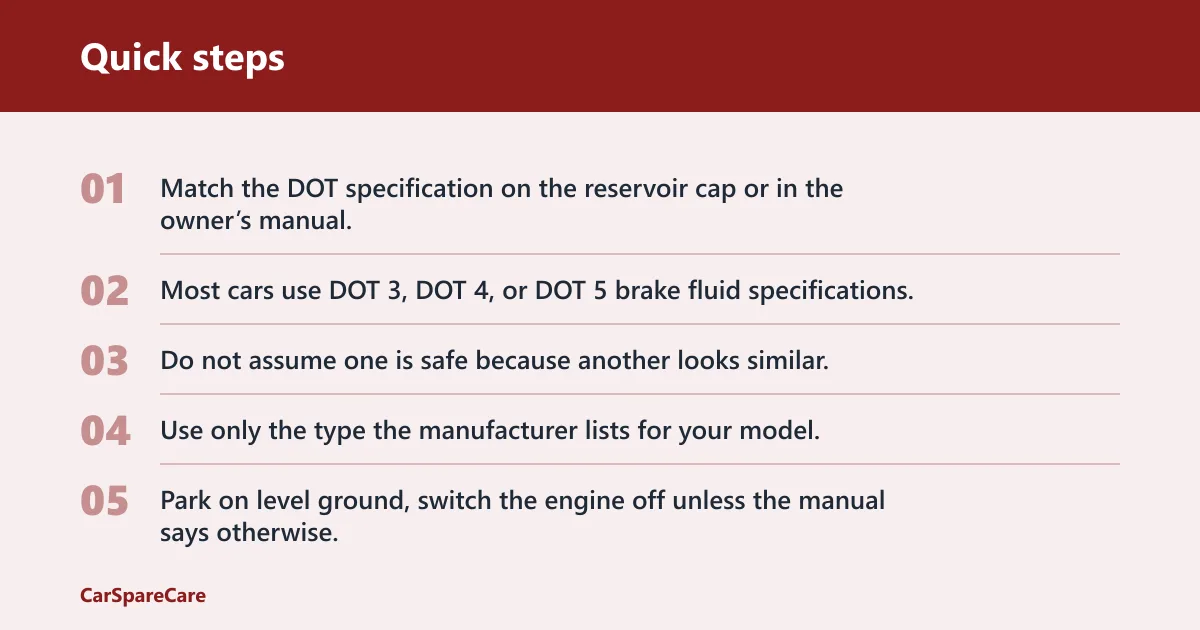
Match the DOT specification on the reservoir cap or in the owner’s manual. Do not assume one is safe because another looks similar. Use only the type the manufacturer lists for your model.
How to check and add brake fluid
Park on level ground, switch the engine off unless the manual says otherwise, and let the reservoir settle before reading it. Open the cap carefully, keep dirt out, and add only the specified fluid to the MAX mark if topping up is appropriate. Refit the cap securely and recheck the level.
Top-up is not the same as repair. If you add fluid to hide a low level without checking pad wear or leaks, you can miss the reason it dropped in the first place. A correct top-up supports the diagnosis; it does not replace it.
A common first-timer mistake is checking the reservoir right after a drive and assuming the reading is final. Follow the vehicle manual. If it does not specify a warm check, park on level ground, turn the engine off, and wait until the reading is stable before deciding what the level means.
Frequently asked questions
Is low brake fluid dangerous?
Yes. Low fluid can mean worn pads, a leak, or both. If the level is below MIN, treat it as urgent rather than cosmetic. A low reservoir plus a soft pedal is a stronger warning, and a soft pedal while the reservoir looks full still needs attention.
Should I top up brake fluid or get a mechanic?
Top up only when the fluid type matches the owner’s manual or reservoir cap and the level is low without obvious leak symptoms. If the level is below MIN, the pedal is soft, or the fluid is black, cloudy, or clearly dirty, inspection comes first and service should follow.
Where is the brake fluid reservoir located?
It is usually near the back of the engine bay on the driver’s side, mounted above the brake master cylinder. Many modern reservoirs are translucent or semi-transparent, so you can read the side markings. Older cars may use a metal reservoir that requires opening the cap to inspect the fluid directly.

Hi, I’m Melvin, an automobile engineer with extensive experience in automobile equipment. I currently work for a local automobile firm, where I specialize in the car parts industry. I’ve had the opportunity to collaborate with seasoned inspectors, gaining invaluable hands-on experience that goes beyond just theory.
My passion for automotive care started at a young age, which led me to create CarSpareCare. Through CarSpareCare, I share the knowledge and skills I’ve acquired over the years to help others navigate the world of car maintenance and repairs.
My goal is to provide practical tutorials, essential safety advice, and the latest industry insights so that anyone—whether a beginner or an expert—can confidently tackle their automotive projects.

