

Power steering fluid is contaminated if it looks milky, foamy, gritty, or smells burnt; slight amber darkening alone is usually normal, but mixed fluids or visible debris mean service now. Ignoring it can cause noisy steering, pump wear, and expensive rack or hose damage. This guide shows how to read the fluid, spot aeration, water, wear debris, and wrong-fluid mixing, and know when a vehicle has no serviceable fluid.
This guide is part of our Power steering and brake problems series.
Power steering fluid signs
Power steering fluid usually starts out clear, amber, or pinkish. Heat and oxidation can darken it over time, and that alone does not always mean contamination. Trouble starts when the color change comes with foam, sediment, a burnt odor, or a milky look, which point to air, water, or internal wear.
Dark amber, brown, or black fluid
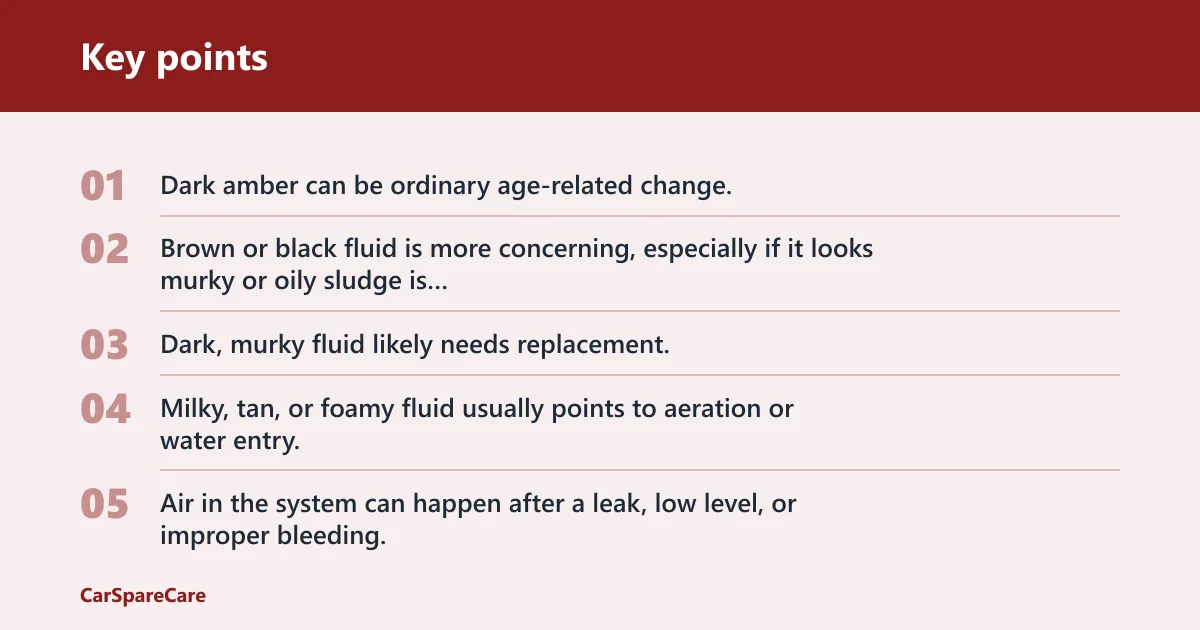
Dark amber can be ordinary age-related change, especially if the steering still feels normal and the fluid is clean otherwise. Brown or black fluid is more concerning, especially if it looks murky or oily sludge is visible. Dark, murky fluid likely needs replacement, but the rest of the symptoms should guide how urgent that service is.
Milky or foamy fluid
Milky, tan, or foamy fluid usually points to aeration or water entry. Air in the system can happen after a leak, low level, or improper bleeding, and water contamination can turn the fluid cloudy. Either condition deserves prompt attention because the pump may cavitate, steering assist can drop, and noise often follows.
Gritty sediment or metallic sparkle
Gritty particles may suggest sludge, wear debris, or degraded seals. Metallic sparkle may point to internal wear from the pump, rack, or hoses. If you can see glitter-like specks, do not treat it as normal discoloration. That is a warning to inspect the system before the debris circulates farther.
Burnt smell and what it can mean
A burnt odor often means overheated fluid, extended aeration, or pump strain. Heat and contamination can break fluid down, especially in hydraulic systems that rely on a belt-driven pump, hoses, and a steering rack. If the smell comes with noise, heavy steering, or darkened fluid, plan service rather than waiting for a full failure.
Where to check the reservoir
On many vehicles, the power steering fluid reservoir sits in the engine bay and the cap includes a dipstick or level marks. Some reservoirs are mounted remotely from the pump, so do not assume the most visible cap is the right one. Electric power steering systems do not use fluid, so a reservoir may not be present.
Find the reservoir in the engine bay
Look for a small plastic or metal reservoir near the belt-driven pump, firewall, or fender area. Some vehicles place it where it is easy to miss, especially if the reservoir is remote from the pump. If the cap has steering-wheel or fluid markings, that is often the right place to start.
Read MIN and MAX or similar markings
Many reservoir caps include dipsticks with MIN and MAX marks or similar level indicators. Use those markings to confirm fluid level, not fluid health. A correct level does not mean the fluid is clean, and a dirty-looking fluid can still sit at the proper mark.
Separate level checks from cleanliness checks
Level and condition are two different checks. Low fluid can cause whining, stiffness, or intermittent assist, while dirty fluid can point to age, moisture, sludge, or wear. Check both. If the fluid is low and dark, the problem may be a leak plus contamination, not just age.
Use a bright light, gloves, and safety glasses
Use a bright light so you can see the fluid clearly. Wear nitrile gloves and safety glasses before you open the cap. The light helps you spot color, foam, and particles in the reservoir. Gloves keep fluid off your skin, and glasses help if the cap releases pressure or fluid splashes when you open it.
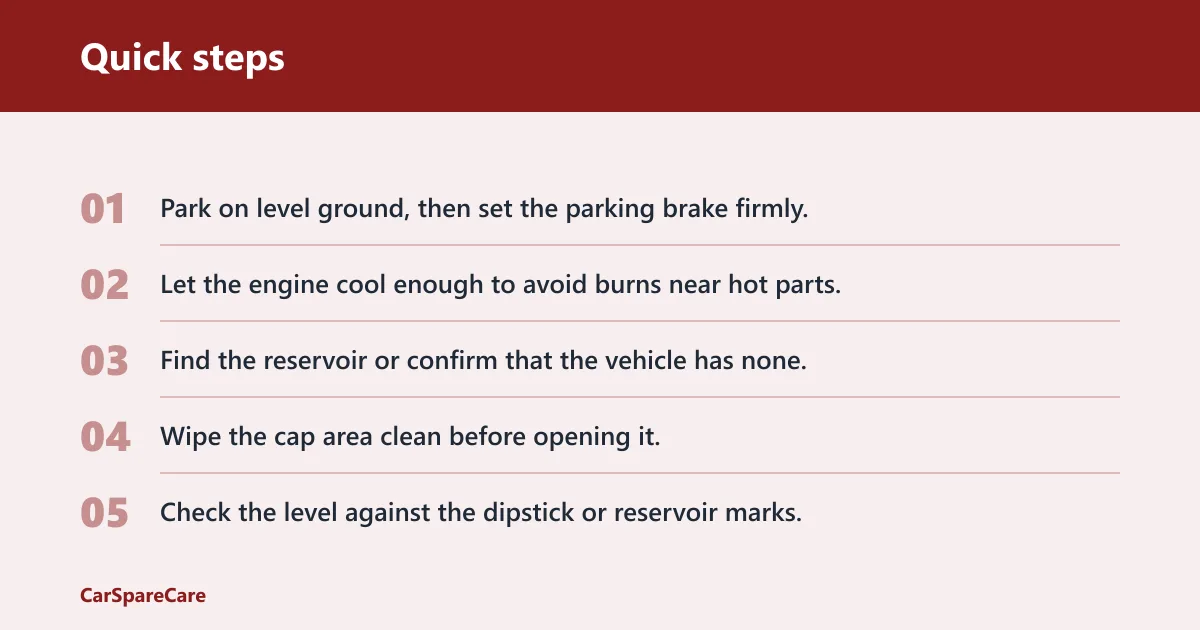
- Park on level ground, then set the parking brake firmly.
- Let the engine cool enough to avoid burns near hot parts.
- Find the reservoir or confirm that the vehicle has none.
- Wipe the cap area clean before opening it.
- Check the level against the dipstick or reservoir marks.
- Look at the fluid in bright light for color, foam, sludge, or metal specks.
How do you know if it is bad?
Use the fluid’s look, smell, and steering symptoms together. Slight darkening with normal steering effort may point to age, while foam, grit, burnt odor, or metal sparkle point to contamination. If the vehicle has no reservoir, it may have electric power steering and no serviceable fluid to inspect.
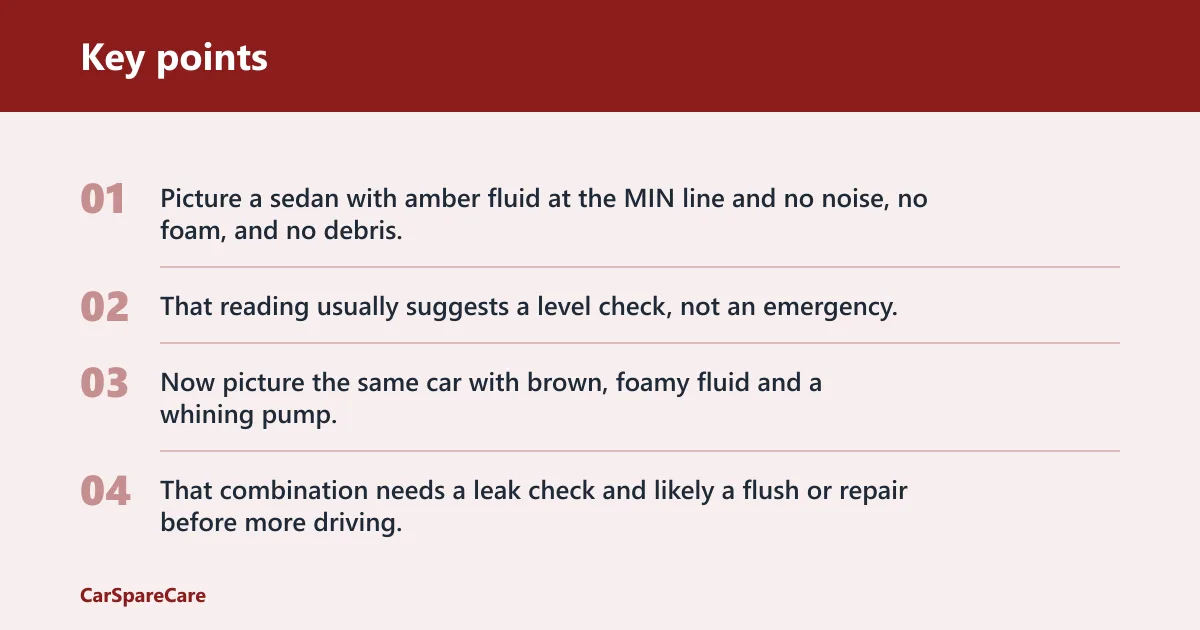
Picture a sedan with amber fluid at the MIN line and no noise, no foam, and no debris. That reading usually suggests a level check, not an emergency. Now picture the same car with brown, foamy fluid and a whining pump. That combination needs a leak check and likely a flush or repair before more driving.
Contamination decision matrix
| Visual sign | Likely cause | Urgency | Next step |
|---|---|---|---|
| Dark amber | Age or oxidation | Monitor soon | Compare with the owner manual and service schedule; flush if the fluid is clearly past its condition limit. |
| Milky or foamy fluid | Aeration or water entry | Prompt | Inspect for leaks, low level, or bad bleeding; service the system before pump damage grows. |
| Gritty sediment | Wear debris or sludge | Prompt to urgent | Plan a flush and inspect the pump, rack, and hoses for wear or restriction. |
| Burnt smell | Heat, overload, or fluid breakdown | Prompt | Check for low fluid, pump strain, or aeration; service if the odor stays after the level is corrected. |
| Metallic sparkle | Internal wear | Urgent | Stop and inspect the system. Metal in the reservoir can mean pump, rack, or hose damage. |
| No reservoir/EPS system | Electric power steering | No fluid inspection needed | Do not search for a reservoir that is not there. Diagnose steering issues through the steering and electrical system instead. |
What fluid type should you use?
Use the manufacturer-specified fluid, not a guess. Some vehicles call for dedicated power steering fluid, some specify automatic transmission fluid, and some require a particular OEM-approved fluid. Do not mix fluid types unless the vehicle spec allows it, because incompatible fluid can affect seals, noise, and pump life.
Follow the owner manual or service data
The owner manual or service data should be the first source for fluid type. That matters because hydraulic systems vary, and some use ATF instead of dedicated power steering fluid. Electrohydraulic systems still rely on hydraulic fluid, even though the pump is electric, so the correct specification still matters.
Avoid mixing fluid types
Do not top off with a different fluid just because it is available. Wrong-fluid mixing can change viscosity, swelling behavior, or foam resistance. If the reservoir already contains the wrong type, the safer move is usually a full service with the correct fluid, not another partial top-off with something similar.
Some vehicles are more specific than others. SynLube warns not to use its PSF in Citroen or Rolls-Royce green-fluid systems, which is a reminder that one fluid choice does not fit every hydraulic design. Always confirm the exact spec before adding anything.
Can you still drive it?
Maybe, but only when the symptoms are mild. A dark amber fluid with no noise may be a scheduled service issue. Whining, heavy steering, foam, metal debris, or a burnt smell are stronger warning signs. If the pump is loud or the steering effort changes suddenly, stop driving and inspect the system first.
Suppose a minivan shows low fluid and a faint whine at parking speeds. That combination suggests a leak or air entry, so topping up without finding the cause can fail again. If the reservoir also shows metal specks, the safe choice is to stop driving and have the system checked before more damage spreads.
When a flush is reasonable
A flush makes sense when the fluid is dark, murky, or slightly degraded but the system still works quietly and no metal is visible. That is a condition-based threshold, not a fixed mileage rule for every vehicle. If the owner manual or service schedule gives an interval, follow it; otherwise, fluid condition is the trigger.
When inspection comes first
Inspection should come first if the fluid is foamy, the steering whines, the level keeps dropping, or the reservoir shows sparkles or sludge. Those clues point to a fault that a flush alone will not fix. Find the leak, confirm the correct fluid, and check pump and rack condition before refilling again.
Frequently asked questions
How do I know if my power steering fluid is bad?
Bad power steering fluid usually looks milky, foamy, gritty, or very dark and may smell burnt. Slight amber darkening by itself is often just age or oxidation. The stronger the change in appearance, smell, or steering noise, the more likely the fluid needs service or a system inspection.
Can you check power steering fluid without tools?
Yes, many vehicles let you do a quick check by hand once you find the reservoir. Many caps include dipsticks or level indicators, so you can inspect level and appearance without special tools. A bright light still helps, and gloves are smart for handling hot or messy parts.
Is power steering fluid toxic?
It should be treated as a chemical you do not want on skin or in your eyes. Wear nitrile gloves, use safety glasses, and wash up after handling it. Dispose of old fluid as used automotive fluid at a proper collection point; do not pour it on the ground or into drains.
Will contaminated power steering fluid damage the pump?
Yes. Contaminated fluid can wear the pump, aerate the system, and spread debris through the hoses and steering rack. Heat, moisture, and dirt can shorten component life, and low or foamy fluid can make the pump noisy before failure shows up as hard steering or fluid loss.
Should I flush dark power steering fluid right away?
Not always, but dark fluid should not be ignored. If it is only slightly dark and the steering is quiet, a condition-based flush may be enough. If it is dark plus foamy, gritty, metallic, or burnt-smelling, inspect the system first and do not wait for a routine interval.
Can I mix power steering fluid types?
Only if the vehicle specification allows it. Some systems use dedicated power steering fluid, some call for ATF, and some need an OEM-approved formula. Mixing types without checking the spec can create compatibility problems, so verify the correct fluid before topping up or flushing.
How to tell if power steering.fluid is contaminated: check for cloudy, foamy, gritty
Check for cloudy, foamy, gritty, or burnt-smelling fluid in the reservoir, and do not rely on color alone. Dark amber can be normal aging, but brownish, blackish, or debris-filled fluid points to contamination. If there is no reservoir, the vehicle may use electric power steering and have no fluid to inspect.
How to tell if power steering fluid is dirty: dirty fluid is usually murky
Dirty fluid is usually murky, brown, or black and may show sludge on the dipstick or sparkles in the reservoir. If the steering is noisy, heavy, or inconsistent, treat the dirty look as a service trigger. Confirm the correct fluid type before replacing or flushing anything.

Hi, I’m Melvin, an automobile engineer with extensive experience in automobile equipment. I currently work for a local automobile firm, where I specialize in the car parts industry. I’ve had the opportunity to collaborate with seasoned inspectors, gaining invaluable hands-on experience that goes beyond just theory.
My passion for automotive care started at a young age, which led me to create CarSpareCare. Through CarSpareCare, I share the knowledge and skills I’ve acquired over the years to help others navigate the world of car maintenance and repairs.
My goal is to provide practical tutorials, essential safety advice, and the latest industry insights so that anyone—whether a beginner or an expert—can confidently tackle their automotive projects.

