
For UV protection, start with shade, add a fitted cover if the car sits outside more than a few days, and reserve a ceramic coating for daily sun exposure. Ignore UV long enough and clear coat fades, trim chalks, and repainting can come sooner. This guide compares shade, covers, waxes, sealants, and coatings so you can match protection to garage-kept, street-parked, or daily-driver use.
This guide is part of our Automotive paint care guide series.
How UV damage shows up on paint and clear coat
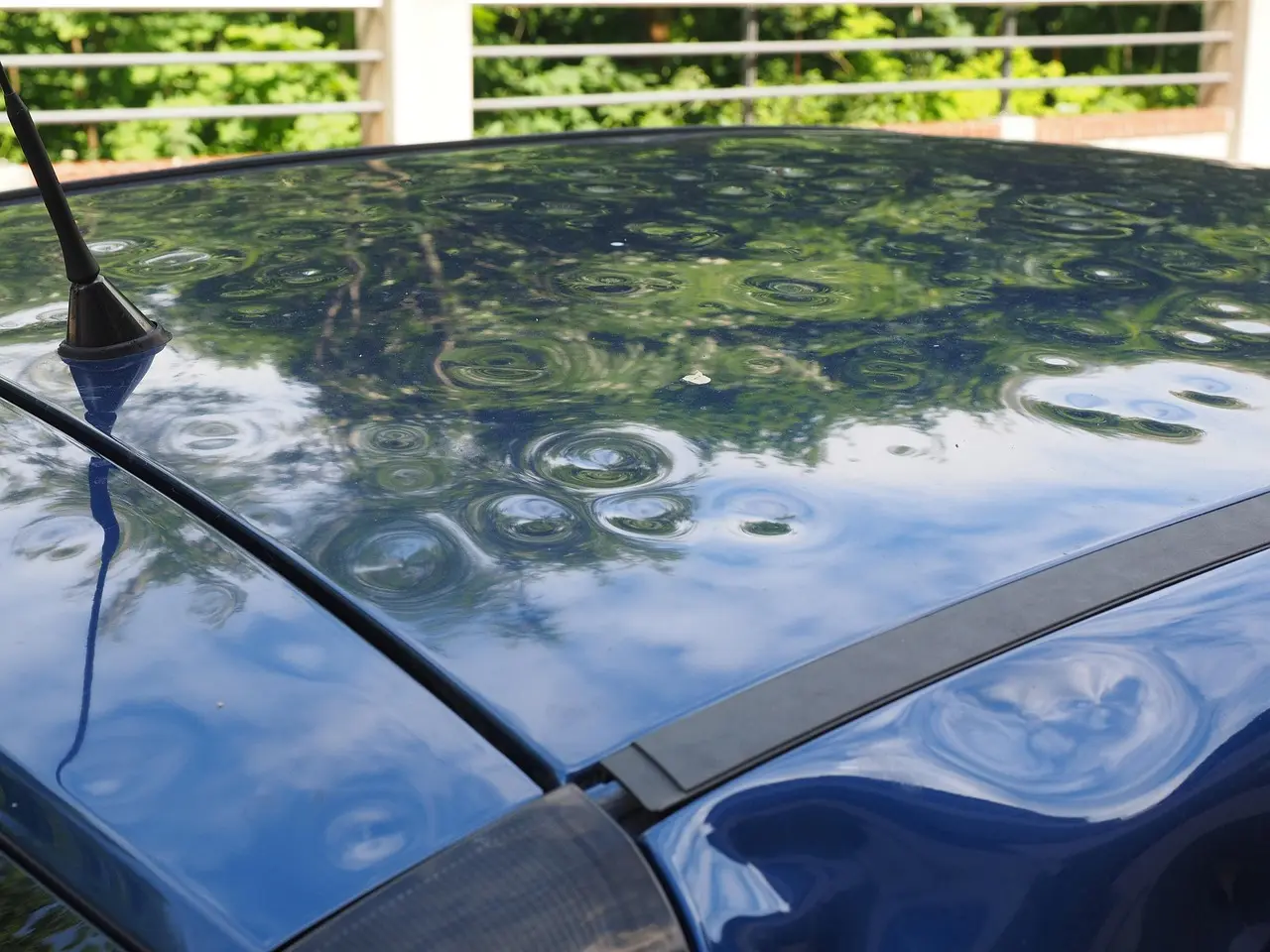

Ultraviolet rays fade colour, oxidize clear coat, crack trim, and discolour plastics, rubber, leather, and headlights. Risk climbs with long, direct exposure, especially on cars parked in open sun every day. Protection should cover more than body panels, because UV reaches the surrounding materials too.
Heat, dirt, and abrasion change the risk. Sunlight can dry trim, bake contaminants into the surface, and make defects easier to spot. Two cars in the same city can age differently. Wash habits, dust load, and towel or brush contact matter too.
Clear coat is the top protective layer over the base coat. It is the paint’s first line of defense against UV and contaminants, but it fails through dullness, haze, brittleness, and peeling. Once spots have lost clear coat, polishing may only improve gloss if enough clear coat remains for safe correction.
Signs the damage is still reversible
If the paint looks dull but still feels smooth after washing, the finish may only need decontamination and polishing before a new protective layer goes on. If you see peeling, sharp edge failure, or clear coat that looks thin and patchy on high spots, simple correction is no longer the right fix.
Say your black sedan parks outside five days a week and the roof has gone gray and hazy while the doors still shine. That pattern often points to UV wear on the most exposed panels first, which means the roof and hood need correction and stronger ongoing protection than the sides.
Why shade parking matters
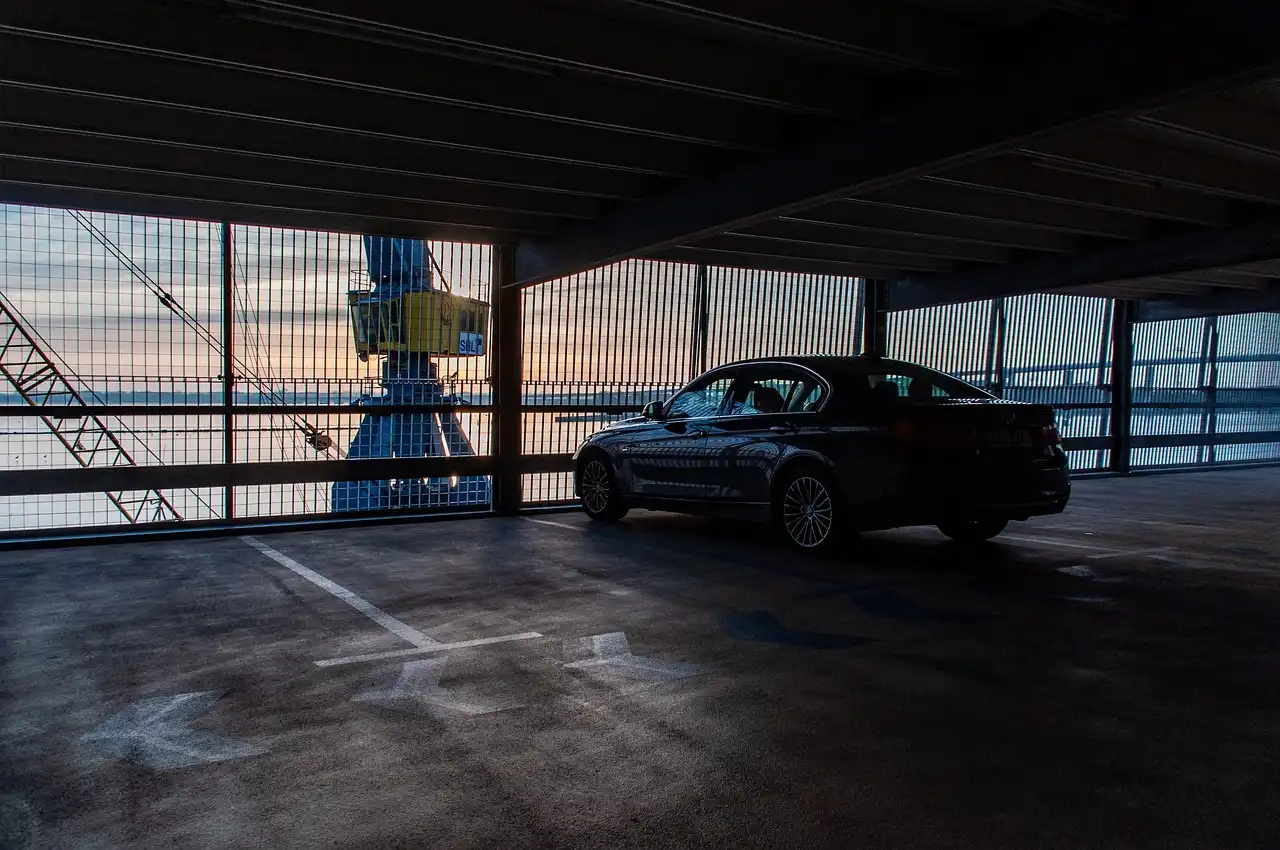
Shade parking is the first defence whenever possible. Garage, carport, and covered parking all cut direct UV exposure, and that lower exposure is the biggest gain you can get without touching the paint. For many cars, shade alone reduces the need for heavy protection.
Garage, carport, and covered parking compared
Garages usually give the most protection because the car stays out of direct sun for most of the day. A carport or covered space still helps because it blocks the strongest rays and shortens exposure time. A shaded street space is better than full sun, but the car still gets moving sunlight as the day changes.
Shade cuts UV load, heat buildup, and the rate at which contaminants bake onto the finish. It does not stop wear from washing, road grit, door dings, or tree sap. It lowers the weather side of the problem, but it does not replace cleaning or surface protection.
When shade alone is enough
If a car sleeps in a garage and only sees brief outdoor parking, regular washing plus a basic sacrificial layer is often enough. A daily driver in full sun needs more. The more hours of direct exposure and the higher the mileage, the more useful a longer-life protection layer becomes.
When should you use a car cover?
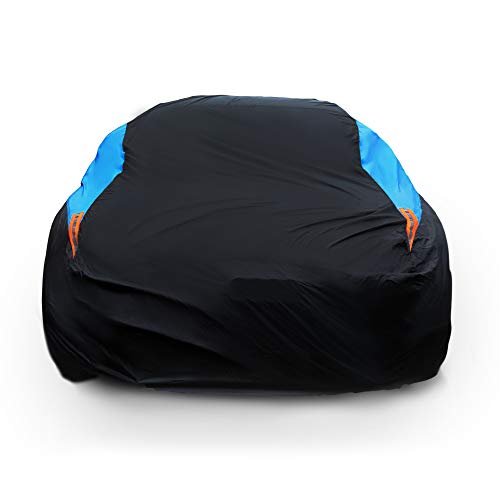
Use a car cover when the car sits outside often and you need a physical barrier against UV, dust, and light fallout. Choose one that is UV-resistant and breathable. It should also be clean before use, because trapped grit can scratch paint every time the cover moves.
How to avoid scratching paint under a cover
Fit matters. A loose cover that flaps in wind can rub the surface, while a dirty cover can grind in dust. Before covering, rinse or wash the car so loose dirt is gone, then make sure the cover itself is clean and fully dry. That matters more than marketing labels.
- Wash the car before covering it.
- Shake out or clean the cover before use.
- Let both surfaces dry before storage.
- Secure the cover so wind cannot work grit across the paint.
- Check the lower edges after storms or windy days.
For long outdoor storage, a cover is often the better choice than a bare finish, especially if the car is parked for days or weeks at a time. It is still a contact layer, so it works best on a clean car with a cover sized for the vehicle.
Paint protection decision table
Use this table to match the protection stack to parking, finish, climate, and use. The goal is not to buy the strongest option everywhere. It is to use the lightest stack that still fits the exposure.
| Parking situation | Paint color or finish | Climate | Weekly mileage | Best UV protection stack |
|---|---|---|---|---|
| Garage-kept, brief sun only | Any gloss color | Mild or moderate sun | Under 50 miles | Regular washing + wax or sealant + trim UV spray |
| Carport or covered parking most days | Black or dark gloss | Hot, sunny climate | 50 to 150 miles | Sealant or ceramic coating + trim UV spray + spot cover for long sits |
| Street-parked, full sun | Any gloss color | Hot, dry, high-UV climate | Under 150 miles | UV-resistant breathable cover + sealant or ceramic coating + trim UV spray |
| Daily driver, open parking at work and home | Dark gloss or single-stage paint | Hot, sunny climate | 150 miles or more | Ceramic coating + regular washing + trim UV spray; add PPF on front-end wear areas |
| Matte finish or matte wrap | Matte paint or matte film | Any sunny climate | Any mileage | Manufacturer-approved matte care only + shade when possible + matte-safe cover if needed |
How to read it: start with parking exposure, then match the finish, then consider climate and how often the car is out in the sun. A garage-kept car usually needs less than a street-parked daily driver. Black paint does absorb more heat and can show defects sooner, but UV damage still depends on exposure, care, and surface condition.
Wax, sealant, or ceramic coating?
Wax is the shortest-term paint protection option. It adds a sacrificial layer and shine, but it needs frequent reapplication. Sealant usually lasts longer than wax and also forms a sacrificial layer that helps repel water and contaminants. Ceramic coating lasts longer than both and creates a hydrophobic barrier, but it does not stop scratches, stone chips, or poor washing.
Wax as the shortest-term sacrificial layer
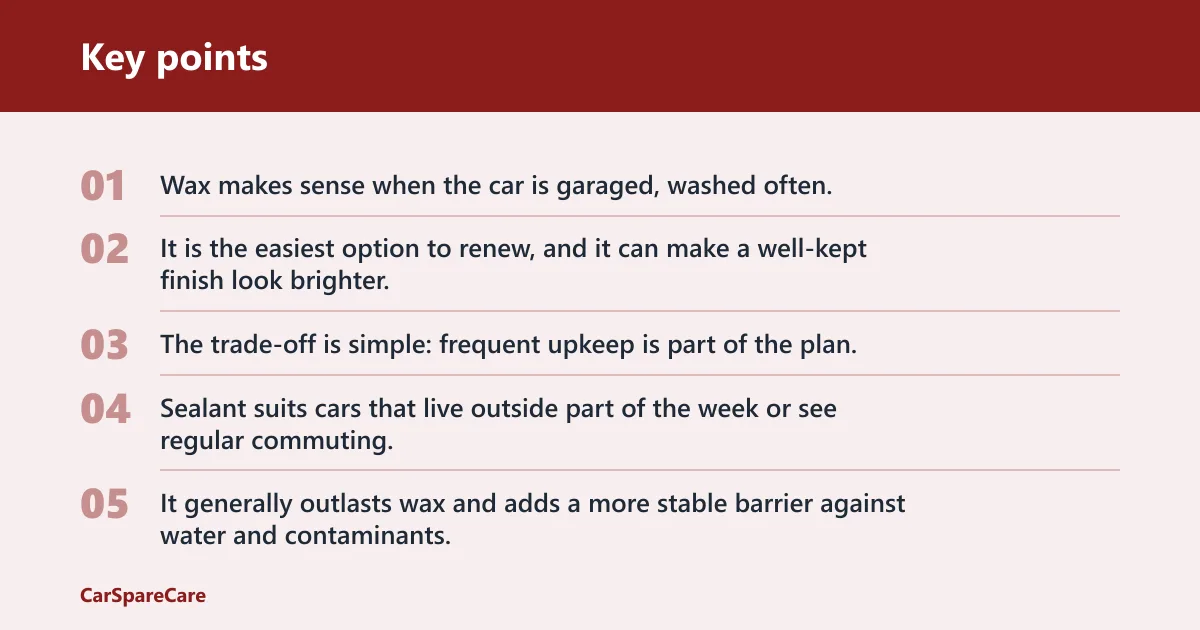
Wax makes sense when the car is garaged, washed often, and does not sit in harsh sun for long periods. It is the easiest option to renew, and it can make a well-kept finish look brighter. The trade-off is simple: frequent upkeep is part of the plan.
Sealant for routine protection
Sealant suits cars that live outside part of the week or see regular commuting. It generally outlasts wax and adds a more stable barrier against water and contaminants. That makes it a practical middle step for a street-parked car that still gets cleaned on schedule.
Ceramic coating for longer-life protection
Ceramic coating is often a better fit for daily sun exposure, especially when longer-life hydrophobic protection and less frequent reapplication are priorities. It helps the surface shed water and grime, but it still needs washing. It also does not prevent physical damage from sand, brushes, or impact.
Where PPF fits
Paint protection film is thicker than coating and is the stronger choice for contact damage and abrasion. It belongs on high-wear areas such as bumpers, the hood, mirror caps, and door edges when road rash or parking-lot contact is the bigger risk than UV alone. It can sit under or alongside coating depending on the product system.
A common first-timer mistake is spending money on ceramic coating for a front bumper that gets sandblasted on the freeway, while leaving the hood and mirrors unprotected. In that case, coating helps with UV and cleaning, but PPF is the better answer for the panels that take the hits.
How do you keep UV protection working?
UV protection only works if the surface stays clean and the layer stays intact. Wash regularly with proper methods, reapply wax or sealant on a schedule that fits your climate, and inspect the finish during hot months. A neglected protective layer loses value fast.
Wash frequency and safe washing methods
For sunny climates, wash often enough that dust, bird droppings, sap, and bug splatter do not sit on the paint for long. Use clean wash mitts and towels, and avoid harsh cleaners that strip protection early. The goal is to remove contamination without grinding it into the clear coat.
When to reapply wax or sealant
Reapply wax when water no longer beads well or the finish starts to feel less slick after washing. Sealant usually lasts longer, so it can follow a less frequent schedule, but it still needs renewal. If the car lives outside all week, check protection more often in hot weather.
What to inspect during hot-weather checks
Look at the hood, roof, trunk lid, top edges of doors, and horizontal trim first. Those areas take the most direct sun. Check for fading, dull patches, chalky trim, and headlight haze, then decide whether you need cleaning, polishing, or a stronger protective layer.
How do you spot early sun damage?
Early sun damage shows up as dullness, haze, colour shift, and rough-feeling trim before it turns into peeling or heavy failure. If the clear coat is only oxidized, polishing can help. If the surface is brittle, peeling, or visibly thin in spots, correction is limited and repainting may be the real fix.
Failure-check signs for oxidation and clear-coat thinning
- Loss of gloss on the roof, hood, or trunk first.
- Chalky residue on a microfiber after light wiping.
- Cloudy or hazy clear coat that does not wash off.
- Uneven reflection, especially on horizontal panels.
- Peeling or flaking edges around badges, handles, or panel corners.
Trim fade, headlight haze, and plastic discolouration
UV does not stop at paint. Trim can grey out, plastics can fade, and headlights can haze. A UV protectant spray helps on plastics, trim, dashboard, and other interior surfaces, where it can slow cracking and fading. It is part of broader sun-damage prevention, not a substitute for shade or washing.
Suppose a white crossover is parked outside and the black mirror caps have turned faded gray while the paint still looks decent. That usually means the trim needs UV care sooner than the body panels, and the next step should be a trim protectant plus better parking, not a full repaint response.
When polishing can help and when it cannot
Polishing helps when oxidation is light to moderate and there is still healthy clear coat above the base colour. It can restore gloss and prepare the panel for fresh protection. It cannot rebuild failed clear coat or fix peeling, so do not treat every dull panel as a simple polish job.
Frequently asked questions
How do I protect car paint from UV damage?
Start by parking in shade whenever possible, then add a wax, sealant, or ceramic coating based on how often the car sits in sun. If it is street-parked, a UV-resistant breathable cover helps. Wash regularly and keep trim, headlights, and interior plastics protected too.
Does ceramic coating protect against sun damage?
Ceramic coating helps against sun-related wear by adding longer-life hydrophobic protection and reducing how fast contamination sticks. It does not stop UV by itself, and it does not prevent scratches, chips, or damage from dirty washing. Treat it as a durable surface layer, not a shield for every risk.
How do I protect black car paint from sun damage?
Black paint needs the same UV steps as any other colour, but it can show heat-related defects and fading sooner. Prioritize shade, then use a sealant or ceramic coating for regular protection. Keep washing gentle, because swirl marks and haze stand out more on dark gloss finishes.
How can I prevent my car paint from fading in the sun?
Reduce direct exposure first, because that is the biggest factor. Then keep the finish clean, remove contamination quickly, and refresh your sacrificial layer on schedule. If the car stays outside all week, choose a longer-life protection layer and inspect the roof, hood, and trunk often.
What is the best way to protect car paint from sun damage?
The best way depends on parking. For a garage-kept car, regular washing and a wax or sealant is often enough. For daily outdoor parking, a ceramic coating plus shade when possible is the stronger choice. For storage outdoors, add a clean, breathable, UV-resistant cover.

Hi, I’m Melvin, an automobile engineer with extensive experience in automobile equipment. I currently work for a local automobile firm, where I specialize in the car parts industry. I’ve had the opportunity to collaborate with seasoned inspectors, gaining invaluable hands-on experience that goes beyond just theory.
My passion for automotive care started at a young age, which led me to create CarSpareCare. Through CarSpareCare, I share the knowledge and skills I’ve acquired over the years to help others navigate the world of car maintenance and repairs.
My goal is to provide practical tutorials, essential safety advice, and the latest industry insights so that anyone—whether a beginner or an expert—can confidently tackle their automotive projects.

