
Wash gloss black car paint with pH-neutral shampoo, a two-bucket setup, and clean microfiber. Correct it only when swirls or haze are visible. Skip that routine and the finish scratches faster, dulls, and may need machine polishing sooner than it should. This guide separates daily contamination control from true paint correction, so you know what to do and what to leave alone.
Why black paint shows defects easily


Gloss black clear coat exposes flaws that lighter colors hide. Sunlight makes swirls, water spots, brake dust traces, fingerprints, and wash marring stand out fast, especially on a flat panel or a hood viewed from the side. That does not mean the paint is fragile in every sense; it means the surface shows damage sooner.
The clear coat is the protective top layer on modern black paint. It still needs gentle washing, periodic protection, and UV defense, because micro-scratches and oxidation reduce the depth that makes black look glossy. A good LED work light helps you separate haze, random swirls, and true oxidation before you reach for polish.
What you’ll need
- pH-neutral shampoo
- Two buckets, one for wash solution and one for rinse water
- Grit guard for each bucket
- Microfiber wash mitt
- Large, soft microfiber drying towel
- Iron remover
- Clay bar or synthetic clay mitt
- Clay lubricant
- Cutting compound
- Finishing polish
- Soft foam pad
- LED work light
- Sealant or ceramic spray coating
- Wax, if you want short-term gloss with easier upkeep
How do you wash gloss black paint safely?
Use a shade-cool panel, pH-neutral shampoo, and the two-bucket method to cut stripping and grit transfer. A clean microfiber wash mitt matters because black paint shows towel drag marks and faint wash marring much sooner than light colors. Dry with a soft microfiber towel using pat-and-pull motion only.
- Rinse the panel first to float off loose dust.
- Fill one bucket with shampoo solution and the other with rinse water.
- Wash from top to bottom with a microfiber mitt, then rinse the mitt often.
- Reload the mitt only after rinsing it clean in the rinse bucket.
- Rinse the car fully, then dry with pat-and-pull motions.
- Finish with a fresh towel edge if water remains in seams or badges.
Suppose a daily driver picks up fine dust after a 10-mile commute. A quick rinse and careful wash is enough. The goal is to remove contamination without grinding it back into the clear coat.
How do you decontaminate black paint before polishing?
Start with inspection under an LED work light, then use iron remover before any clay step. That order matters because brake dust and rail dust bond into the surface, and clay can drag that grit if you skip chemical removal first. After that, clay bar or a synthetic clay mitt with lubricant removes the remaining bonded contamination.
- Inspect the panel in shade or controlled light for roughness, specks, and bonded debris.
- Spray iron remover on the paint and let the reaction finish; purple bleeding is the common cue.
- Rinse thoroughly after the iron remover dwell time.
- Lubricate the panel and clay in straight passes until the surface feels smooth.
- Wipe dry and inspect again before any machine correction.
A common first-timer mistake is claying first because the paint “feels rough.” That can waste the clay and add marring if the bonded metal particles were never chemically loosened.
When should you polish gloss black paint?
Polish only when inspection shows actual defects: oxidation, swirls, or haze that do not wash off. Use cutting compound for heavier defects, in small sections, and then follow with finishing polish to restore depth and clarity. If the paint is clean and glossy, skip polishing and protect it instead.
- Inspect under an LED work light in shade or controlled light.
- Mark panels that show dullness, haze, or visible swirls.
- Use cutting compound on the affected section only, working a small area at a time.
- Refine the same area with finishing polish on a soft foam pad.
- Wipe with a 1:10 isopropyl alcohol mix for the final inspection step.
Use polish as a correction tool, not as routine maintenance. Over-polishing removes clear coat that should be preserved for future correction.
How do I keep gloss black car paint looking deep and shiny?
Keep the surface clean, decontaminated, and protected, then stop correcting it unless the finish actually needs correction. Black paint stays deep when you reduce bonded contamination, avoid towel drag, and refresh protection before the clear coat starts looking dry or hazy. Regular inspection matters more than frequent polishing.
Sealant and ceramic spray coating both help here because they add environmental protection and make washing easier. Wax can add short-term richness and gloss, but it usually needs more frequent reapplication. On black paint, short-lived protection often means more wash contact, which can create more marring.
Gloss black maintenance matrix
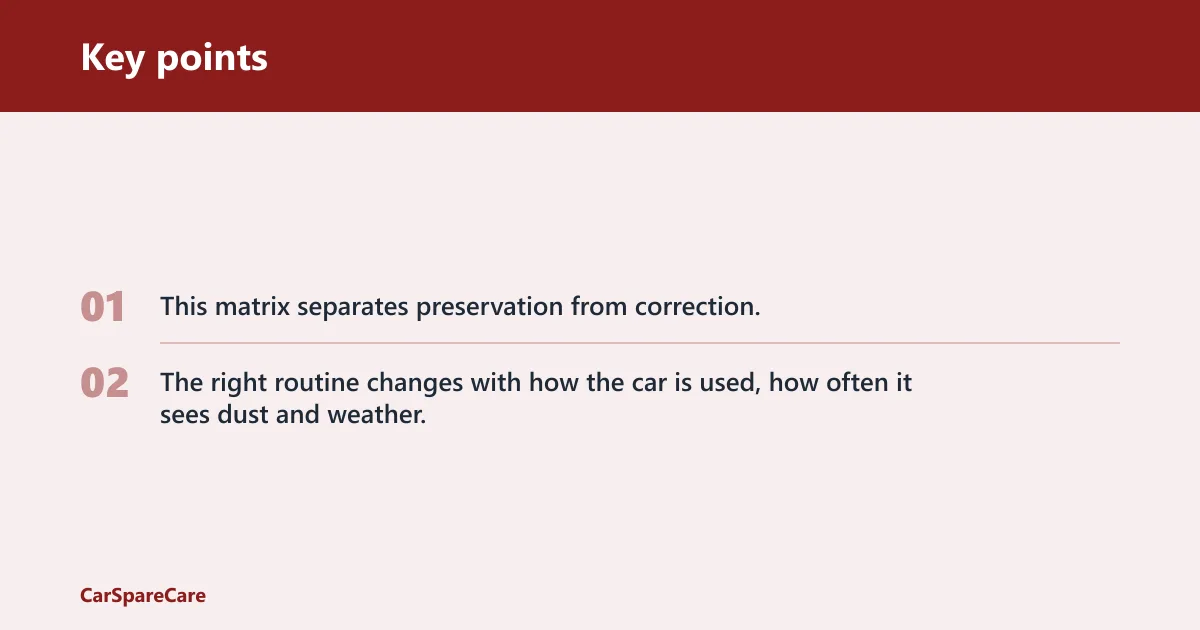
This matrix separates preservation from correction. The right routine changes with how the car is used, how often it sees dust and weather, and whether the paint already shows swirls.
| Use case | Wash frequency | Drying method | Decontamination interval | Protection choice | Polish or avoid polishing |
|---|---|---|---|---|---|
| Daily driver | Every 1 to 2 weeks, plus after heavy road film | Pat-and-pull with a clean microfiber drying towel | Iron remover every 3 to 6 months; clay only when the surface feels rough | Sealant or ceramic spray coating for easier upkeep | Avoid polishing unless LED inspection shows visible swirls or haze |
| Garage-kept weekend car | Every 2 to 4 weeks, or before events | Pat dry with a dedicated soft towel | Inspect each wash; decontaminate when specks or roughness appear | Wax for short-term gloss or ceramic spray coating for less frequent reapplication | Polish only after inspection finds oxidation, not on a calendar |
| Already-swirl-marked car | Wash gently, but do not increase wash frequency just to chase gloss | Use the softest towel available and avoid dragging | Decontaminate before correction, then again only when contamination returns | Sealant or ceramic spray coating after correction to help preserve the finish | Polish once defects are confirmed; avoid repeat correction unless the marks return |
Common mistakes with gloss black paint
Drying in direct sun can leave spots before the towel even reaches the panel. A dirty towel drags grit across the clear coat, and black paint makes that mistake obvious fast. Trim staining is another problem when sealants or waxes are allowed to haze on surrounding plastic.
Other mistakes are more subtle. Over-polishing removes clear coat that could have been saved for a future correction cycle. Using a rough applicator or skipping inspection can turn minor haze into visible micro-marring. Protection streaks also show more on black, so wipe residue fully and inspect from two angles.
Picture a black hood that looks glossy in the garage but gray under daylight. That usually means the surface needs inspection, not more product. An LED work light is the fastest way to decide whether you need cleanup, decontamination, or actual correction.
What products protect black car paint best?
Sealant or ceramic spray coating is the best everyday choice for most black cars because both add UV and environmental protection and help the paint stay cleaner between washes. Wax can still work if you want a shorter-term, easy-to-apply gloss boost, but its durability is usually lower. In general, ceramic coatings are designed for the longest service life, while spray sealants and waxes trade durability for simpler application and touch-up convenience.
When product choice is the priority, think in terms of upkeep rather than chasing one universal “best.” Wax is often the simplest if you want a quick gloss refresh. Sealant is the middle ground for easier maintenance and stronger durability than wax. Ceramic spray coating is the more durable easy-use option for black paint when you want fewer applications and cleaner wash behavior.
Can I use clay bar and polish on gloss black paint?
Yes, but use them in order and only when the paint needs them. After washing, use iron remover first, then clay bar or a synthetic clay mitt with lubricant, and polish only if inspection still shows swirls, haze, or oxidation. That sequence limits unnecessary marring on the clear coat.
Claying is for bonded contamination. Polishing is for defects. Mixing those jobs creates more work and can create new marks on black paint, which is why the finish should be checked under an LED work light before each step.
How do I remove water spots from gloss black paint without scratching it?
Start with the least aggressive step: a gentle wash and fresh microfiber towel, because some spots are only surface minerals sitting on top of the clear coat. If the marks feel rough, the next step is to distinguish bonded contamination from true etching. Bonded contamination often responds to iron remover, then clay with lubricant. Etching does not wash away and may need polishing.
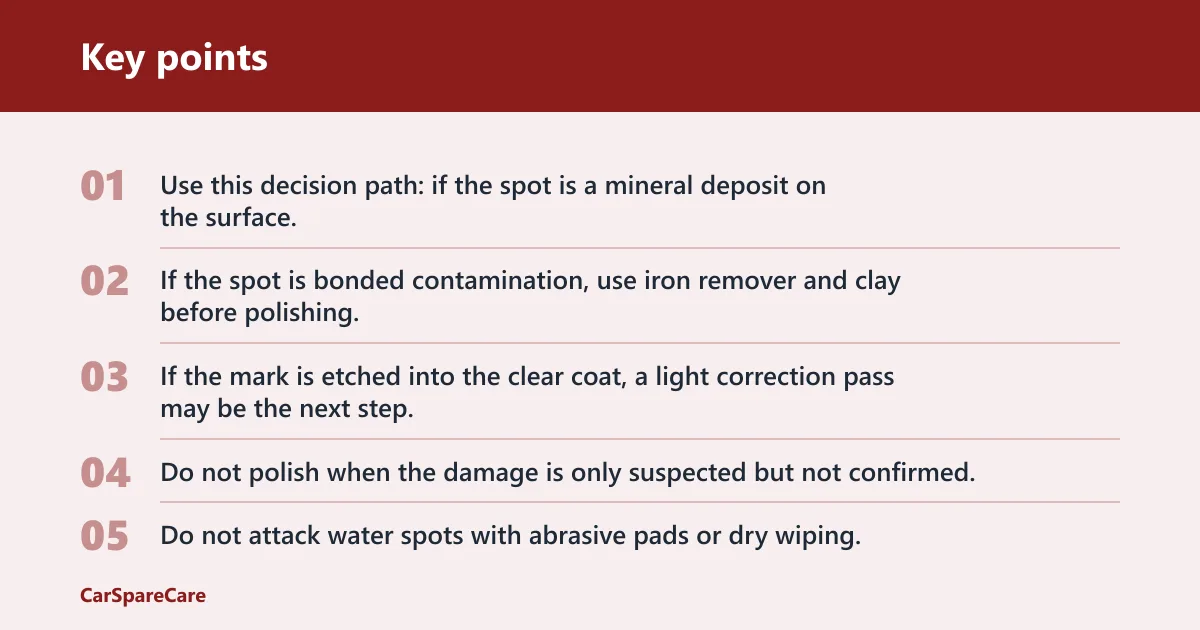
Use this decision path: if the spot is a mineral deposit on the surface, wash first and move to decontamination only if needed. If the spot is bonded contamination, use iron remover and clay before polishing. If the mark is etched into the clear coat, a light correction pass may be the next step. Do not polish when the damage is only suspected but not confirmed, because unnecessary abrasion on black paint can create the haze you were trying to avoid.
Do not attack water spots with abrasive pads or dry wiping. That is how a spot turns into visible haze on black paint. If the marks survive washing and decontamination, a light polish may be the right next step, but only after inspection confirms etching.
Frequently asked questions
What is the safest way to wash gloss black paint without swirl marks?
Use the two-bucket method, a microfiber wash mitt, and shade-cool panels. Rinse the mitt often, then dry with pat-and-pull motions instead of dragging the towel. That reduces grit transfer and the fine marring that black paint shows so easily.
Should I use wax, sealant, or ceramic coating on gloss black paint?
Use wax for short-term gloss, sealant for straightforward protection, or a ceramic spray coating when you want longer upkeep intervals and easier washing. If the paint is already corrected, sealant or ceramic spray coating is usually the more practical daily choice for black paint.
How often should gloss black paint be polished?
Not on a schedule by default. Polish only after inspection shows visible swirls, haze, or oxidation that washing will not remove. If the finish still looks sharp under an LED work light, leave the clear coat alone and protect it instead.

Hi, I’m Melvin, an automobile engineer with extensive experience in automobile equipment. I currently work for a local automobile firm, where I specialize in the car parts industry. I’ve had the opportunity to collaborate with seasoned inspectors, gaining invaluable hands-on experience that goes beyond just theory.
My passion for automotive care started at a young age, which led me to create CarSpareCare. Through CarSpareCare, I share the knowledge and skills I’ve acquired over the years to help others navigate the world of car maintenance and repairs.
My goal is to provide practical tutorials, essential safety advice, and the latest industry insights so that anyone—whether a beginner or an expert—can confidently tackle their automotive projects.

