Yes, bad spark plugs can trigger the check engine light through misfire codes such as P0300 or P0301–P0308, but a coil, boot, or injector can set the same fault. Ignoring it can waste fuel, foul the catalytic converter, and turn a simple fix into a pricier repair. This guide shows how to tell plug problems apart from coil, boot, and injector faults.
How worn plugs trigger misfire codes
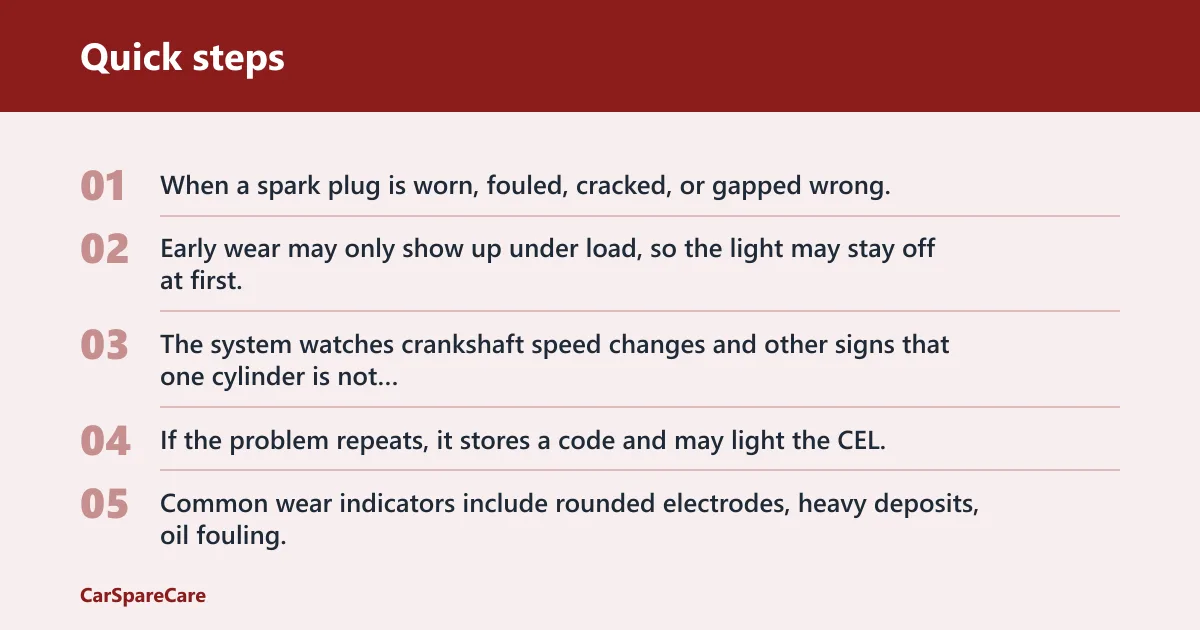
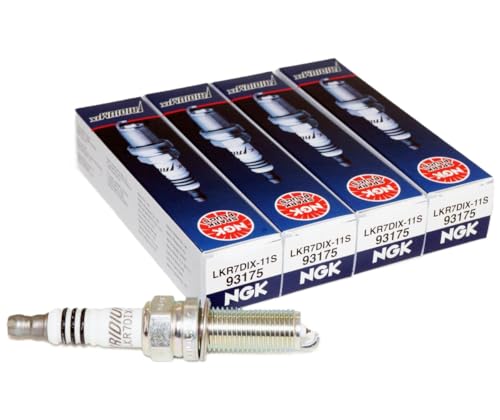
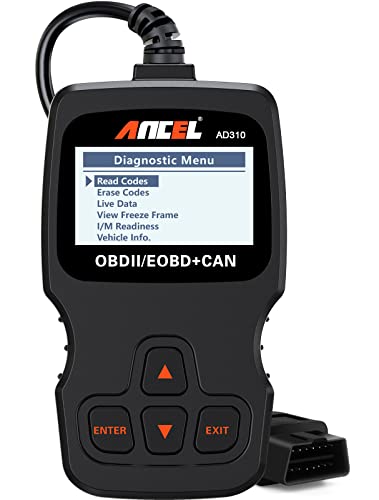

Yes. When a spark plug is worn, fouled, cracked, or gapped wrong, the engine can misfire often enough for the ECU to notice and turn on the check engine light. Early wear may only show up under load, so the light may stay off at first.
Misfire monitoring is part of OBD-II. The system watches crankshaft speed changes and other signs that one cylinder is not contributing as expected. If the problem repeats, it stores a code and may light the CEL.
How plug wear turns into a code
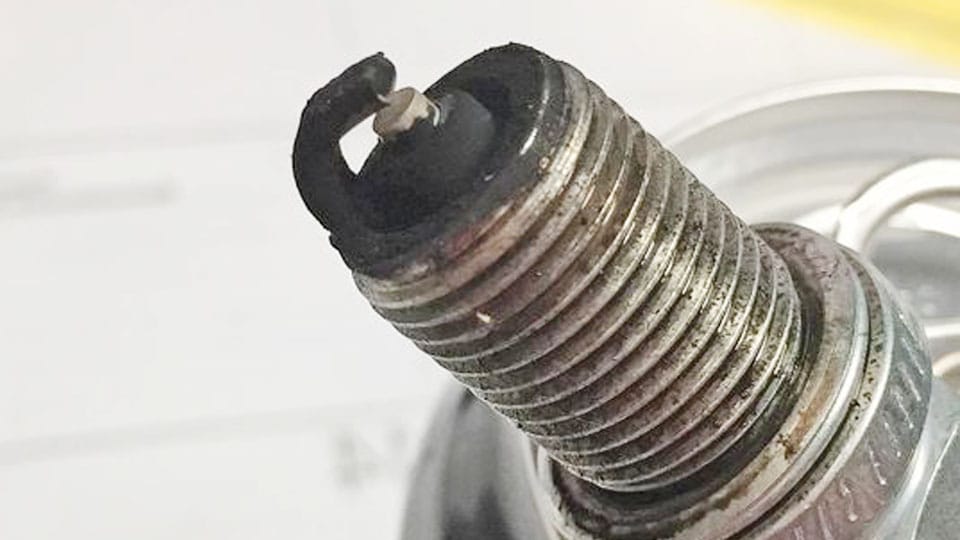
Common wear indicators include rounded electrodes, heavy deposits, oil fouling, fuel fouling, and a widened gap. A plug with too much gap needs more voltage to fire, which can stress the ignition coil and make misfire more likely.
Bad plugs often show up as rough idle, hesitation on acceleration, poor fuel economy, and loss of power. Those symptoms are useful clues, but they are not proof that the plug is the only fault.
Why the light may stay off at first
Worn spark plugs do not always turn on the CEL right away. If the misfire is light, intermittent, or limited to certain loads, the engine may run poorly without setting a code yet. That is why a visual inspection matters even before the scanner does.
Check engine light and misfire codes
A solid CEL usually means the fault is active or stored but not severe enough to demand an immediate stop. A flashing CEL usually points to an active misfire that can be serious enough to risk catalyst damage. In both cases, a scan tool should be the next step.
P0300 and cylinder-specific codes
P0300 means random or multiple-cylinder misfire. P0301 through P0308 point to a specific cylinder, which is the more useful clue when you are separating spark plug trouble from a coil, boot, wire, or injector problem. The number at the end tells you where to start.
If the code keeps returning on the same cylinder after a new plug, the plug is probably not the only cause. That pattern often points to the ignition coil, a damaged boot or wire, or a fuel delivery issue on that cylinder.
What a scan tool can confirm
A basic code reader can show the stored DTC. A better scan tool can also show pending codes, misfire counters, and freeze-frame data. Those details help you tell whether the fault happened at idle, during acceleration, or under load.
Misfire triage table
Use the symptom pattern and code behavior together. The table below gives a quick first-pass guess and the next test to run.
| Symptom pattern | Solid CEL | Flashing CEL | Single-cylinder code | Random misfire | Next test to perform |
|---|---|---|---|---|---|
| Rough idle after spark plug service | Common | Less common | P0301–P0308 | P0300 | Check plug gap, seating, and coil connector on the affected cylinder |
| Hesitation only on acceleration | Common | Possible | P0301–P0308 | Possible | Inspect coil, boot, and plug under load-related misfire conditions |
| Misfire returns on the same cylinder after new plugs | Common | Possible | Likely | Less common | Swap the coil with another cylinder and see whether the code follows |
| Intermittent stumble with no clear cylinder | Common | Possible | Unlikely | Likely | Check for vacuum leaks, fuel pressure problems, and injector faults |
| Misfire plus fuel smell or black plug | Common | Possible | Possible | Possible | Inspect injector spray, fuel trim data, and plug fouling on that cylinder |
Can spark plugs cause a flashing CEL?
Yes, they can. A flashing CEL usually means the misfire may be active enough that raw fuel can enter the exhaust. That is more urgent than a steady light, and you should cut driving and diagnose it quickly.
Why a flashing light is urgent
Unburned fuel can overheat the catalytic converter. A converter is designed to clean up exhaust gases, not to burn repeated fuel slugs from a misfiring cylinder. Continued driving can turn a misfire into a converter repair.
Picture a 4-cylinder car that starts shaking at highway speed and then flashes the CEL during uphill acceleration. That is not a “watch it for a week” situation. Reduce load, avoid hard acceleration, and get the fault scanned.
When to stop driving
If the CEL is flashing and the engine is running rough, the safest move is to stop driving as soon as practical. Short, gentle movement to a safe place is one thing; continuing a long trip with a severe misfire is another.
Is the problem really the plugs?
Not always. Spark plugs are a common cause, but coil-on-plug failure, damaged boots or wires, and injector faults can create the same code pattern. If the code stays on one cylinder after plug replacement, widen the search.
Coil-on-plug faults
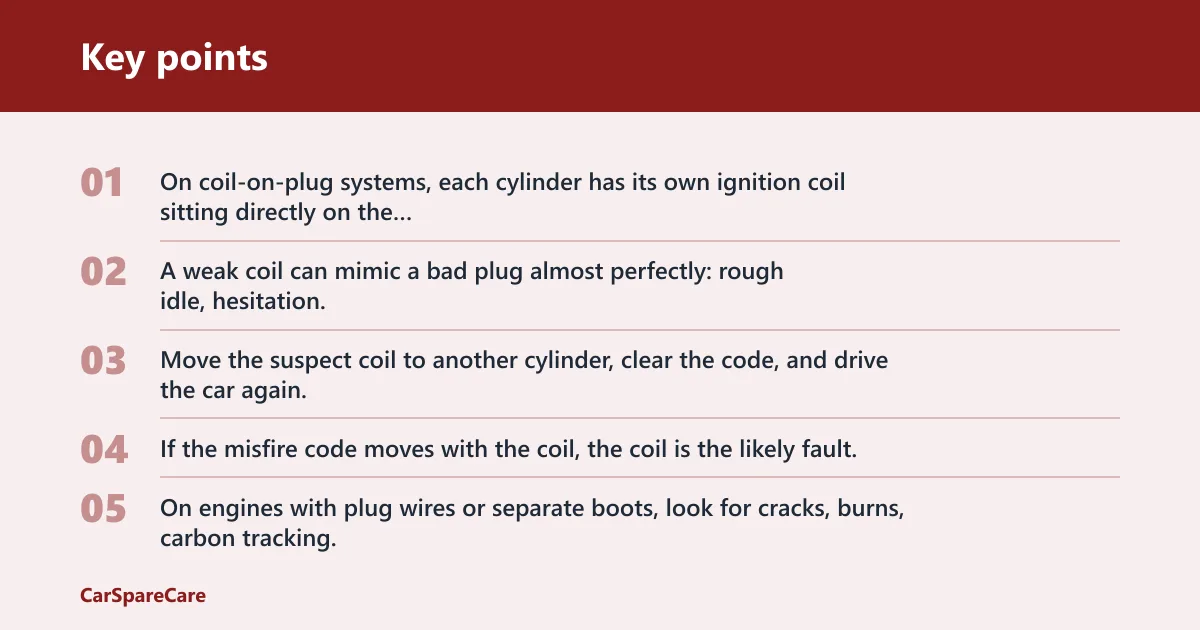
On coil-on-plug systems, each cylinder has its own ignition coil sitting directly on the plug or on a short boot. A weak coil can mimic a bad plug almost perfectly: rough idle, hesitation, and a P030x code on one cylinder.
A simple swap test helps. Move the suspect coil to another cylinder, clear the code, and drive the car again. If the misfire code moves with the coil, the coil is the likely fault. If it stays put, look elsewhere.
Wire or boot damage
On engines with plug wires or separate boots, look for cracks, burns, carbon tracking, swollen rubber, and arcing marks. Carbon tracking is the dark line left when spark leaks across the surface instead of jumping the gap inside the plug.
Suppose a V6 has a P0304 code and the plug looks fine. If the boot has a hairline crack and a black line down the side, that boot can leak under load and create the same misfire a bad plug would.
Injector and fuel delivery faults
A clogged or sticking injector can also create a cylinder-specific misfire. Rich or lean fuel delivery problems may foul a plug, but they may also be the reason the plug went bad in the first place. Fuel trim data and injector checks matter when the same cylinder keeps failing.
Do not assume the plug caused the whole problem if the plug tip is wet, black, or white and chalky. Those colors can point to fuel, oil, or mixture issues that need their own diagnosis.
What to inspect after replacing plugs
If you already replaced the plugs and the code remains, the next step is not another set of plugs. Check the cylinder that keeps returning, then work outward to the ignition and fuel parts that can imitate plug failure.
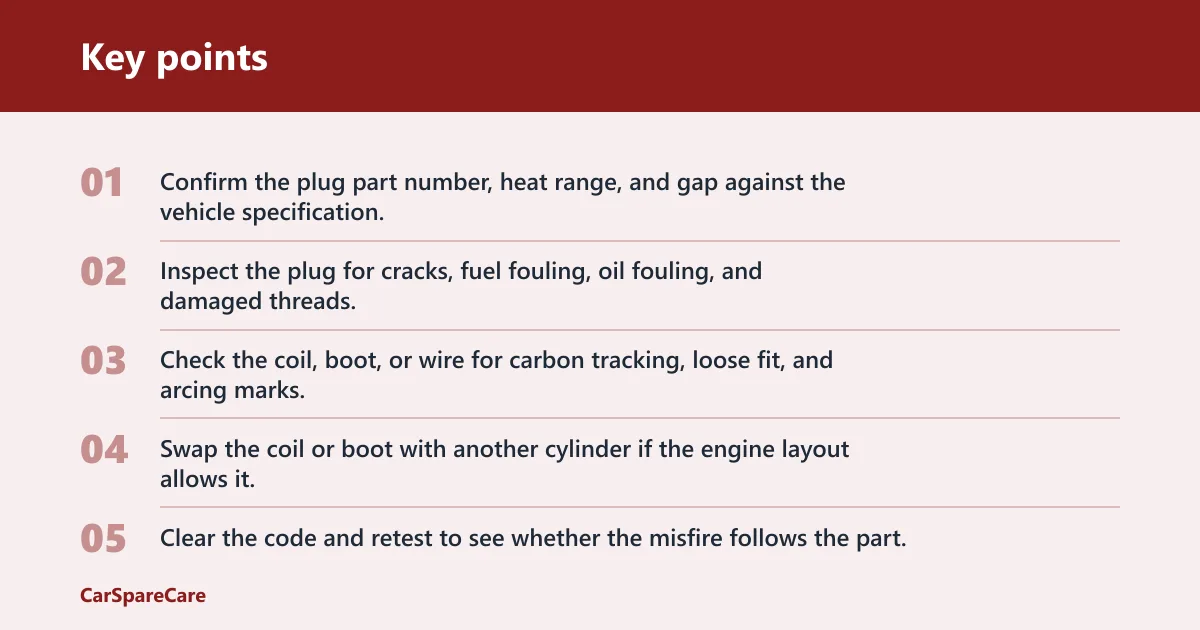
- Confirm the plug part number, heat range, and gap against the vehicle specification.
- Inspect the plug for cracks, fuel fouling, oil fouling, and damaged threads.
- Check the coil, boot, or wire for carbon tracking, loose fit, and arcing marks.
- Swap the coil or boot with another cylinder if the engine layout allows it.
- Clear the code and retest to see whether the misfire follows the part.
- If the code stays on the same cylinder, inspect the injector, compression, and fuel delivery next.
Plug gap and seating
Even a new plug can misfire if the gap is wrong or the plug is not seated properly. A plug that is over-torqued, under-torqued, or cross-threaded can also create sealing or heat-transfer problems that show up later as a misfire.
Boots, coils, and arcing marks
Look for a boot that is hard, torn, or oil-soaked. On high-voltage parts, even small damage can create a leakage path. Arcing marks often show up as tiny burnt spots or a gray-black trail where spark escaped.
Use the cylinder number to narrow it down
When a scan tool shows P0301, P0302, or another single-cylinder code, that cylinder should usually get the first close inspection. If the code is P0300, focus on the most likely common causes first: weak ignition, fuel delivery faults, or a vacuum leak that affects more than one cylinder.
Frequently asked questions
Can bad spark plugs cause check engine light to come on?
Yes. Bad spark plugs can cause a misfire that the ECU detects through OBD-II monitoring, which can turn on the check engine light.
Can bad spark plugs cause check engine light to blink?
Yes, if the misfire is active and severe enough. A blinking or flashing CEL usually means raw fuel may be reaching the exhaust, so the catalytic converter can overheat. That is a more urgent warning than a steady light.
Can bad spark plug wires cause check engine light?
Yes. Damaged plug wires can leak voltage through cracks, carbon tracking, or arcing, which creates the same symptoms as a worn plug. On older ignition systems, wire inspection belongs near the top of the diagnosis list if the misfire points to one cylinder.
Will bad spark plugs always cause check engine light?
No. Early wear, mild fouling, or load-only misfires may not trigger a light right away. The engine can run rough or hesitate before the OBD-II monitor decides the fault is frequent enough to set a code.
Can a bad spark plug cause check engine light?
Yes. A single bad plug can create a cylinder-specific misfire code and light the CEL. If the same cylinder keeps faulting after plug replacement, the coil, boot, wire, or injector on that cylinder deserves a closer look.
Can old spark plugs cause check engine light to come on?
Yes. Old plugs often have widened gaps, worn electrodes, or deposits that weaken spark and raise the chance of a misfire. That can trigger a CEL, especially under acceleration, idle, or other conditions that make ignition harder.

Hi, I’m Melvin, an automobile engineer with extensive experience in automobile equipment. I currently work for a local automobile firm, where I specialize in the car parts industry. I’ve had the opportunity to collaborate with seasoned inspectors, gaining invaluable hands-on experience that goes beyond just theory.
My passion for automotive care started at a young age, which led me to create CarSpareCare. Through CarSpareCare, I share the knowledge and skills I’ve acquired over the years to help others navigate the world of car maintenance and repairs.
My goal is to provide practical tutorials, essential safety advice, and the latest industry insights so that anyone—whether a beginner or an expert—can confidently tackle their automotive projects.