

A worn serpentine belt often shows cracking, glazing, frayed edges, or chirping. Any belt noise that lasts more than a few seconds, a charging warning, or steering loss needs immediate checks of the tensioner, pulleys, and driven accessories. Ignoring it can strand you, overheat the engine, or leave the battery and power steering without drive. This guide shows how to tell belt wear from tensioner trouble, pulley damage, and fluid leaks.
What a worn serpentine belt sounds and looks like


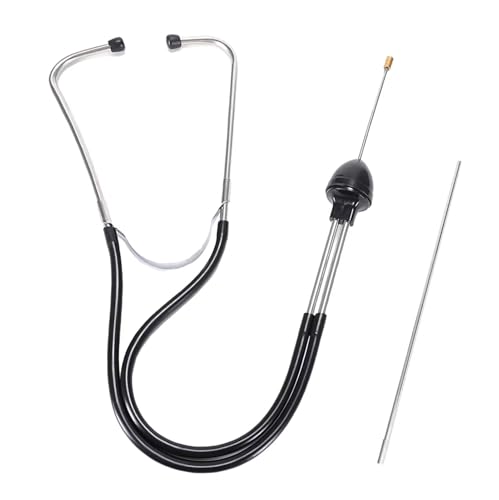
The serpentine belt, also called a drive belt, runs accessories from the crankshaft. It is usually visible at the front or side of the engine under the hood, where it typically drives the alternator, power steering pump, water pump on some vehicles, and the air conditioning compressor.
Noise is often the first clue. A bad belt can make a squealing noise from the engine bay, especially on startup or in wet weather. Chirping, slapping, or knocking can also point to belt slip, a weak tensioner, a pulley problem, or a belt that is misrouted or damaged.
Noise symptoms to listen
- Short startup squeal. A brief squeal at cold start can come from a belt that is beginning to glaze or from a tensioner that is losing force. If it stops within a few seconds and does not return, it is generally lower risk than a constant squeal.
- Constant squeal. A squeal that continues while the engine runs points more toward slip, weak tension, contamination, or pulley drag. That deserves prompt inspection, because a worn-out belt can stretch and lose tension.
- Chirp in rain. A chirp that shows up in wet weather often means the belt surface is slipping harder than it should, or water is entering a worn pulley or belt path. Moisture can make an already weak system noisier.
- Slapping or knocking. These sounds suggest the belt may be loose enough to whip, or a pulley or tensioner may be out of line. That is more urgent than a simple squeal.
Visual wear cues under the hood
A new serpentine belt should have a soft felt-like surface on the ribbed side. Worn belts can harden and crack, and the belt may show abrasions, separation, glazing, frayed edges, or missing sections of material. Any of those are replacement triggers.
- Engine off and cool. Open the hood and look at the belt path from the front or side of the engine. Check the ribbed side and the smooth back side where visible, because wear can appear differently on each surface.
- Inspect the full belt path. Turn your attention to cracks, shiny glazed patches, edge fraying, and missing chunks. A belt that looks polished or hard has likely lost grip and may slip under load.
- Look for contamination. Search for wet oil, coolant, or power steering fluid near the belt and pulleys. Oil or coolant on the belt is more than a cleanup issue. It can damage the serpentine or timing belt fast, so a new belt alone may fail again if the leak stays.
Say your car squeals for two seconds on a damp morning, then drives normally the rest of the day. That pattern fits a lower-risk slip condition more than an immediate breakdown, but it still points to inspection soon if the belt is old, glazed, or the tensioner is weak.
Serpentine belt triage table
| Symptom pattern | Most likely cause | Action level |
|---|---|---|
| Cold-start squeal | Early belt glaze, weak tension, or a tensioner that is losing force | Inspect soon |
| Constant squeal | Slip from wear, contamination, pulley drag, or a worn tensioner | Inspect soon; avoid long trips |
| Chirp in rain | Moisture exposing a glazed belt, weak tension, or pulley wear | Inspect soon |
| Frayed edges | Misalignment, pulley wear, or belt tracking problem | Inspect soon |
| Glazing | Slip from age, weak tension, or accessory drag | Inspect soon |
| Battery light plus steering loss | Loss of belt drive to the alternator and, on some vehicles, the power steering pump | Stop driving |
| Overheating | Belt drive loss to a belt-driven water pump, or another drive accessory problem | Stop driving |
| Oil contamination | External leak soaking the belt and reducing grip fast | Stop driving until the leak is fixed and the belt is checked |
| Do not drive | Belt failure, severe slip, or accessory seizure | Tow the vehicle |
What causes serpentine belt wear?
Most serpentine belts are meant to last at least 50,000 miles, but heat, age, and load still wear them out. The belt flexes around several pulleys every time the engine runs, so hardening, cracking, stretching, and edge wear are normal failure paths over time.
Age, heat, and normal wear
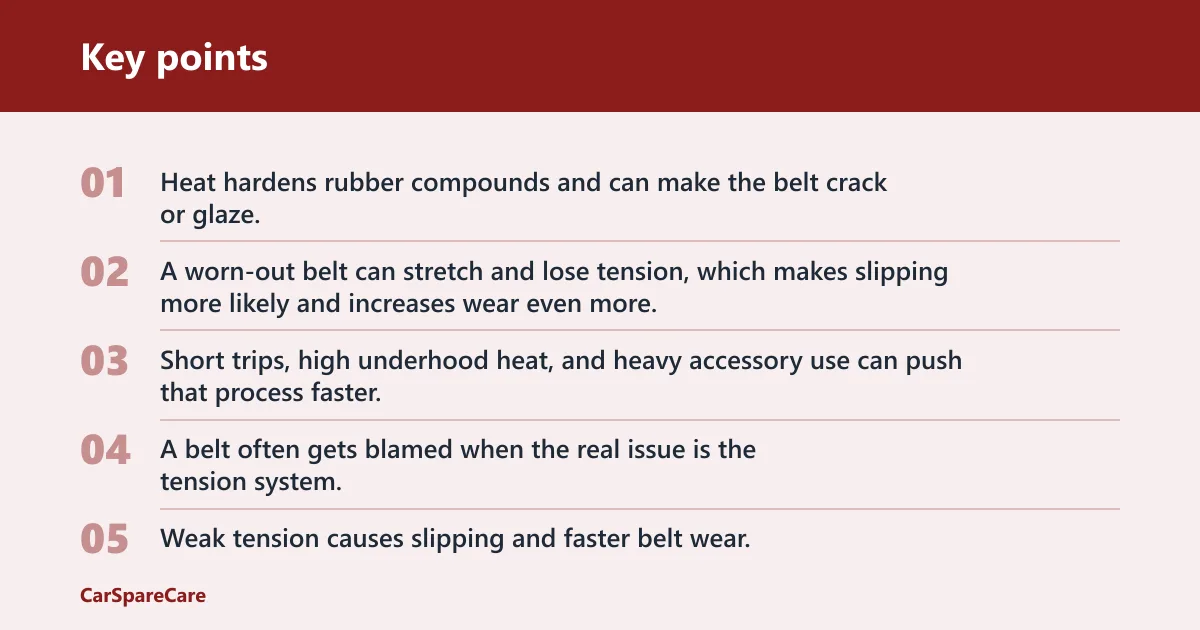
Heat hardens rubber compounds and can make the belt crack or glaze. A worn-out belt can stretch and lose tension, which makes slipping more likely and increases wear even more. Short trips, high underhood heat, and heavy accessory use can push that process faster.
Tensioner, pulley, and alignment problems
A belt often gets blamed when the real issue is the tension system. A spring-loaded automatic belt tensioner can seize or wear out, a hydraulic type can leak or rattle, and a manual tension setup can be out of adjustment. Weak tension causes slipping and faster belt wear.
Bad pulley bearings can also create noise, heat, and drag. If a pulley does not turn smoothly, the belt may chirp, squeal, or fray at one edge. Alignment trouble can do the same thing, especially if the belt tracks off center.
Oil or coolant contamination
Oil or coolant on the belt is more than a cleanup issue. Fluid can soak into the belt, reduce grip, and damage the rubber quickly. If the leak remains, a fresh belt can fail early and the repair will not hold.
A common first-timer mistake is replacing the belt after a noisy start, then missing a small valve cover or pump leak that keeps wetting the same path. The new belt may look fine for a short time, then glaze again or begin to slip.
Can you keep driving with a worn serpentine belt?
It depends on the symptom. A brief squeal at startup or in rain is lower risk than a belt that is frayed, soaked in oil, or slipping all the time. If the belt is still driving the alternator, power steering pump, or water pump normally, you may have time to inspect it soon, rather than ignore it.
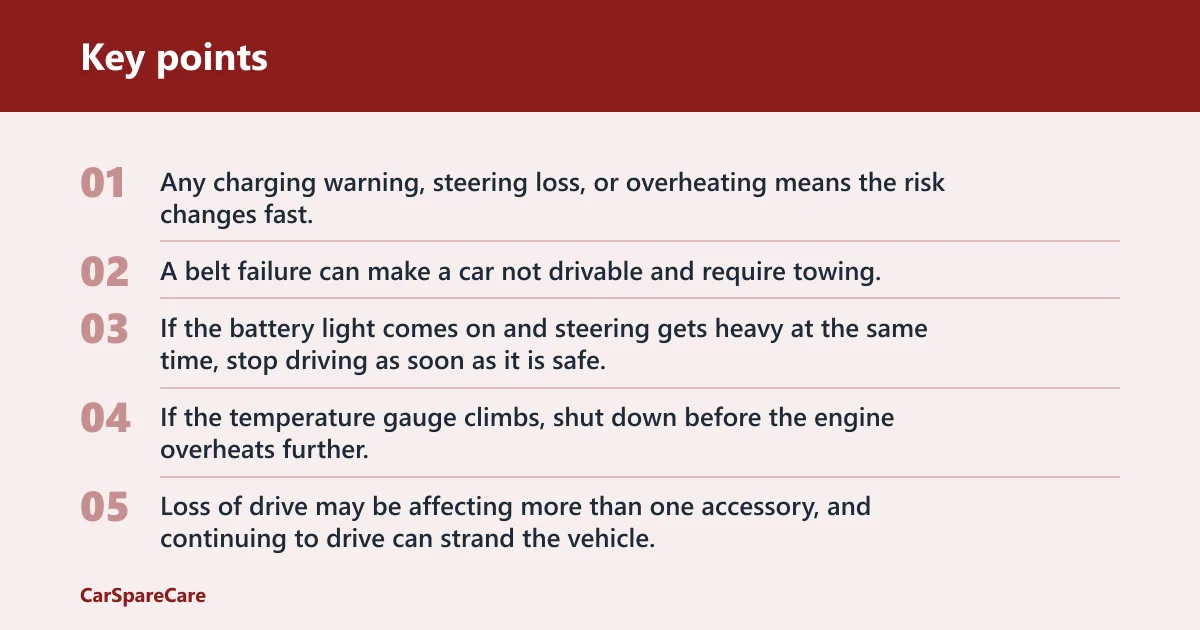
Any charging warning, steering loss, or overheating means the risk changes fast. A bad serpentine belt can cause multiple warning lights on the dashboard, loss of power steering, poor air conditioning, and engine overheating. A belt failure can make a car not drivable and require towing.
When a brief squeal is lower risk
A short squeal that clears quickly, with no warning lights and no accessory loss, usually points to early wear, light slip, or a tensioner that is weakening. That still needs inspection because the belt may be close to the point where tension drops enough to affect charging or cooling.
When warning lights or heat mean stop driving
If the battery light comes on and steering gets heavy at the same time, stop driving as soon as it is safe. That combination can mean the alternator is no longer being driven and the power steering pump has lost drive as well. If the temperature gauge climbs, shut down before the engine overheats further.
Suppose the belt starts squealing after a puddle splash, then the battery light appears and the wheel feels heavy at parking-lot speeds. That is no longer a “watch it” problem. Loss of drive may be affecting more than one accessory, and continuing to drive can strand the vehicle.
How to tell the belt from the tensioner or an accessory fault
Not every belt noise means the belt itself is the root cause. A failing tensioner, seized pulley, alternator drag, a power steering issue, or an air conditioning compressor problem can all load the belt and create the same sound. The fix depends on which part is creating the drag or letting the belt slip.
Spring-loaded, hydraulic, and manual tension systems
Some vehicles use a spring-loaded automatic tensioner that keeps force on the belt all the time. Others use a hydraulic tensioner that can leak or rattle. A manual tension system depends on correct adjustment, so an out-of-spec setting can leave the belt loose from the start.
Weak tension usually shows up as slip, noise, and faster wear. If the belt looks acceptable but keeps chirping or squealing, inspect the tensioner arm movement, pulley rotation, and tensioner body for leaks, seized motion, or rattle.
Alternator, power steering, water pump, and AC clues
The alternator is driven by the belt, so loss of drive can trigger battery or charging warning lights. If the battery stops charging because the belt slips or breaks, the car may run until the battery is drained, then stall or fail to restart.
When the power steering system is belt-driven, loss of belt drive can make steering heavy. Low fluid can cause similar symptoms, so do not assume the belt is the only cause. A belt-driven water pump can contribute to overheating, and a belt-driven air conditioning compressor can reduce or eliminate cold air.
Should you replace the belt and tensioner together?
Often, yes. If the belt shows wear and the tensioner is weak, noisy, seized, or leaking, replacing both together can avoid paying labor twice and can stop a fresh belt from running on a bad tension system. A belt alone is a weak fix when the tensioner or pulley path is already suspect.
It also makes sense to inspect the pulleys and check for leaks at the same time. A spring-loaded automatic tensioner can cost $20-$50 for the part plus labor, while a hydraulic belt tensioner costs anywhere from $35 to $75. Belt replacement cost cited is $18-$75 for parts plus $50-$150 labor.
- Check tensioner movement. With the engine off, inspect whether the tensioner arm moves smoothly and returns with force. A seized, rattling, or weak unit can let the belt slip even if the belt itself still looks usable.
- Spin nearby pulleys. Check for roughness, wobble, or noise from idler and driven pulleys. If one pulley drags or sits out of line, a new belt can fail early or make the same noise again.
- Fix leaks first. Look for oil or coolant reaching the belt path and repair the source before installing a new belt. Fluid left in place can ruin the replacement quickly and turn a routine service into repeat work.
Frequently asked questions
What are the symptoms of a serpentine belt going bad?
The common signs are squealing, chirping, glazing, cracks, frayed edges, and missing sections of material. A bad belt can also cause multiple warning lights on the dashboard, poor air conditioning, loss of power steering, or overheating if the water pump is belt-driven.
Is it safe to drive with a worn serpentine belt?
Only briefly, and only if the symptoms stay mild. A short squeal with no warning lights is less urgent than constant squeal, visible damage, steering loss, overheating, or a charging warning. If the belt is slipping badly or the vehicle loses accessories, stop driving and have it checked.
What causes a serpentine belt to wear out?
Heat, age, and mileage wear the belt down, and most serpentine belts are meant to last at least 50,000 miles. Weak tension, seized or worn tensioners, pulley misalignment, and oil or coolant contamination can speed up failure. Those issues can make a new belt wear out early too.
What problems can a loose serpentine belt cause?
A loose belt can slip, squeal, and fail to drive the alternator, power steering pump, water pump, or air conditioning compressor correctly. That can lead to battery warning lights, heavy steering, poor cooling, weak AC, and overheating. A loose belt also wears faster because it cannot grip the pulleys properly.
How do I know if the serpentine belt is cracked or glazed?
Cracks usually appear as splits across the ribs or along the belt surface, while glazing looks shiny, hard, or polished instead of soft. A new serpentine belt should have a soft felt-like surface on the ribbed side. If the belt feels hard or looks shiny, replacement is usually due.
Why is my car squealing when I start it or turn the wheel?
A short squeal at startup or during a steering input often means the belt is slipping under load. That can happen with a worn belt, weak tensioner, pulley drag, or contamination. If the sound lasts more than a few seconds or returns often, inspect the belt system soon.

Hi, I’m Melvin, an automobile engineer with extensive experience in automobile equipment. I currently work for a local automobile firm, where I specialize in the car parts industry. I’ve had the opportunity to collaborate with seasoned inspectors, gaining invaluable hands-on experience that goes beyond just theory.
My passion for automotive care started at a young age, which led me to create CarSpareCare. Through CarSpareCare, I share the knowledge and skills I’ve acquired over the years to help others navigate the world of car maintenance and repairs.
My goal is to provide practical tutorials, essential safety advice, and the latest industry insights so that anyone—whether a beginner or an expert—can confidently tackle their automotive projects.

