Yes. Bad spark plugs can raise fuel consumption when they cause misfires, weak spark, or incomplete combustion, but they are not the first thing to blame if mileage drops without drivability symptoms. Ignoring the cause can waste fuel, damage the catalytic converter, and hide a separate problem. This guide explains when spark plugs are a likely cause, when they are not, and what to check next before you replace parts.
When bad spark plugs are the likely culprit


When plugs are the likely cause
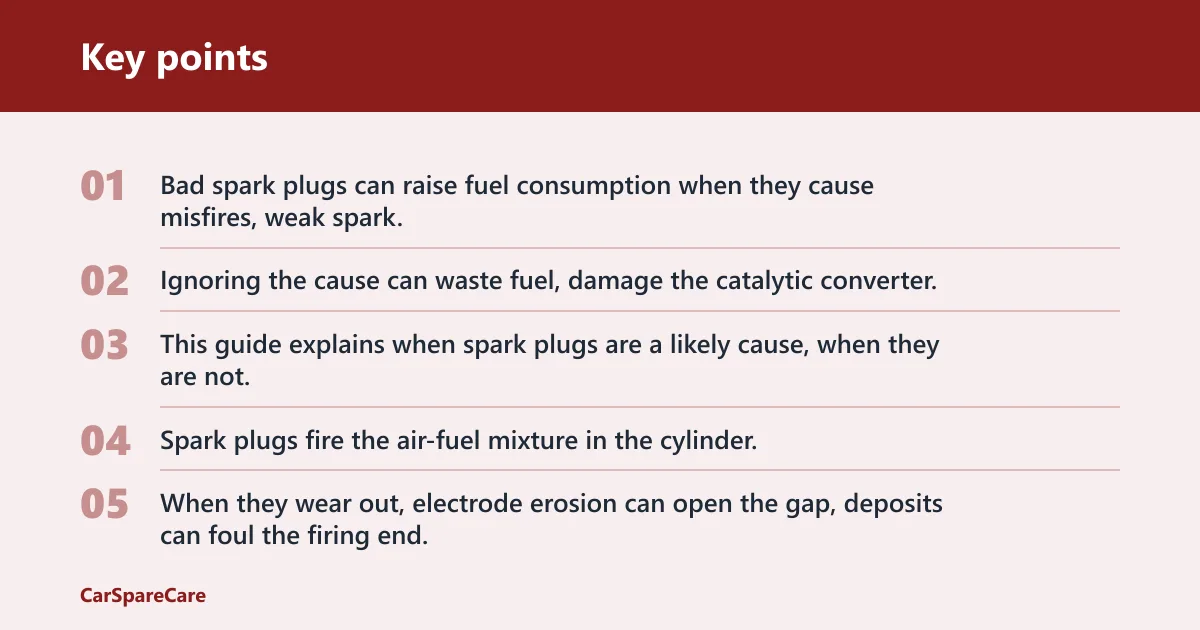
Spark plugs fire the air-fuel mixture in the cylinder. When they wear out, electrode erosion can open the gap, deposits can foul the firing end, and the engine may misfire. Bad spark plugs can cause rough idle and increased fuel consumption. A weak spark can also make the engine work harder for the same power.
When plugs are less likely to be the main cause
If fuel economy drops but the engine still starts cleanly, idles smoothly, and shows no misfire symptoms, spark plugs are less likely to be the only fault. Air leaks, a dirty air filter, injector problems, ignition coil faults, or sensor issues can all affect mileage. The right fix depends on the symptom pattern.
What this article helps you rule in or out
You are looking for a diagnosis, not a guess. The sections below separate plug wear from coil, injector, air, and sensor faults, then show what to inspect before you buy parts. That order matters, because replacing plugs alone will not fix every poor-mileage complaint.
How spark plugs affect fuel economy
Worn spark plugs can create incomplete combustion and higher fuel use. When the spark is weak, the mixture does not burn as cleanly, so the engine loses efficiency and may need more throttle for the same driving condition. Fuel economy declines because the combustion event is no longer happening at its best.
What plugs do in the combustion chamber
Spark plugs fire across a gap in the combustion chamber and light the air-fuel mixture. Healthy plugs keep the spark strong enough to light the mixture on time and under compression. Copper, platinum, and iridium plugs all do the same job, but they do not wear at the same rate.
How wear, deposits, and gap growth weaken spark
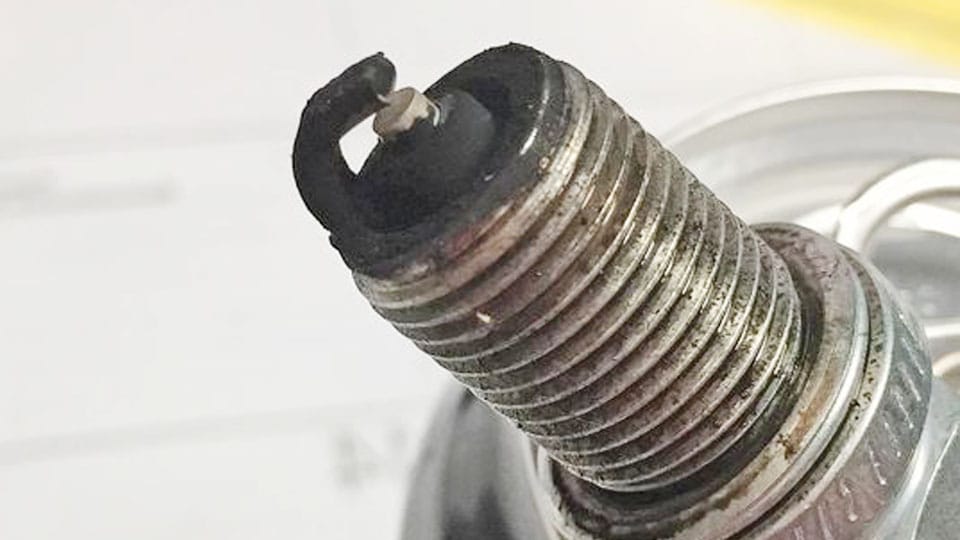
Wear causes electrode erosion, and that erosion increases the gap. A wider or uneven spark plug gap can reduce ignition efficiency and should be checked against vehicle specifications. Carbon deposits can also interfere with spark quality, while oil fouling can short-circuit the plug surface and weaken ignition.
Why incomplete combustion leads to worse mileage
Incomplete combustion leaves energy on the table. The engine may compensate with extra fuel, unstable idle control, or a longer crank time before it catches. Misfires from bad plugs can increase fuel consumption, and prolonged rough running can also stress the ignition coil over time.
What other symptoms happen when spark plugs are bad?
Bad spark plugs often cause rough idle, hesitation, hard starting, and a check engine light. They can also trigger engine misfire codes, and misfires often increase fuel consumption. If the car feels uneven at idle or stumbles under load, the plugs move higher on the suspect list.
Rough idle, hesitation, and hard starting
These symptoms point to weak or inconsistent combustion. A plug with a widened gap may fire poorly at idle, then improve slightly at higher rpm, or the reverse can happen if deposits or oil fouling are present. A healthy engine should not shake at stoplights or hesitate on light throttle.
Check engine light and misfire codes
An engine misfire is caused by incomplete combustion and often triggers the check engine light. If the code points to a specific cylinder, that cylinder deserves close inspection. If the code is random or multiple-cylinder, the fault may involve coils, fuel delivery, air leaks, or sensor data rather than one bad plug alone.
One-cylinder vs multiple-cylinder misfire patterns
A single-cylinder misfire often points more strongly to a plug, coil, or injector on that cylinder. Multiple-cylinder misfires can suggest a broader issue such as fuel pressure, vacuum leaks, mass airflow errors, or an ignition problem affecting more than one cylinder. The pattern tells you where to look first.
Is the mileage loss really from spark plugs?
This decision table helps you separate a plug fault from other causes before you buy parts. Start with the symptom pattern, then compare the plug condition, and then check the next likely system. That order is safer than replacing plugs only because mileage dropped.
| Symptom | Likely plug-related cause | Likely non-plug cause | Next check |
|---|---|---|---|
| Rough idle | Worn electrodes or plug gap growth | Vacuum leak or dirty throttle body | Inspect plugs, then scan for trim codes |
| Misfire codes | Bad plug on the coded cylinder | Ignition coil or injector fault | Swap coil and inspect that cylinder’s plug |
| Hard starts | Weak spark from wear or fouling | Battery, starter, or fuel pressure issue | Check cranking speed and plug condition |
| Black soot on plugs | Rich running with carbon fouling | Faulty sensor or excess fuel delivery | Check air filter, fuel trims, and sensor data |
| Oil fouling | Plug contaminated by oil deposits | Valve stem seal or ring wear | Find the oil source before replacing plugs |
| Normal-looking plugs with bad MPG | Plug wear may not be the main cause | Oxygen sensor, air leak, or injector issue | Inspect fuel trims and intake system |
| One-cylinder misfire | Single bad plug or plug gap issue | One bad coil or injector | Move parts between cylinders if allowed |
| Multiple-cylinder misfire | General plug wear across the set | Coil pack, fuel, or sensor problem | Check system-wide causes before replacing all plugs |
What the plug face can tell you
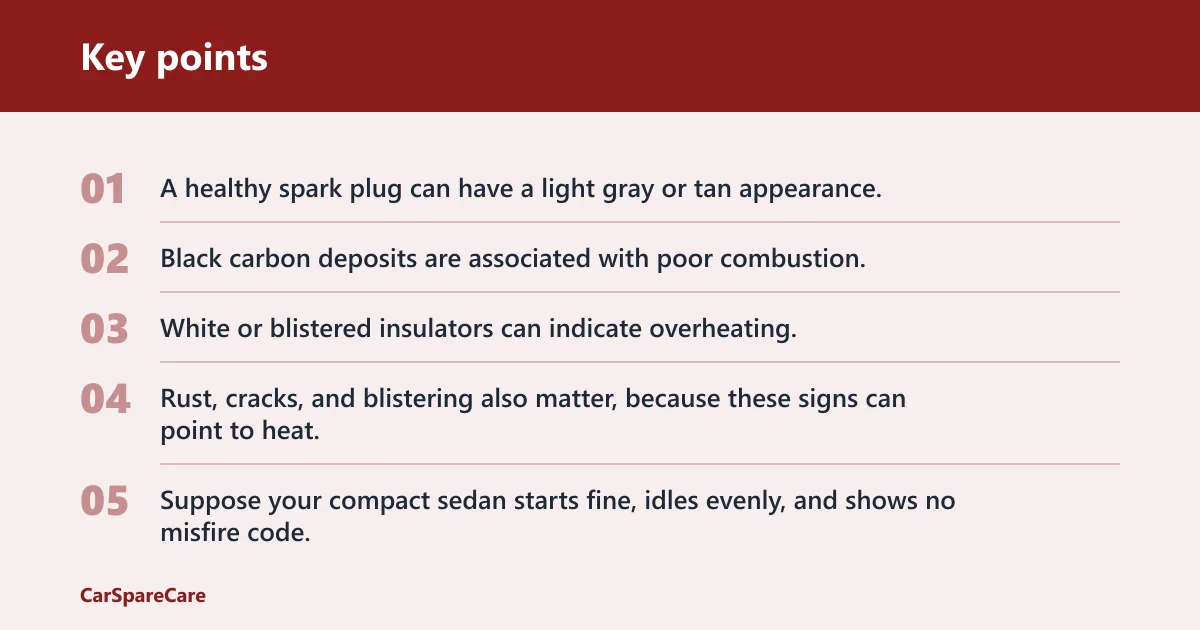
A healthy spark plug can have a light gray or tan appearance. Black carbon deposits are associated with poor combustion. White or blistered insulators can indicate overheating. Rust, cracks, and blistering also matter, because these signs can point to heat, contamination, or a damaged plug body rather than normal wear.
What not to assume from mileage alone
Suppose your compact sedan starts fine, idles evenly, and shows no misfire code, but fuel economy has slipped and the plugs still look tan with only mild wear. That pattern is not a strong plug diagnosis. The next step is usually to check fuel trims, intake leaks, and sensor data before buying a new set.
Inspect spark plugs by checking the electrodes and insulator for wear and deposits, then measuring the gap with a feeler gauge. Look for carbon, oil, rust, cracks, and blistering. If the plug is worn enough to open the gap beyond specification, spark efficiency drops and ignition quality suffers.
Step-by-step inspection order
- Remove the plug from one cylinder at a time so you can compare them.
- Check the electrode for erosion or rounding.
- Look at the insulator for carbon, oil, rust, cracks, and blistering.
- Measure the gap with a feeler gauge and compare it with vehicle specifications.
- Repeat the check on the other plugs so you can spot a pattern.
What a pass or fail looks like
Light tan or gray color is usually acceptable. Heavy black soot suggests carbon fouling, and oil wetness points to an engine sealing issue rather than normal plug wear. A visibly widened gap, broken ceramic, or blistered insulator usually means the plug is past the point where cleaning will help.
Why gap measurement matters
Gap growth from wear can weaken ignition even if the plug still fires. The gap should match the vehicle specification, not a generic number. An incorrect gap can cause poor starting, misfires, and rough running, especially under load. A feeler gauge gives you the measurement you need before replacement decisions are made.
When to replace plugs and what else to check
Copper plugs may need replacement after about 30,000 miles. Platinum plugs are described as lasting around 60,000 miles. Iridium plugs can frequently exceed 100,000 miles and are described as the longest-lasting type. Condition still matters, though, because contamination or damage can shorten service life well before the mileage interval.
Replacement intervals by plug type
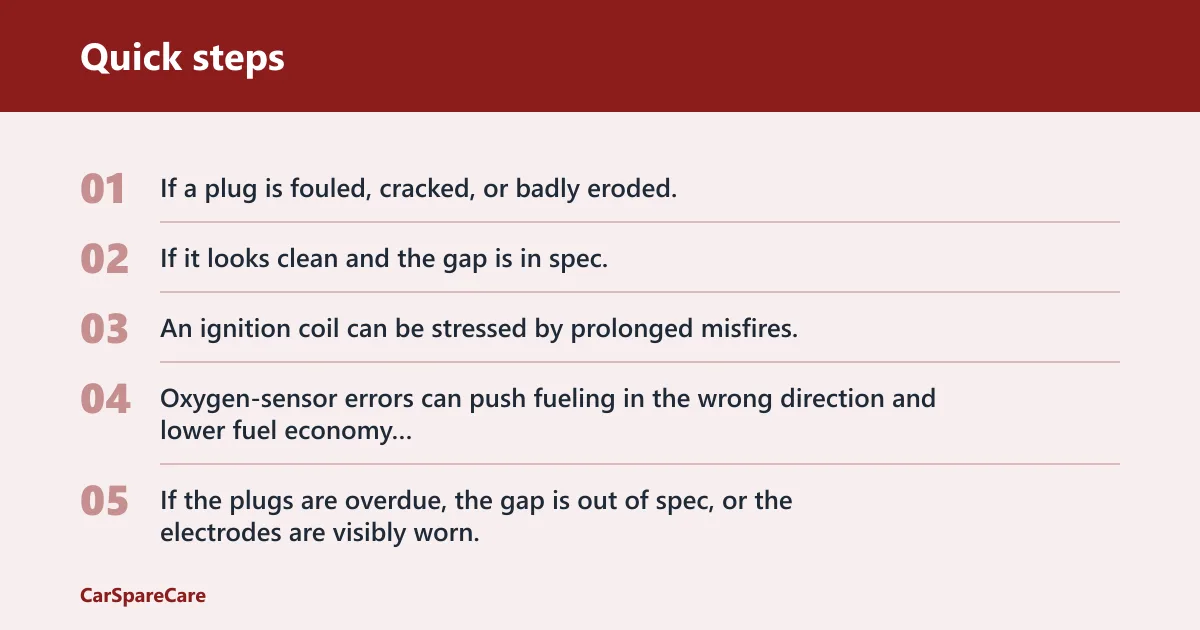
Use mileage as a guide, not a verdict. If a plug is fouled, cracked, or badly eroded, replace it even if it has not reached the usual interval. If it looks clean and the gap is in spec, keep diagnosing the rest of the system before you spend money on parts you may not need.
Why coils, injectors, air filters, and sensors still matter
An ignition coil can be stressed by prolonged misfires, and a neglected plug can hide coil weakness until the problem spreads. Injectors can cause lean or rich running. A restricted air filter can change airflow. Oxygen-sensor errors can push fueling in the wrong direction and lower fuel economy without any plug defect.
When to stop troubleshooting and replace the plugs
If the plugs are overdue, the gap is out of spec, or the electrodes are visibly worn, replacement is reasonable. If one plug is clearly fouled while the others look normal, fix the underlying cause too. A replacement only makes sense when the plug condition matches the symptom pattern.
What happens if you ignore the signs
Picture a V6 with repeated misfires on one bank and a flashing check engine light. If the unburned fuel keeps entering the exhaust, the catalytic converter can overheat and fail. That is a costly downstream consequence, and it is one reason a misfire should not be ignored for long.
Frequently asked questions
Can bad spark plugs cause high fuel consumption?
Yes. Bad spark plugs can cause high fuel consumption when they create incomplete combustion, weak spark, or misfires. That does not mean plugs are always the cause, though. If the engine runs smoothly and shows no misfire symptoms, you should also check coils, injectors, air leaks, and sensors.
Can bad spark plugs cause excessive fuel consumption?
They can, but the effect is usually tied to poor combustion rather than fuel delivery alone. Misfires from bad plugs can increase fuel consumption, and rough idle often goes with it. If the plugs look normal, the next suspects are often the ignition coil, oxygen sensor, or injector.
Do spark plugs affect fuel economy?
Yes. Spark plugs affect fuel economy because they light the air-fuel mixture, and worn plugs can create incomplete combustion. When that happens, the engine may need more fuel for the same output. A wider gap, carbon buildup, or oil fouling can all reduce spark quality.
Can bad spark plugs cause bad gas mileage?
Yes, bad spark plugs can cause bad gas mileage when they misfire or burn the mixture poorly. The driver may notice more frequent fill-ups, rough running, hesitation, or a check engine light. If those symptoms are absent, the cause may be elsewhere in the fuel or air system.
Why do worn spark plugs make a car use more fuel?
Worn spark plugs can make a car use more fuel because electrode erosion increases the gap and weakens the spark. A weak spark can make the engine work harder for the same power. That lowers efficiency and can trigger rough idle or hesitation under load.
How can I tell if spark plugs are causing poor fuel economy?
Start with symptoms. Rough idle, hard starting, hesitation, and misfire codes all raise suspicion. Then inspect the plugs for carbon, oil, rust, cracks, blistering, and gap growth. If the plugs look healthy and the gap is in spec, look next at coils, injectors, air leaks, and sensors.

Hi, I’m Melvin, an automobile engineer with extensive experience in automobile equipment. I currently work for a local automobile firm, where I specialize in the car parts industry. I’ve had the opportunity to collaborate with seasoned inspectors, gaining invaluable hands-on experience that goes beyond just theory.
My passion for automotive care started at a young age, which led me to create CarSpareCare. Through CarSpareCare, I share the knowledge and skills I’ve acquired over the years to help others navigate the world of car maintenance and repairs.
My goal is to provide practical tutorials, essential safety advice, and the latest industry insights so that anyone—whether a beginner or an expert—can confidently tackle their automotive projects.